Raid in Gaza City: At Least Four Palestinians Killed in the Attacks
On Sept. 1, Israeli forces carried out an operation to detain the head of Hamas's internal security service. Two children were reported killed in strikes launched to cover the withdrawal.
At least four Palestinians were killed during a special operation carried out by Israeli forces in Gaza City on Sept. 1, 2026; two children were among the dead. The information was reported citing officials in Gaza.
According to reports, the operation was aimed at detaining a Hamas member, and once it was detected, airstrikes were launched to cover the forces' withdrawal.
Statements from the parties
Israeli Defense Minister Israel Katz said a senior Hamas member had been detained. According to an Israeli security official, the detained individual was the head of Hamas's internal security service.
The Palestinian side noted that civilians were among those killed. Independent verification of the events remains limited.
How the truce is working
The third truce in Gaza took effect on Oct. 10, 2025, once the first stage of a U.S.-backed peace plan was agreed. Under the plan, Hamas's civil administration in Gaza resigned on July 6, 2026, and on July 31 an agreement on disarmament was announced — tied to the reconstruction process and to the withdrawal of Israeli forces.
Despite this, operations have not stopped during the truce. According to Palestinian reports, numerous instances of shooting, bombardment and property destruction were recorded in the period from Oct. 10, 2025, to April 14, 2026.
Other events in September
Several more incidents were recorded over the course of the month. On Sept. 10, at least four people, including two children, were killed in a strike in the Beit Lahiya area of northern Gaza. On Sept. 13, two Palestinians were reported killed despite the truce.
- Sept. 1: raid in Gaza City, at least 4 killed
- Sept. 10: strike in Beit Lahiya, at least 4 killed
- Sept. 13: two Palestinians killed
- Date the truce took effect: Oct. 10, 2025
The state of reconstruction
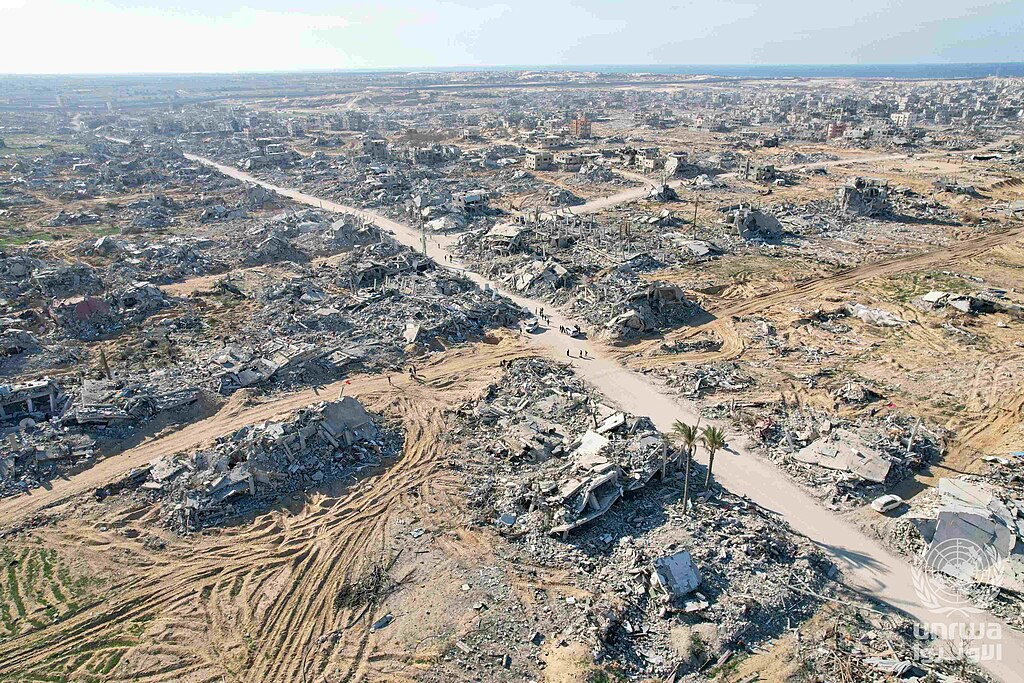
According to Gaza officials, more than 90 percent of the territory has been destroyed since October 2023. Materials published on Sept. 8 showed residents rebuilding homes and shops from mud bricks, salvaged wood and scraps of fabric and plastic.
A report published in July 2026 put the total cost of reconstruction at $71 billion over a ten-year period. The European Commission, meanwhile, announced a $1 billion fund under the “Team Gaza Initiative” at a donors' meeting in Brussels.
The response in the Muslim world
The situation in Gaza remained one of the central themes of regional diplomacy through 2026. Central Asian states have stated at the official level that they support humanitarian aid and a political solution; Uzbekistan, Kazakhstan and Kyrgyzstan have sent humanitarian shipments at various stages.
For Muslim communities in the United States, the subject has also become part of domestic political debate — including through demonstrations on university campuses and the court cases connected to them.
On sources of information
Stages of the truce plan
The truce that took effect on Oct. 10, 2025, was agreed under the first stage of a U.S.-backed peace plan. The plan consists of several stages, each tied to the fulfillment of the one before it.
Hamas's civil administration in Gaza resigned on July 6, 2026. On July 31, an agreement on disarmament was announced; it was tied to the reconstruction process and to the withdrawal of Israeli forces.
In practice, the transition between stages has been slow, and the parties have continued to accuse each other of violating the terms of the agreement.
The “yellow line” regime
Under the terms of the truce, Israeli forces withdrew from part of the Gaza Strip and a line of control was established. In reports, this boundary is called the “yellow line.”
According to Palestinian reports, incursions into areas beyond the line, shootings and bombardments were recorded in the period from Oct. 10, 2025, to April 14, 2026. The Israeli side describes these actions as security measures.
The humanitarian situation
According to Gaza officials, more than 90 percent of the territory has been destroyed since October 2023. A large share of the population lives in temporary shelters or tents.
Materials published on Sept. 8 showed residents rebuilding homes and shops from mud bricks, salvaged wood and scraps of fabric and plastic. Such structures offer insufficient protection from heat, rain and cold.
The parties' figures on the volume of aid deliveries differ: international organizations note that the number of trucks specified in the agreement is not being fully achieved.
The cost of reconstruction
A report published in July 2026 valued the reconstruction of Gaza at $71 billion over a ten-year period. The report noted the need to involve Palestinians themselves in the process.
The European Commission announced a $1 billion fund under the “Team Gaza Initiative” at a donors' meeting in Brussels. This sum covers a small portion of the overall need.
Events in September
- Sept. 1: raid in Gaza City, at least 4 people killed
- Sept. 8: materials on reconstruction, 90%+ destruction of the territory recorded
- Sept. 10: strike in Beit Lahiya, at least 4 people killed
- Sept. 13: two Palestinians killed despite the truce
This list is not exhaustive and covers events that were widely reported in open sources.
International reaction
Muslim states and international organizations are calling for compliance with the terms of the truce and an increase in humanitarian aid. Central Asian states have stated at the official level that they support humanitarian aid and a political solution.
In the United States, the subject has become part of domestic political debate. On Sept. 14, the Palestinian activist Mahmoud Khalil filed a civil rights lawsuit against Columbia University.
Assessing the data
Casualty figures in Gaza rest on data from local health authorities; the Israeli side disputes them in some cases. Opportunities for independent international verification remain limited.
For that reason, figures cited in different sources may differ and should be compared with care.
The internal security service
According to an Israeli security official, the detained individual was the head of Hamas's internal security service. That body has handled matters of order and control in the territory.
Following the resignation of the civil administration, the question of an administrative vacuum in the territory is under discussion: it is unclear which powers remain in whose hands.
Children and civilians
Under the rules of international humanitarian law, the protection of civilians is required in military operations. The UN and human rights organizations have regularly documented violations of these rules over the course of the conflict.
Two children were reported among those killed in the Sept. 1 incident. Children were also reported killed in the Sept. 10 strike in Beit Lahiya.
Casualty figures in Gaza rest on data from local health authorities, and the Israeli side disputes them in some cases. Opportunities for independent international verification are limited.