Direct Almaty–Urgench Flights Launch, Shortening the Trip to Khiva
FlyArystan has been flying the route twice a week since Sept. 3. Flight time is 2 hours 35 minutes.
On Sept. 3, 2026, Kazakhstan's budget airline FlyArystan began direct flights between Almaty and Urgench. The service operates twice a week, on Thursdays and Sundays.
The route is flown with an Airbus A320; flight time is 2 hours 35 minutes.
Why Urgench
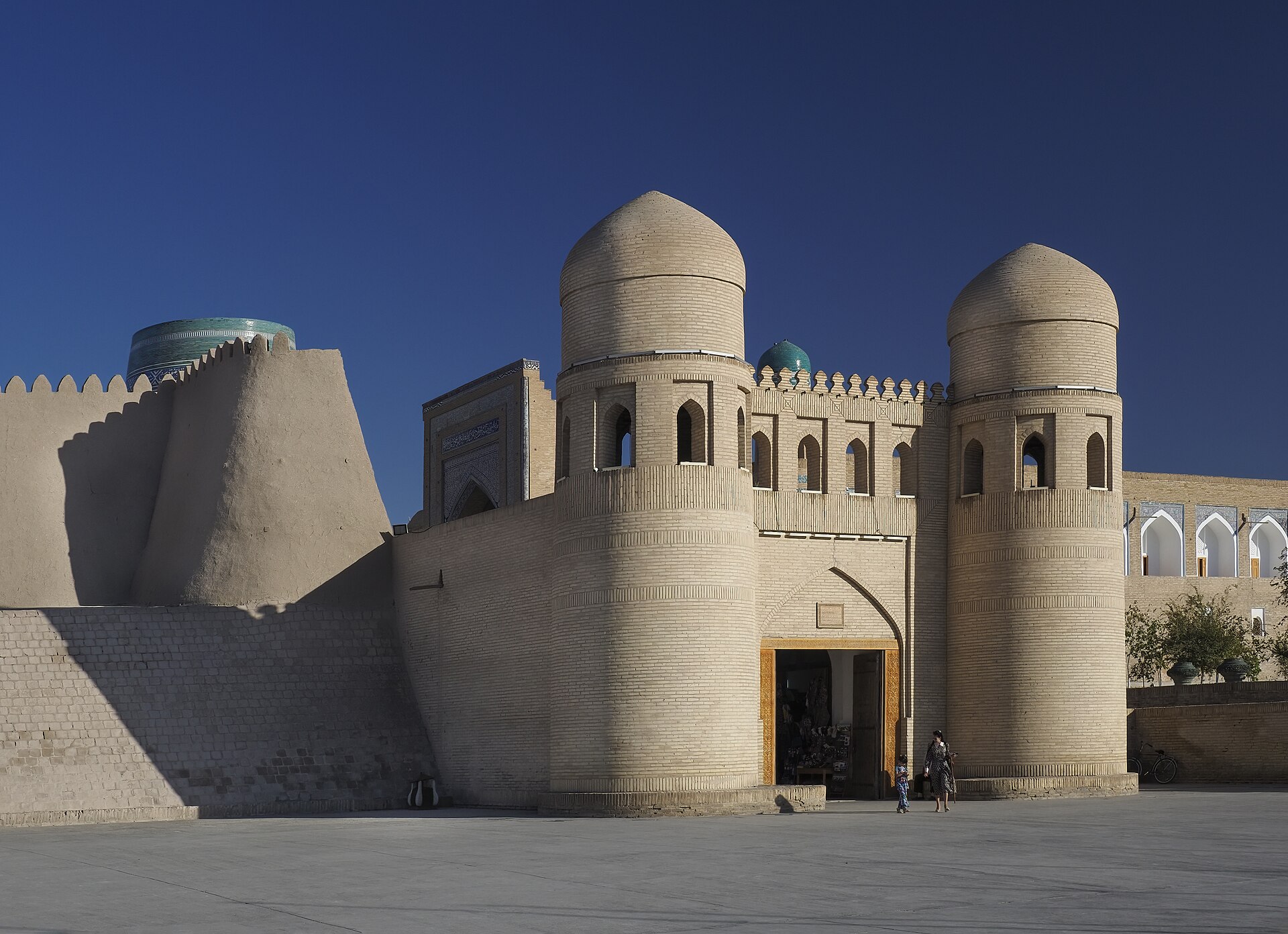
Urgench is the administrative center of the Khorezm region and the closest air gateway to the city of Khiva. Khiva's Itchan Kala district is inscribed on the UNESCO World Heritage List and is among the most visited historic complexes in Central Asia.
Previously, travelers from Almaty to Khorezm had to use connecting flights through Tashkent or Nukus.
- Launch date: Sept. 3, 2026
- Frequency: 2 times a week (Thursday, Sunday)
- Aircraft: Airbus A320
- Flight time: 2 hours 35 minutes
- Season: September through late autumn, with possible extension
The route is scheduled on a seasonal basis: the initial timetable runs from September through the end of October, with an indicated later extension to mid-November and a short second season in March 2027.
Regional air service is expanding
The number of international flights serving Uzbekistan has risen in recent months. In August 2026, Etihad Airways launched daily flights on the Abu Dhabi–Tashkent route and signed a codeshare agreement with Uzbekistan Airways. Flights on the Samarkand–Antalya route were also introduced.
On Sept. 14, it was announced that scheduled flights on the Tashkent–Hyderabad route would begin on Sept. 28.
The tourism context
Uzbekistan is developing tourism as one avenue of economic diversification. The visa-free regime has been expanded: as of Jan. 1, 2026, U.S. citizens may visit visa-free for up to 30 days.
Kazakhstan, for its part, is one of Uzbekistan's nearest and largest outbound markets — a visa-free regime is in effect between the two countries, and trade turnover reached $2.8 billion in the first half of 2026.
What it means for Khorezm
The Khorezm region is developing in areas beyond tourism as well: in September, the 126-megawatt Sarimay solar power plant in the region was brought fully online.
The region also lies near the zone of environmental problems associated with the drying of the Aral Sea; water scarcity and soil degradation remain a long-term constraint on the local economy.
Practical information
Budget aviation in the region
FlyArystan is the budget carrier within the group of Air Astana, Kazakhstan's national airline. It began operations in 2019 and within a short time became one of the largest low-cost airlines in the region.
The budget model is built on a single-type aircraft fleet, separate charges for ancillary services and high-frequency flights. This model makes it possible to lower fares.
For many years the aviation market in Central Asia was a monopoly of state carriers. Over the past five years, liberalization policies have brought new carriers and routes.
Khiva and tourism
Khiva's Itchan Kala district was inscribed on the UNESCO World Heritage List in 1990. It is a walled historic city containing madrasas, minarets and palaces.
Together with Samarkand and Bukhara, Khiva forms one of Uzbekistan's principal tourist routes. The three cities are typically combined into a single itinerary.
Urgench airport is the closest air point to Khiva; the distance between them is about 35 kilometers.
Expanding air service
The number of international flights serving Uzbekistan rose significantly over the course of 2026. In August, Etihad Airways launched daily flights on the Abu Dhabi–Tashkent route and signed a codeshare agreement with Uzbekistan Airways.
Flights on the Samarkand–Antalya route were also introduced. On Sept. 14, it was announced that scheduled flights on the Tashkent–Hyderabad route would begin on Sept. 28.
New routes are opening on the domestic market as well; a program to modernize regional airports is under way.
Visa regime
Uzbekistan has liberalized its visa regime in stages in order to encourage tourism. As of Jan. 1, 2026, U.S. citizens may visit visa-free for up to 30 days; the corresponding decree was signed on Nov. 3, 2025.
With Kazakhstan, a visa-free regime has been in effect for many years, and citizens of the two countries may cross the border with an internal passport.
The Khorezm economy
The traditional foundation of the Khorezm region's economy is irrigated farming. Because the region lies in the lower reaches of the Amu Darya, it is sensitive to water shortages.
In September, the 126-megawatt Sarimay solar power plant in the region was brought fully online; it generates roughly 252 gigawatt-hours of electricity a year.
Tourism, meanwhile, is being developed as a source of foreign currency earnings and employment for the region: hotels, handicrafts and the service sector all depend on it.
Seasonality
The route is scheduled on a seasonal basis. Tourist flows to Khorezm fall mainly in the spring and autumn months, because temperatures in the area are very high in summer.
Schedules and fares may be changed by the airline during the season; travelers are advised to verify final details through the carrier's official channels.
The Kazakhstan–Uzbekistan corridor
Passenger traffic between the two countries is growing year over year. Most of it consists of trade, labor and family travel; tourist traffic is a relatively new segment.
In the first half of 2026, trade turnover between the two countries reached $2.8 billion, making Kazakhstan Uzbekistan's third-largest trading partner.
On the land route, the busiest crossing point — Gishtkuprik, near Tashkent — is being reconstructed; once the work is complete, its daily capacity is expected to rise from 30,000 to 70,000 people.
Aircraft type
The route is flown with an Airbus A320. This is a narrow-body medium-haul aircraft widely used by budget carriers.
For the Almaty–Urgench distance, flight time is 2 hours 35 minutes. Compared with connecting flights, this shortens travel time considerably.
Regional airports
Urgench airport is one of Uzbekistan's regional airports. In recent years the country has pursued a policy of modernizing regional airports and attracting international flights to them.
The aim of this policy is to direct passenger flows straight to the regions rather than solely through Tashkent. From a tourism standpoint, this matters for the Samarkand, Bukhara and Khiva destinations.
Silk Road routes
Almaty and Khiva are historically cities on different branches of the Great Silk Road. In tourism, the idea of combining these two points into a single itinerary has been advanced in regional programs in recent years.
Central Asian states have also discussed a single tourist visa initiative; it is expected to allow travel to several countries on one permit.
The practical outcome of such initiatives will depend largely on transport connectivity — direct flights being one of those connecting links.
The route's schedule and fares may be changed by the airline during the season. Travelers are advised to verify final route details through the carrier's official channels.