Strikes Continue in Gaza: Two Killed on Sept. 13, Hospital Generators Shut Down
A vehicle was struck in the Tal al-Hawa neighborhood of Gaza City on Sept. 13. According to the Health Ministry, hospital generators have failed because of a fuel shortage. The total death toll has reached 73,669.
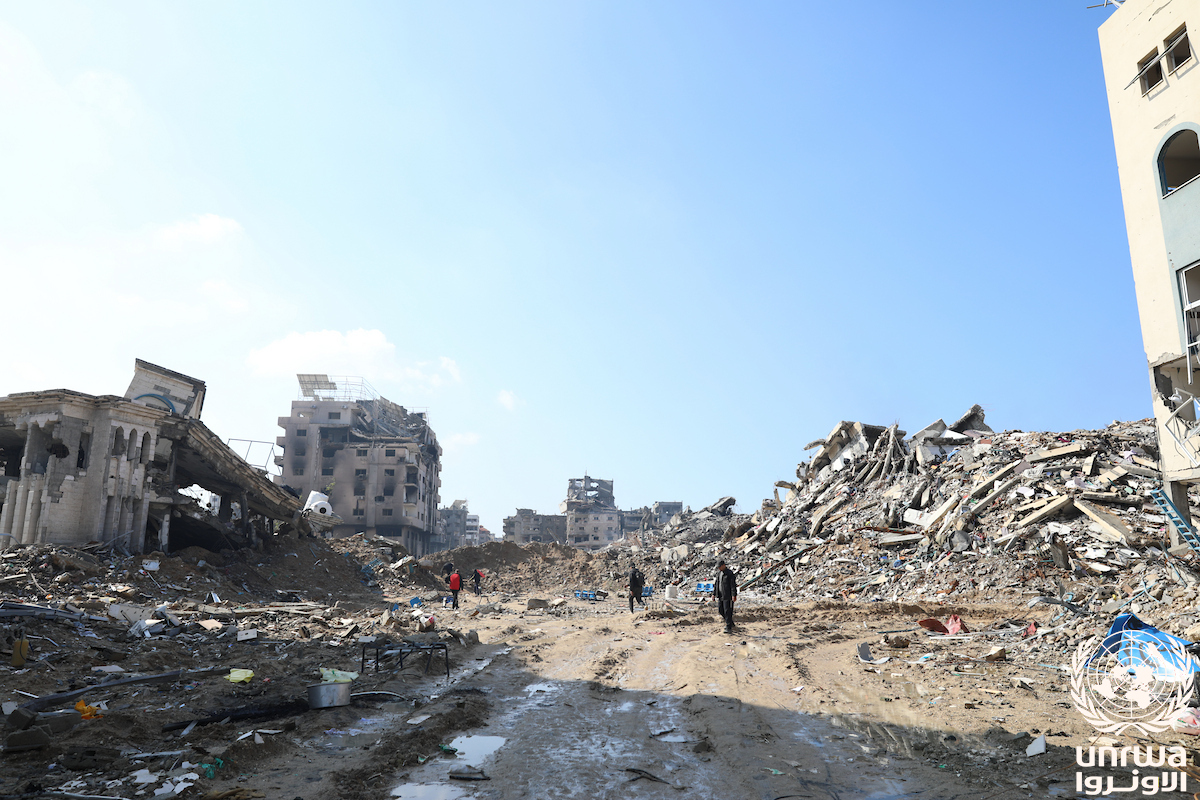
On Sept. 13, 2026, Israel carried out an airstrike on a civilian vehicle in the Tal al-Hawa neighborhood of Gaza City. According to Al Jazeera, at least two people were killed and 13 wounded in the strike.
A statement by the Israeli army said “two Hamas fighters” had been targeted. Images from the scene show the vehicle's roof and doors torn away.
The strikes of Sept. 9–10
Earlier, on the night of Sept. 9 into Sept. 10, four members of one family were killed in Beit Lahiya in northern Gaza: a husband, his wife and their two daughters, aged 12 and 8. The strike occurred near Kamal Adwan Hospital.
Those same days, shots were fired from a helicopter near the Jabalia camp, and three Palestinians were wounded in a drone strike in the al-Daraj neighborhood. The al-Haq Mosque west of the Nuseirat camp, the Nuseirat camp itself and the al-Mawasi area in Khan Younis were also struck.
The situation in hospitals
According to Gaza's Health Ministry, generators at a number of hospitals have stopped working because of shortages of fuel, oil and spare parts.
The fuel Israel has permitted to enter covers only emergency needs and is far below the 2,500 liters hospitals require each month.
— Gaza Health Ministry information (from Al Jazeera translation, 13.09.2026)
Al-Ahli Arab Hospital halted imaging services after its main generator failed for lack of fuel and spare parts.
By the numbers
- Sept. 13 strike: 2 killed, 13 wounded (Tal al-Hawa, Gaza City)
- Sept. 9–10, Beit Lahiya: 4 members of one family killed (daughters aged 12 and 8)
- Killed since Oct. 7, 2023: 73,669 people
- Wounded: 174,652 people
- Killed since the ceasefire agreement: more than 1,300
- Hospitals' monthly fuel requirement: 2,500 liters
The overall toll
According to local authorities, the number killed since Oct. 7, 2023, stands at 73,669, with 174,652 wounded. Women and children make up the bulk of those killed.
Since the ceasefire agreement that took effect in October 2025, more than 1,300 Palestinians have been killed in Israeli strikes.
Statements from the parties
Hamas accused Israel of violating the ceasefire agreement and of obstructing U.S. President Donald Trump's plan to end the war.
During a visit to Ireland, Donald Trump said “very little is happening now” in Gaza and that his administration had “done a great job.”
The status of the agreement
The U.S.-backed peace plan was signed on Oct. 9, 2025, and took effect on Oct. 10. The plan was to be implemented in stages: an exchange of hostages, expanded aid deliveries, disarmament and a phased withdrawal of Israeli forces.
On July 6, 2026, Hamas's civil administration in Gaza resigned. On July 31, an agreement on the disarmament of armed groups was announced; it was linked to progress in reconstruction and to the withdrawal of Israeli forces.
Context
In early September, two members of the Israeli government — National Security Minister Itamar Ben-Gvir and Defense Minister Israel Katz — announced plans concerning the displacement of Gaza's population. The U.S. State Department rejected any form of forced displacement.
The state of the health system
Hospitals in Gaza draw electricity mainly from diesel generators. The central power grid in the territory has been knocked out over the course of the war; the generators, in turn, depend on fuel, oil and spare parts.
A generator shutdown in practice halts the operation of intensive care units, ventilators, incubators, dialysis machines and imaging equipment. Al-Ahli Arab Hospital halted imaging services after its main generator failed.
An Al Jazeera correspondent reported a complete collapse under way in the health system.
Water and sanitation
Water contamination in Gaza has nearly tripled since January 2026. All five wastewater treatment plants in the territory are out of operation.
The flow of untreated wastewater into groundwater and the sea raises the risk of infectious disease outbreaks. International humanitarian organizations have noted this situation on several occasions.
How the data is compiled
Casualty figures are published by Gaza's Health Ministry. The data is compiled on the basis of bodies brought to hospitals and registered cases.
Those trapped under rubble are counted separately: an estimated 8,000 to 14,000 people are listed among the missing and are not included in the overall figure. The published indicator is therefore incomplete.
UN bodies and international organizations generally use this data; the Israeli side has treated the figures as disputed.
How the ceasefire is being violated
The agreement signed on Oct. 9, 2025, and in force since Oct. 10, formally remains in effect. In practice, however, strikes have not stopped: more than 1,300 Palestinians have been killed in Israeli strikes since the agreement took effect.
According to tallies published by Al Jazeera in November 2025, in the six months after the agreement took effect Israel opened fire on civilians 921 times, carried out 97 incursions into residential areas beyond the “yellow line,” bombed Gaza 1,109 times and destroyed property in 273 instances.
The “yellow line” is a notional line designated under the agreement as the limit of the Israeli forces' withdrawal. Areas on its far side were to pass to the control of the Palestinian administration.
The Israeli side's position
The Israeli army generally explains its strikes as targeting Hamas fighters or military infrastructure. In the case of the Sept. 13 strike as well, it said “two Hamas fighters” had been targeted.
The Palestinian side, for its part, notes that civilians are among the casualties. The ability of independent sources to verify each individual case is limited: access to Gaza for international media is under restrictions.
Regional and international reaction
The Shanghai Cooperation Organization declaration adopted in Bishkek on Sept. 1 stated that a comprehensive resolution of the Palestinian question is essential to stability in the Middle East.
The BRICS declaration adopted in New Delhi on Sept. 12–13 noted that violence has continued despite the October 2025 agreement; the document expressed support for Palestinian membership in the UN and for a two-state solution.
The aid delivery regime
Humanitarian aid and fuel deliveries to Gaza are carried out through crossing points controlled by Israel. The volumes admitted and the list of goods are determined by Israel.
According to the Health Ministry, the fuel permitted to enter covers only emergency needs and falls far below hospitals' monthly requirement of 2,500 liters. Deliveries of spare parts and oil are likewise restricted.
UN bodies and international nongovernmental organizations have noted on several occasions the need to increase the volume of aid.
The BRICS declaration adopted in New Delhi on Sept. 12–13 noted that violence has continued despite the October 2025 agreement.
International humanitarian organizations are documenting the severity of the situation in Gaza regarding water, electricity and medical supplies: all five wastewater treatment plants in the territory are out of operation, and water contamination has nearly tripled since January.