Israeli Ministers Unveil Plans to Displace Gaza's Population; U.S. Rejects Forced Displacement
National Security Minister Itamar Ben-Gvir presented a seven-year plan called “Separation 710.” Defense Minister Israel Katz called displacement “the only solution.” The U.S. State Department rejected forced displacement.
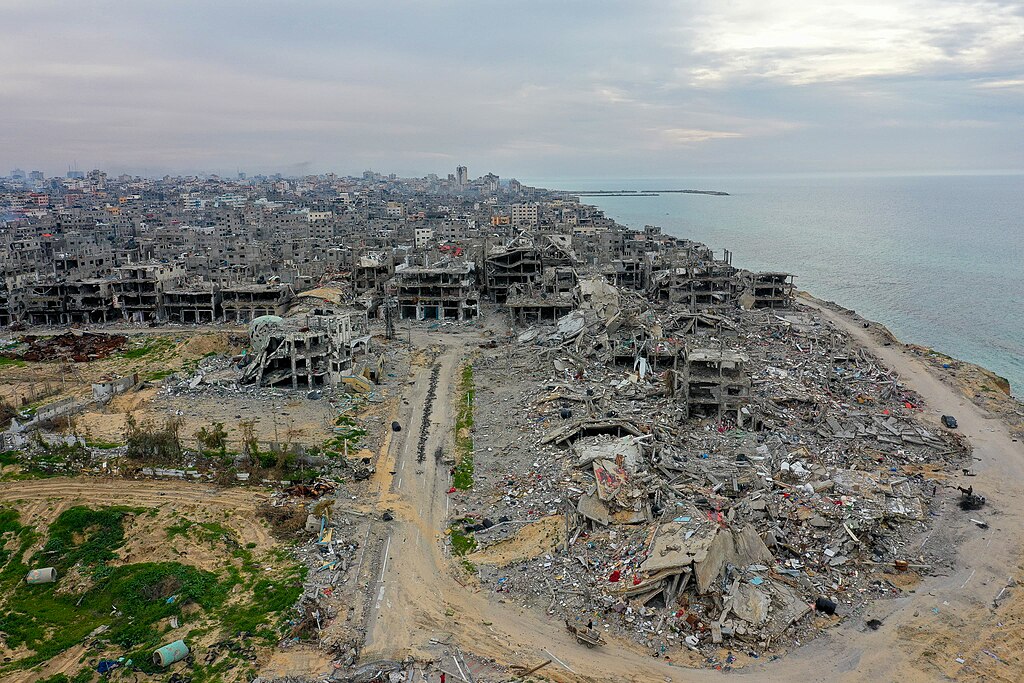
In early September 2026, two members of the Israeli government announced plans concerning the displacement of the Gaza Strip's population. Al Jazeera compiled the statements in a weekly review published Sept. 8.
The “Separation 710” plan
National Security Minister Itamar Ben-Gvir presented a seven-year plan called “Separation 710.” The plan envisions removing the roughly 2 million residents of Gaza through “voluntary emigration.”
Ben-Gvir said that if re-elected he would establish a Ministry of Migration to handle the removal of Palestinians.
The defense minister's statement
Israeli Defense Minister Israel Katz said removing Palestinians from Gaza is “the only solution.” He said Israel is prepared to carry this out “by sea, by air and by every possible means.”
The U.S. reaction
The U.S. State Department rejected any form of “forced displacement, expulsion or forcible transfer” of Gaza's population. The statement did not name the ministers directly.
By the numbers
- Duration of the “Separation 710” plan: 7 years
- Population covered: ~2 million people
- Killed since October 2023: 73,658 people
- Additional deaths since October 2025: more than 1,340
- Trapped under rubble: approximately 8,000–14,000 people
- Wastewater treatment plants out of operation: 5 of 5
The humanitarian situation
According to the Palestinian Health Ministry, the number killed since October 2023 stands at 73,658. More than 1,340 additional people have been killed since the ceasefire agreement took effect in October 2025.
By some estimates, roughly 8,000 to 14,000 Palestinians remain under rubble and are listed among the missing.
Water contamination in Gaza has nearly tripled since January. All five wastewater treatment plants in the territory are out of operation.
The West Bank
The review noted that the practice of demolishing homes in the West Bank is continuing. All 12 houses in the village of Khirbet al-Tabban were demolished. Deaths resulting from settler violence were recorded in the villages of al-Mughayyir and Hajja.
The ceasefire agreement
On Oct. 9, 2025, Israel and Hamas agreed to the first stage of a U.S.-backed peace plan; the agreement took effect on Oct. 10. It was the third ceasefire agreement of the war.
Although the agreement formally remains in force, strikes have not stopped. On July 6, 2026, Hamas's civil administration in Gaza resigned; on July 31, an agreement was announced on the disarmament of Hamas and other armed groups — a disarmament tied to the reconstruction process and to the withdrawal of Israeli forces.
The international law perspective
The forced displacement of a population from occupied territory is prohibited by the Fourth Geneva Convention. International law specialists and human rights organizations note that even where the term “voluntary emigration” is used, if people have no other choice, it constitutes forced displacement.
The Israeli government's official position is that emigration would be carried out on a voluntary basis.
Regional positions
Egypt and Jordan have repeatedly rejected the idea of admitting Palestinians onto their territory. The Arab League and the Organization of Islamic Cooperation have also taken positions against displacement plans.
The political backdrop in Israel
Itamar Ben-Gvir is Israel's national security minister and leader of the far-right Otzma Yehudit party. His statement specified that the plan would be implemented “if re-elected” — that is, the proposal was advanced in the context of an election platform.
Israel Katz is the defense minister. His statement was made within the framework of the government's military policy. Neither minister's proposal has been announced as an official decision of the Israeli government.
There is no single position on these proposals within Israel: different parties in the government and different security agencies approach the issue differently.
The U.S. position
The U.S. State Department rejected any form of forced displacement, expulsion or forcible transfer of Gaza's population. The statement did not name the ministers — a form of restraint from direct criticism of allied officials that is standard in diplomatic practice.
The United States is the principal mediator of the peace plan that took effect in October 2025. The plan was to be implemented in stages: an exchange of hostages, expanded humanitarian aid, the disarmament of armed groups and the withdrawal of Israeli forces.
The question of reconstruction
International discussions on Gaza's reconstruction are continuing. Much of the territory's housing stock, schools, hospitals and utility infrastructure has been destroyed.
On July 31, an agreement was announced on the disarmament of Hamas and other armed groups; it was tied to progress in reconstruction and to the withdrawal of Israeli forces. On July 6, Hamas's civil administration in Gaza had resigned.
Plans to displace the population run directly counter to the question of reconstruction: one approach envisions rebuilding the territory, the other removing its population.
The debate over the term “voluntary emigration”
Ben-Gvir's plan uses the term “voluntary emigration.” International law specialists and human rights organizations, commenting on the term, note that if living conditions have been rendered uninhabitable and no other choice exists, a decision to leave cannot be considered voluntary.
The Fourth Geneva Convention prohibits the forcible displacement of a civilian population from occupied territory. The statute of the International Criminal Court likewise defines the forcible transfer of a population as a crime against humanity.
The Israeli government's official position is that emigration would be carried out on a voluntary basis and does not constitute forced displacement.
The position of neighboring states
Egypt is the only Arab state bordering Gaza. Cairo has repeatedly rejected the idea of admitting Palestinians into the Sinai Peninsula; Egyptian officials have said such a step would be regarded as eliminating the Palestinian question altogether and as a threat to Egypt's security.
Jordan has a high share of residents of Palestinian origin; Amman has likewise maintained a position against further displacement. The Arab League and the Organization of Islamic Cooperation have adopted statements opposing displacement plans.
The situation in the West Bank
The Al Jazeera review noted that the practice of demolishing homes in the West Bank is continuing. All 12 houses in the village of Khirbet al-Tabban were demolished; deaths resulting from settler violence were recorded in the villages of al-Mughayyir and Hajja.
The West Bank is a territory separate from Gaza, where the Palestinian National Authority operates. Settlements in the territory are assessed as illegal under international law; Israel disputes that assessment.
The BRICS declaration adopted in New Delhi on Sept. 12–13 noted that violence has continued despite the October 2025 agreement and expressed support for Palestinian membership in the UN and for a two-state solution.
The SCO declaration adopted in Bishkek on Sept. 1 had stated that a comprehensive resolution of the Palestinian question is essential to stability in the Middle East.