The Uzbek diaspora in the USA: a history of how the community formed
From the first association in 1958 to today's "Little Uzbekistan" — the formation of the Uzbek and Central Asian community in the U.S.: Turkestani émigrés, Bukharan Jews, the DV-lottery wave, and settlement in Brooklyn. Facts, with dates.
The Uzbek diaspora in the United States formed in several waves and periods. Today Uzbekistan ranks first in the world for the number of winners in the DV (Green Card) lottery, and New York has a neighborhood known as "Little Uzbekistan." The following sets out the history of how this community formed, with dates, based on official and reputable sources.
The first association: 1958, Philadelphia
One of the first organizations representing immigrants from Central Asia — the Turkistanian American Association — was founded on 13 December 1958 in Philadelphia. It re-registered in New York in 1961, moved to Brooklyn in 1980, and to Dover, New Jersey, in 2007. It is described as the first non-governmental organization representing Central Asian immigrants in the U.S.
The 1980s: refugees of the Afghan war era
In the 1980s a wave of political refugees connected to the Soviet invasion of Afghanistan arrived; among them were Muslim Uzbeks, many of whom settled in Morris County, New Jersey.

Bukharan Jews — the largest distinct community
The largest distinct community from Central Asia in the U.S. is the Bukharan Jews. Their migration grew in the 1960s–70s, increased again after 1985 (as the border opened), and reached its largest wave in the 1990s after the 1991 Soviet collapse. In 1990, anti-Jewish riots in Andijan and the Fergana Valley pushed many to emigrate to Israel or the U.S.
By various estimates, about 70,000 Bukharan Jews live in the U.S.; the largest community is concentrated in the Queens borough of New York — in Rego Park, Forest Hills and Kew Gardens. RFE/RL estimated the Queens community at about 40,000 in 2001 (the second-largest in the world after Israel) and noted that more than 10,000 arrived in New York in the 1990s.
After 1991: independence and the DV lottery
After Uzbekistan gained independence in 1991, the U.S. became the main destination for Uzbek migration. The DV (Diversity Visa) lottery, created by the Immigration Act of 1990, became one of the main channels. According to the Department of State, 56,028 families from Uzbekistan won through the DV program in 1996–2016. (Because Uzbekistan was grouped with other former Soviet republics in statistics from 1991 to 1999, precise yearly figures for that period are limited.)
Growth was rapid: the number of Uzbeks arriving in the U.S. rose from 1,304 in 2007 to 3,716 in 2012 — nearly tripling; 2012–2013 are considered the historical peak. In recent years Uzbekistan has led the world in the DV lottery: about 5,564 people were selected for DV-2025 (announced 3 May 2025, first in the world). Today roughly 6,000–7,800 Uzbeks move to the U.S. each year.
"Little Uzbekistan," Brooklyn
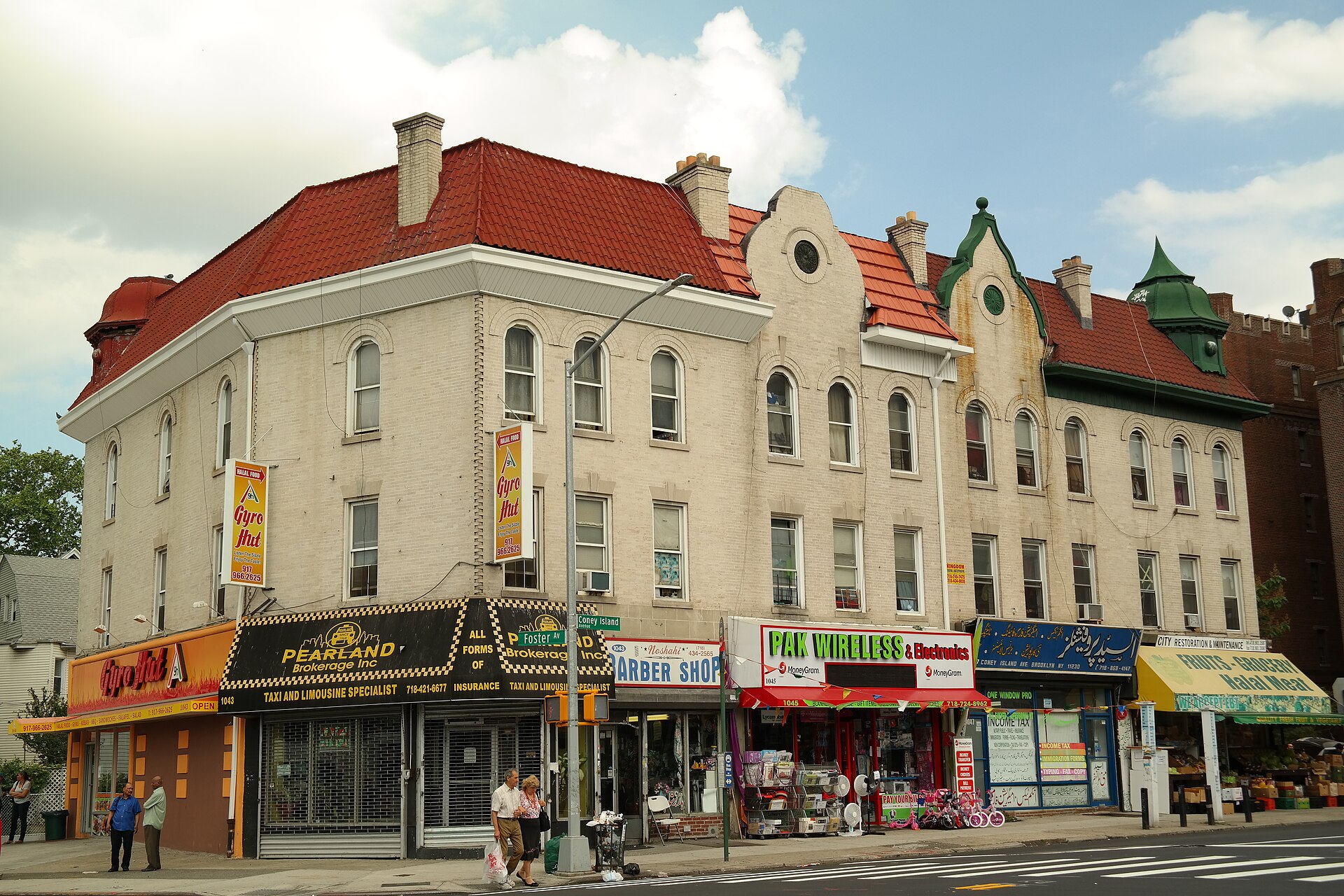
The main hub for Muslim Uzbeks is "Little Uzbekistan" in Brooklyn, at the meeting of the Kensington, Midwood and Ditmas Park neighborhoods, centered on Coney Island Avenue. Since the 2000s about 20,000 Uzbek Muslims who came through the DV lottery have settled in Brooklyn. According to 2013 Census data, there were about 23,000 Uzbek immigrants in New York — roughly double the figure of a decade earlier. Uzbek restaurants, shops and mosques opened along the avenue.
Population: the definition matters
The number of Uzbeks in the U.S. cannot be captured in a single figure — it depends on how they are counted. Per 2023 Census (ACS) data, about 25,000 identified as "Uzbek alone," about 55,000 when combined with another origin, while the number born in Uzbekistan was about 74,967 (2023). The last figure is larger because it also includes Bukharan Jews and ethnic Russians. The Pew Research Center notes that 2023 was the first year Uzbeks were counted separately in the statistics.
The overall picture
In summary, the Uzbek diaspora in the U.S. was very small before 1991 → grew to thousands in the 1990s, mainly Bukharan Jews arriving in Queens → surged in 2007–2012 thanks to the DV lottery → and by 2025 Uzbekistan had become first in the world in the DV lottery. That trajectory is the well-sourced through-line. Exact numbers vary by definition.

Sources
- Turkistanian American Association — founding (13 Dec 1958, Philadelphia) and moves
- RFE/RL — "U.S.: Bukharian Jews Seek To Preserve Identity" (18 April 2001)
- Pew Research Center — Uzbeks in the U.S. (2023 ACS analysis)
- U.S. Department of State, Bureau of Consular Affairs — DV winners from Uzbekistan (1996–2016: 56,028 families)
- Untapped New York — "Little Uzbekistan" Brooklyn and Uzbek migration growth 2007–2012
- Times of Central Asia — Uzbekistan #1 in DV-2025 selections