Collectivization and "dekulakization": the forced displacement of Uzbek peasants, 1929–1934
The Soviet collectivization that began in 1929 and the "dekulakization" policy (liquidating the kulaks as a class) led in the Uzbek SSR to the confiscation of land and property, the deportation of families and flight toward the border. This history article sets out the key dates, policies and consequences of the process on the basis of sources; disputed figures are flagged separately.
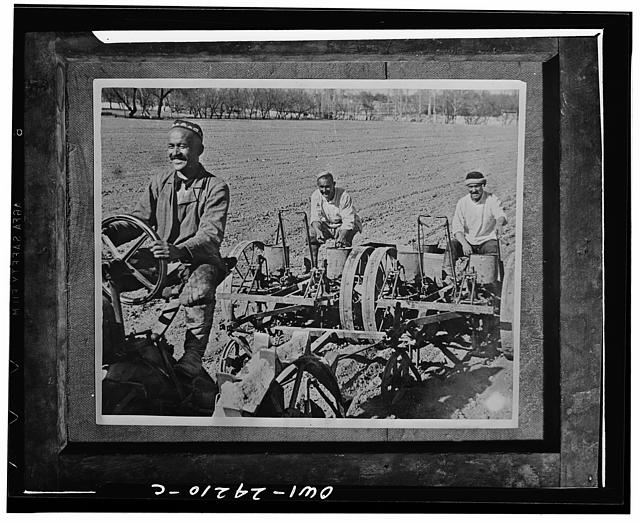
From the late 1920s into the early 1930s the Soviet Union carried out a policy of forced collectivization of agriculture (merging individual farms into collective and state farms). An inseparable part of this policy was "dekulakization" — the "liquidation as a class" of well-off peasants and landowners. In the Uzbek SSR this process involved the confiscation of land and property, the deportation of thousands of families and the flight of part of the population abroad, including to Afghanistan. What follows is set out solely on the basis of verified dates and sources.
The earlier stage: the land-and-water reform
The ground for collectivization in the Uzbek SSR was prepared by the land-and-water reform ("yer-suv islohoti") begun in 1925. Carried out in stages in 1925–1929, this reform transferred the land- and water-use rights of large landowners to the state and redistributed them to poor peasants. Researchers regard this reform as an early stage of the dekulakization that followed. (Source: journal Revolutionary Russia, Taylor & Francis.)
The key dates (1929–1933)
On 27 December 1929 Stalin publicly proclaimed the policy of the "liquidation of the kulaks as a class" (likvidatsiya kulachestva kak klassa). In December 1929 Akmal Ikramov became First Secretary of the Communist Party of Uzbekistan (until September 1937). On 5 January 1930 the Central Committee issued its decree "On the pace of collectivization and state assistance to collective-farm construction." The Politburo resolution of 30 January 1930 divided the kulaks into three categories and set deportation quotas; on 2 February 1930 an OGPU (state-security) order set in motion the arrests and relocations. On 8 May 1933 a secret instruction signed by Stalin and Molotov halted the mass deportations. (Sources: Communist Crimes; Rights in Russia; Dekulakization.)

"Kulak," "bay" and the three categories
In local conditions the Soviet "kulak" label was often applied to the "bay" — a large landowner — as well as to religious figures and those connected to waqf land; the category was defined politically and loosely. The resolution of 30 January 1930 divided kulaks into three categories: the first ("counter-revolutionary activists") — arrest, camp or execution; the second (the wealthiest) — deportation with their families to remote regions; the third — partial confiscation of property and resettlement within their own district. Those deported were called "special settlers" (spetspereselentsy) and were sent to the Northern Krai, the Urals, Siberia and Kazakhstan.
The figures (disputed)
Figures on the scale of deportation vary considerably across sources and must be treated as estimates. Across the whole Union, the resolution of 30 January 1930 set a quota of about 60,000 people for the first category and about 150,000 families for the second — these are Union-wide quotas, not figures for Uzbekistan. In total it is reported that across the entire Union 2.1–2.3 million people were deported as kulaks in 1930–1933, and, by the estimate of the historian Manfred Hildermeier, 530,000–600,000 people died in the deportation process (these are disputed estimates). Exact deportation figures specific to the Uzbek SSR are scarce and inconsistent in the sources, so they should be treated cautiously, as estimates. (Sources: Dekulakization; Communist Crimes; Population transfer in the Soviet Union.)
Cotton monoculture
Collectivization entrenched cotton monoculture in the Uzbek SSR: irrigated land was directed almost entirely to growing cotton. The republic supplied roughly 70 percent of the cotton grown in the Soviet Union. This dependence became one of the main drivers of the long-term environmental path that later led to the desiccation of the Aral Sea.
Consequences: forced sedentarization and flight
Alongside collectivization, nomadic and semi-nomadic pastoralists were forcibly settled, which wrecked the traditional herding economy. In neighboring Kazakhstan this policy caused a severe famine in 1931–1933, and refugees flowed into Uzbekistan and other republics. It should be stressed that the heaviest population loss from famine occurred not in the Uzbek SSR but mainly in Kazakhstan. In Uzbekistan there was plunder, confiscation of property and a sharp decline in living standards.
Flight to Afghanistan and the Basmachi
Forced collectivization drove part of the peasantry to flee abroad — especially across the southern border into Afghanistan, where a community of tens of thousands of Central Asian émigrés had already formed in the 1920s. This period is also linked to the movement of the Basmachi leader Ibrahim Bek, who staged raids into Uzbekistan and Tajikistan from Afghan territory (he was captured in 1931). Collectivization was one of the factors that reignited the wave of resistance.
Conclusion
The collectivization and dekulakization of 1929–1934 fundamentally transformed the countryside of the Uzbek SSR: individual farms were merged into collective farms, well-off peasants and religious figures were stripped of their property and deported, cotton monoculture was entrenched, and part of the population fled across the border. Exact figures for the process remain disputed to this day — Soviet archival data are incomplete and were shaped under political pressure — so in this article all large figures are given as estimates, with their source.

Sources
- Encyclopaedia Britannica — Dekulakization / Collectivization
- Communist Crimes — Brutal Crime against Rural Life: Collectivisation in the Soviet Union
- Rights in Russia — Remember the Date: Decree on Collectivisation, 5 January 1930
- Revolutionary Russia (Taylor & Francis) — Land-and-water reform in the Uzbek SSR (1924–1928)