What Remittances Are and Why They Matter: An Explainer for Uzbekistan
What a remittance is, the channels money moves through, the global scale, and the numbers for Uzbekistan (Central Bank and World Bank data) — a facts-based explainer.
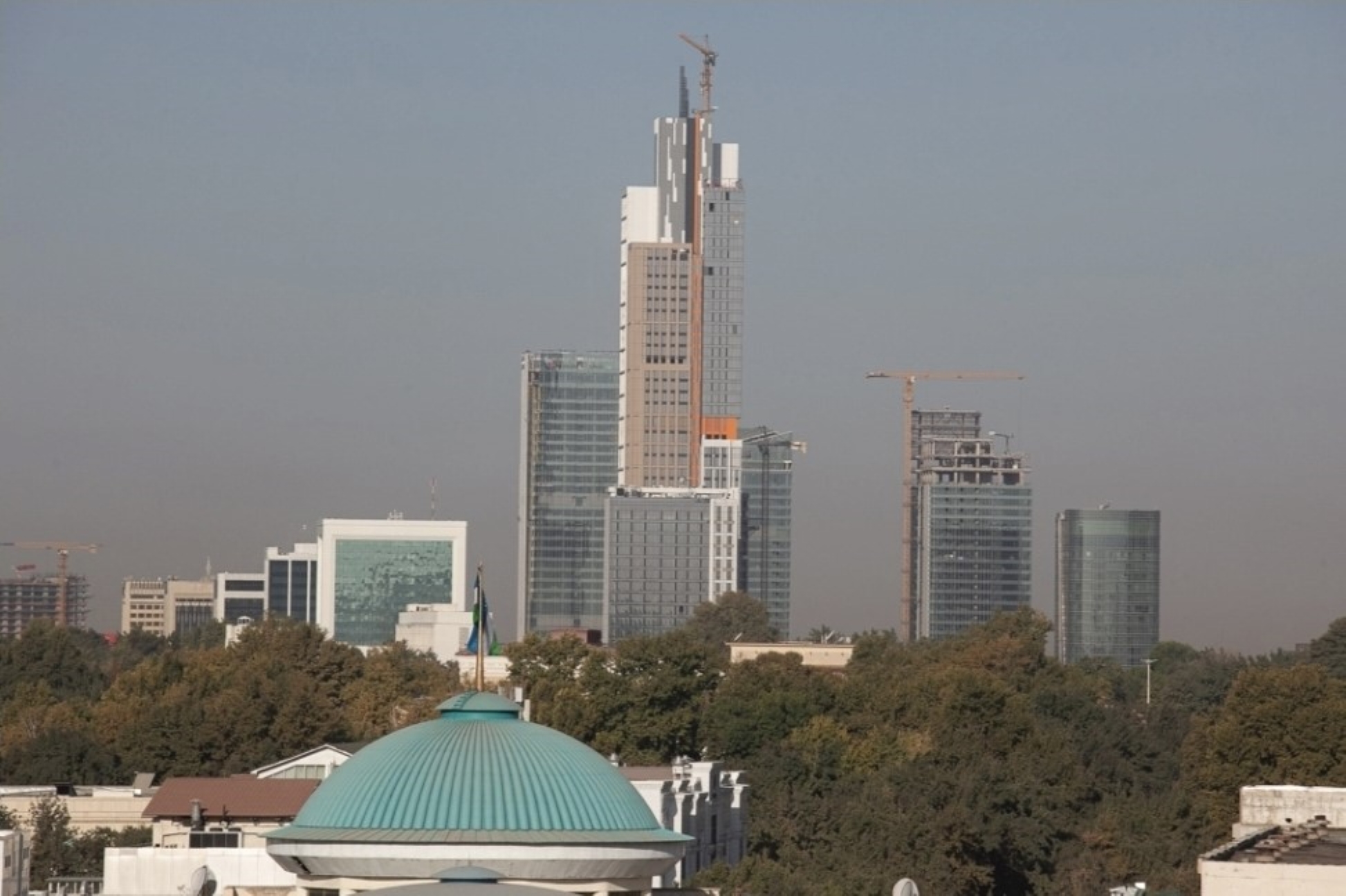
Remittances (pul o‘tkazmalari) are the money that migrants working abroad send back to their families at home. For Uzbekistan they are one of the economy's largest sources of foreign currency. The following sets out the concept, how it works, and the numbers for Uzbekistan — on a facts-only basis, from verified sources, without opinion.
What a remittance is
In international standards, “personal remittances” combine two things: personal transfers between resident and non-resident households, and compensation earned by workers employed abroad (net of taxes). Put simply, it is person-to-person money that reaches households. It differs from foreign direct investment (FDI) and official development assistance (ODA): FDI flows to firms and projects and ODA to governments and institutions, while remittances go directly to families.
Formal and informal channels
Money moves through formal channels — banks (SWIFT), dedicated transfer systems (e.g. Zolotaya Korona/KoronaPay, Western Union, MoneyGram), card-to-card and mobile apps. Informal channels — cash carried by hand or informal networks — are not captured in official statistics, so real flows may exceed the reported totals.

Why they matter: the global scale
According to the World Bank (KNOMAD), remittances to low- and middle-income countries reached an estimated $685 billion in 2024 — more than the foreign direct investment and official aid those countries receive combined. The largest recipients (2024) were India (~$129bn), Mexico (~$68bn), China (~$48bn), the Philippines (~$40bn) and Pakistan (~$33bn).
Uzbekistan: the numbers
According to the Central Bank of Uzbekistan's data on “cross-border money transfers of individuals,” transfers have risen sharply in recent years. The biggest jump came in 2022; the figure fell in 2023 and then rose again.
- 2020: ~$6.0 billion
- 2021: $8.1 billion
- 2022: $16.9 billion (a record, 2.1× the 2021 level)
- 2023: $11.4 billion (a decline)
- 2024: $14.8 billion (+29.8%)
- 2025: $18.9 billion (Central Bank data, a new record)
An important methodological note: the World Bank measures “personal remittances” under a balance-of-payments definition, while the Central Bank reports “cross-border transfers of individuals” — so the two sources' annual totals can differ. By the World Bank's estimate, remittances equalled about 21% of Uzbekistan's GDP in 2022, ~18% in 2023 and ~14% in 2024 — making Uzbekistan one of the world's most remittance-dependent economies.
Where it comes from
The main source is Russia, but its share is falling: from ~85% in 2022 to ~77% (~$11.5bn) in 2024. Other sources are rising: by Central Bank data, in 2024 the leading ones were Kazakhstan (~$795m), the USA (~$577m), South Korea (~$534m), Türkiye (~$405m) and the United Kingdom (~$135m). Exact shares shift quarter to quarter.
Number of migrants
According to the Migration Agency, at the end of 2023 there were just over 2 million Uzbek citizens abroad; by the end of 2024 this had fallen to ~1.35 million. Russian authorities (the MVD), however, counted ~1.8 million Uzbek migrants in Russia in September 2024. The gap reflects different counting methods (registered labor migrants vs. total presence).
How it is sent, and the cost
For transfers from Russia, the Zolotaya Korona (KoronaPay) system is one of the main rails (instant, no bank account needed), alongside bank transfers. Cost matters: by the World Bank, the global average cost of sending $200 was ~6.4% at the end of 2023 — double the UN Sustainable Development Goal target of 3%. But the Russia–Uzbekistan corridor is one of the cheapest in the world, already around or below 3%.
Risks and context
Heavy dependence on a single source (Russia, ~77%) makes flows sensitive to Russia's economy and the ruble's exchange rate. The World Bank attributed the 2023 decline partly to a weaker ruble, higher Russian inflation, the som's appreciation against the ruble, and fewer migrants in Russia. Because much is earned and sent in rubles, its value in dollars and som swings with the exchange rate.
Note
The above are verified statistical facts, not financial advice. Figures can differ by source (Central Bank vs. World Bank) and by period; each is attributed to its source.

Sources
- World Bank — Remittances Slowed in 2023, Expected to Grow Faster in 2024
- World Bank / KNOMAD — Migration and Development Brief (Dec 2024)
- World Bank Open Data — Personal remittances received (% of GDP), Uzbekistan
- Gazeta.uz — Remittances to Uzbekistan reach nearly $15 billion in 2024 (CBU)
- Kun.uz — Remittances to Uzbekistan exceed $18.9 billion
- Gazeta.uz — Labor migrant count (Migration Agency)
- World Bank — Remittance Prices Worldwide