How fasting in Ramadan works: rules, exemptions and fidya
Fasting in Ramadan (sawm) is one of the Five Pillars of Islam and is obligatory for able, adult Muslims. It runs from true dawn (subh) to sunset (maghrib). Below, the rules of the fast, who is exempt, and the make-up fast (qada), compensation (fidya) and expiation (kaffara) are explained using broadly accepted sources, primarily the Hanafi school. Where the legal schools differ, this is noted.
Fasting in the month of Ramadan is one of the most important acts of worship for Muslims. Below, what the fast is, how it is observed, who is obliged to keep it, and who may postpone it or make it up, is set out using broadly accepted religious sources. It leans on the Hanafi school, which predominates in Uzbek society; where the schools differ, that is noted.
What the fast is
Fasting in Ramadan (Arabic: sawm) is one of the Five Pillars of Islam and is obligatory (fard) on able, adult Muslims capable of fasting. Its basis is in the Qur'an, Surah Al-Baqarah 2:183–185: fasting is prescribed, as it was for those before, so that one may attain taqwa (God-consciousness).
When it is kept
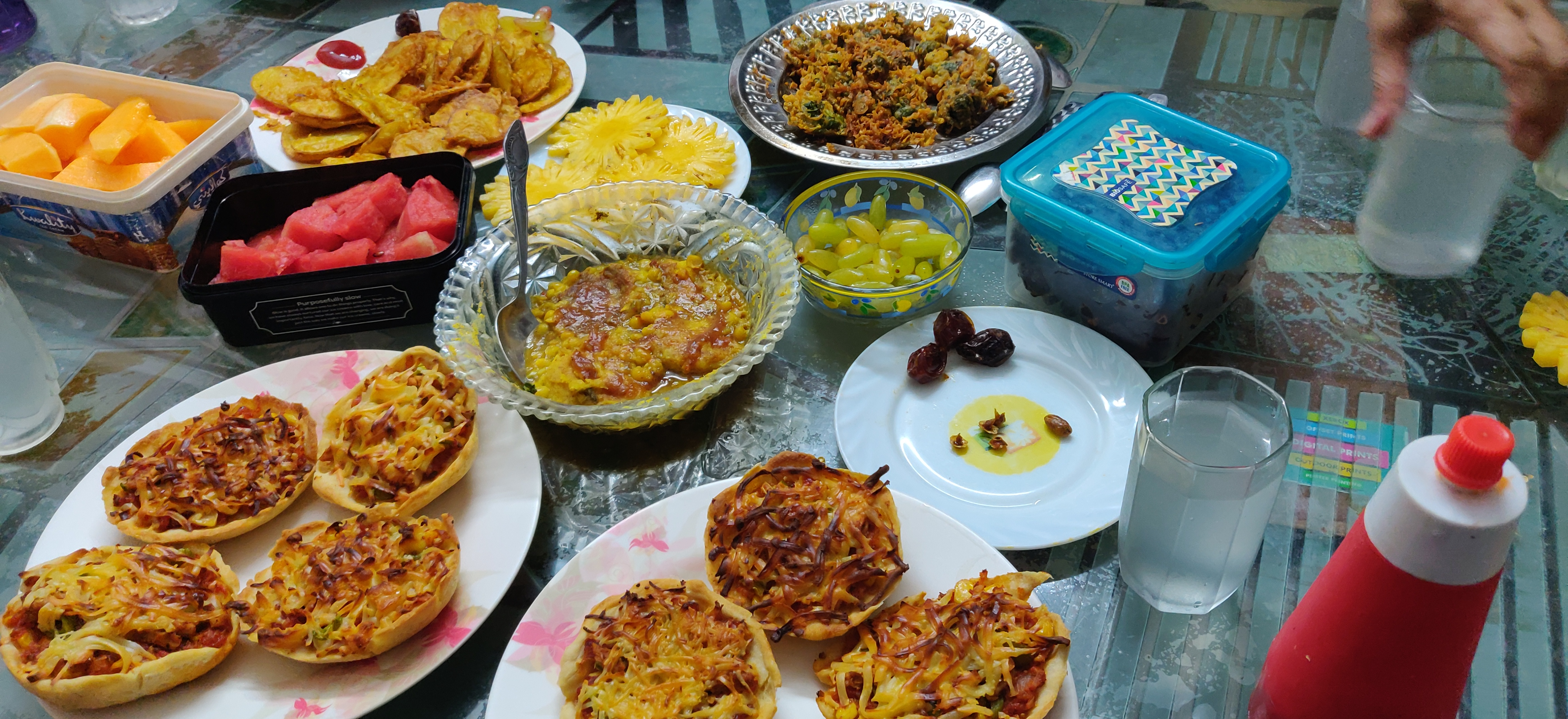
The fast is observed each day from true dawn (fajr/subh) to sunset (maghrib). A pre-dawn meal, suhur, is taken before dawn; at sunset the fast is broken with iftar, traditionally with dates. Ramadan is the 9th month of the Islamic lunar calendar; its start and end are set by sighting the new moon. Because the lunar year is shorter than the solar year, Ramadan moves about 10–11 days earlier each Gregorian year.

What breaks the fast
Deliberately eating, drinking, smoking or having sexual relations during fasting hours breaks the fast; deliberate vomiting also breaks it. Eating or drinking unintentionally, out of forgetfulness, does not break the fast according to the broadly held view.
Who may not fast or may postpone
Pre-pubescent children are not obliged to fast. The seriously ill — if fasting would worsen the illness or delay recovery — do not fast and make up the days later (qada). Travelers over the distance set by Shari'ah may defer and make up the days later. Pregnant and breastfeeding women — if fasting would harm mother or child — may defer and make up the days. Menstruating women do not fast and make up the days later. The elderly and those with a permanent, incurable illness who can never make up the days pay fidya instead of fasting.
Qada, fidya and kaffara
Qada is making up an equal number of missed days later. Fidya is feeding one needy person for each missed day, for those permanently unable to fast (for example, the chronically ill or very elderly). Kaffara is the heavier expiation due from someone who, having begun a fast, deliberately breaks it without a valid excuse (by eating, drinking or intercourse): in the Hanafi school this is 60 consecutive days of fasting, or, if unable, feeding 60 needy people. Note: if a person never began the Ramadan fast at all, only qada is due (though they are sinful), not kaffara.
Some differences between the schools
The schools differ on what triggers kaffara: in the Hanafi school it is due for deliberately breaking a fast one has begun by eating, drinking or intercourse; some other schools (e.g. Shafi'i) restrict the 60-day kaffara to breaking the fast specifically by intercourse. The figure of 60 days / 60 people, however, is agreed across the Sunni schools. The schools also differ on whether pregnant and breastfeeding women owe only qada, only fidya, or both.
The end of the month
Ramadan ends with Eid al-Fitr, on the 1st of Shawwal. Fasting on the day of Eid al-Fitr is prohibited.
