How to Protect Yourself From Fraud and Scams in the USA: the Traps That Target Immigrants
A reference guide grounded in official guidance from the Federal Trade Commission (FTC), the IRS, U.S. Citizenship and Immigration Services (USCIS), and the Social Security Administration (SSA). It explains government-impersonation calls, immigration and tax fraud, tech-support and phishing traps, and the payment red flags — how to spot them and where to report. This is a reference, not legal advice.
Newcomers to the USA are among the easiest targets for scammers. The reasons: language barriers, unfamiliarity with how US government agencies operate, and fear about immigration status. According to the Federal Trade Commission (FTC) and other official agencies, most scammers use the same handful of tactics, so anyone who knows the warning signs can protect themselves.
Why newcomers are targeted
Scammers rely on confusing and rushing their victims. A newcomer may not fully speak English, may not know which agency does what, and may worry about their status. Scammers exploit exactly that fear to keep you from taking time to think it through.
Scammers who pose as a government agency
According to the FTC, scammers may pose as an employee of the IRS, SSA, or an immigration agency. They may offer to "verify" your number or claim your Social Security number has been "suspended." Caller ID can be faked, so even if a government agency appears on your screen, it may be a scam. A real government agency will not call you demanding immediate payment or personal information.

Fraud in the name of the IRS (tax agency)
According to the IRS, the agency usually initiates contact by regular mail. The IRS does not contact you first by email, text, or social media to request personal or financial information, and it does not leave prerecorded, urgent, or threatening messages. If a caller threatens you with arrest, deportation, or revocation of a license, it is a scam. Report such calls to phishing@irs.gov and to the Treasury Inspector General for Tax Administration (TIGTA).
Fraud in the name of the SSA (Social Security)
According to the SSA Office of the Inspector General (OIG), Social Security will never threaten, scare, or pressure you into taking immediate action. No real government employee will send photos of badges or credentials, ask for gift cards, gold, cryptocurrency, wire transfers, or cash, or threaten arrest. A letter or email saying your number will be "suspended due to criminal activity" is a scam. To protect yourself, create a "my Social Security" account at ssa.gov.
Immigration services and "notario" fraud
According to USCIS, in the United States a "notario publico" is not authorized to provide immigration legal services. While in some countries a "notario" is a specially credentialed lawyer, in the US a notary public is not an attorney and cannot represent you in immigration matters. Only a licensed attorney or an accredited representative from a Department of Justice (DOJ)-recognized organization can give you legal advice and represent you in your case.
How to find legitimate help
Per USCIS guidance, you can verify an attorney's license through the American Bar Association (ABA) or your state bar association, and verify an accredited representative through the Executive Office for Immigration Review (EOIR) roster. Be wary of anyone who "guarantees" a result or promises to speed up your case. uscis.gov is the only official site; beware fake sites that look affiliated with USCIS and charge fees, and make sure the web address ends in .gov.
Tech-support and phishing traps
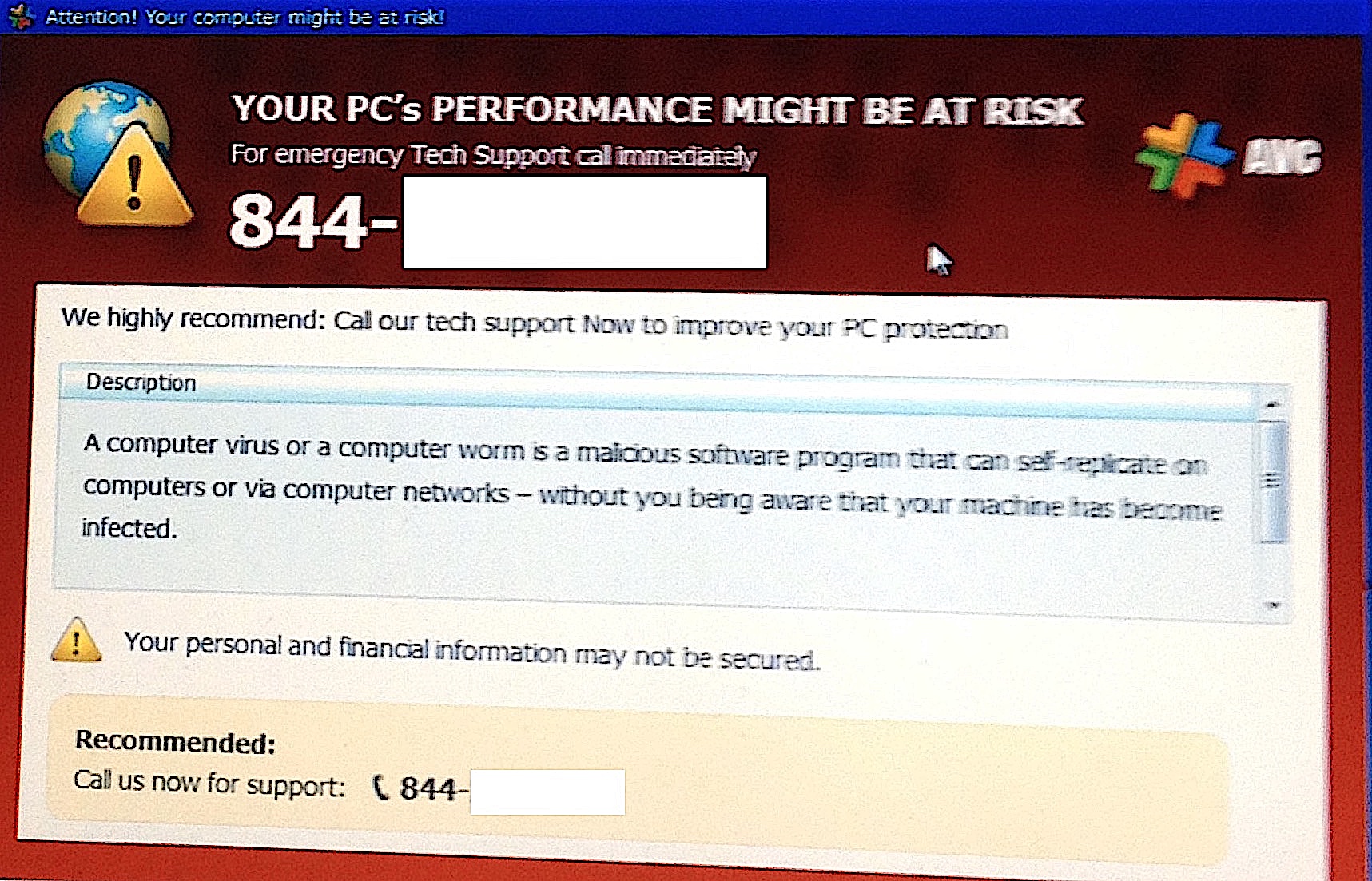
According to the FTC, urgent pop-up windows warning that your computer is "at risk" and telling you to call a number are a sign of a tech-support scam. Real tech companies' security warnings never ask you to call a phone number. Do not click the link in such a window or call the number. Likewise, never give out a password or payment details through links in an email or text (phishing and smishing).
The payment method — the most important red flag
According to the FTC, scammers ask to be paid in ways that are hard to trace and hard to reverse: gift cards, wire transfer, a payment app, or cryptocurrency. No real business or government agency will demand gift-card numbers (such as Google Play or Apple) or payment in cryptocurrency. If someone demands one of these methods and tells you to "keep it secret," it is always a scam.
How to verify
According to official agencies, when you get an unexpected call, text, email, or letter, pause and think "scam first." Do not trust a number the caller gives you. Instead, contact the agency yourself through the number on its official website (such as irs.gov, ssa.gov, uscis.gov) or on an official document, and verify the information.
Protecting your documents and data
According to SSA OIG guidance, do not give your Social Security number (SSN) to anyone who contacts you first, no matter how routine the request sounds. Guard your SSN, A-number, passwords, and personal data carefully. Turning on two-factor authentication (2FA) on your official accounts adds another layer of protection.
If you have been scammed — where to report
Report the scam to the FTC at ReportFraud.ftc.gov. For online fraud, file a complaint with the FBI's Internet Crime Complaint Center at ic3.gov. If your identity has been stolen, report it at IdentityTheft.gov and get a recovery plan. Report immigration scams to USCIS — doing so will not affect your application or case. Additionally, report directly to the relevant agency (IRS, SSA).

Sources
- FTC — How To Avoid a Government Impersonation Scam
- FTC — How To Avoid Imposter Scams
- FTC — Shutting down tech support scams
- FTC — Avoiding and Reporting Gift Card Scams
- IRS — Knowing how scammers pose as the IRS
- IRS — Beware of scammers posing as the IRS
- USCIS — Common Scams (notario fraud)
- USCIS — Legal Services
- USCIS — Report Immigration Scams
- SSA OIG — New Wave of Imposter Scams
- SSA OIG — Protect Your Social Security Number
- FBI IC3 — Internet Crime Complaint Center
- FTC — IdentityTheft.gov