W-2 employee vs. 1099 independent contractor: worker status in the U.S.
When you work in the U.S. you are either an "employee" (W-2) or an "independent contractor" (1099) — a difference that fundamentally changes your taxes, benefits, and legal protections. This reference explains the IRS control test, Forms W-2 and 1099-NEC, FICA and self-employment tax (15.3%), quarterly taxes, worker protections, and misclassification — strictly on the basis of official sources: the IRS, SSA, and Department of Labor (DOL). This is general information, not tax or legal advice.
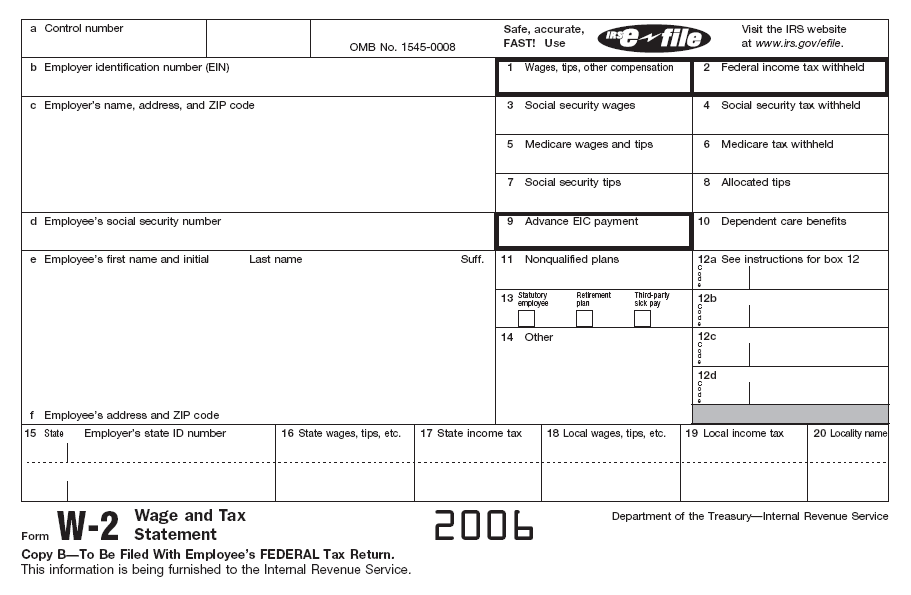
When you work for pay in the U.S. you are in one of two statuses: an "employee," who receives a W-2 form at year's end; or an "independent contractor," that is, a self-employed person, who receives a 1099-NEC form for payments of $600 or more. This difference fundamentally changes your taxes, benefits, and legal protections. This reference explains the general rules strictly on the basis of official sources — the U.S. Internal Revenue Service (IRS), the Social Security Administration (SSA), and the Department of Labor (DOL). It is not tax or legal advice; figures and rules change.
The core difference: who controls the work
The IRS determines worker status through a "common-law" control test and weighs three categories together: behavioral control (does the business have the right to direct what work is done and how — instructions, training), financial control (expenses, the worker's own investment, how they are paid, the ability to make a profit or loss), and the relationship of the parties (a written contract, employee-type benefits such as paid leave, the permanency of the relationship, whether the work is a key part of the business). No single factor decides it — the entire relationship and the degree of control are assessed. An employee gets a W-2; a true independent contractor gets a 1099-NEC.
Forms W-2 and 1099-NEC
The W-2 (Wage and Tax Statement) is the form an employer gives each employee; it reports wages and the taxes withheld (including Social Security and Medicare taxes). The 1099-NEC (Nonemployee Compensation) is the form a business gives a nonemployee it paid $600 or more for services during the year. The 1099-NEC replaced box 7 of the old 1099-MISC form beginning with tax year 2020. Both forms share the same deadline: the payer files them with the IRS and furnishes them to the recipient by January 31 of the following year.

Taxes: FICA and self-employment tax
For an employee, the employer withholds income tax and the employee's share of FICA from wages. FICA = Social Security 6.2% + Medicare 1.45% = 7.65% from the employee, and the employer pays the same again — another 7.65%, for 15.3% in total. An independent contractor has nothing withheld — they pay the full self-employment tax themselves, that is 15.3% (12.4% Social Security + 2.9% Medicare). Social Security tax applies only up to the annual wage "base" ($184,500 in 2026); Medicare tax has no such upper limit — it applies to all earnings.
Quarterly taxes and filing
An employee's tax is withheld automatically from wages; an independent contractor's is not. For that reason a contractor who expects to owe $1,000 or more in tax for the year generally must make quarterly estimated tax payments (using Form 1040-ES). A contractor reports income and business expenses on Schedule C (Form 1040); one-half of the self-employment tax is deducted when figuring taxable income.
Benefits and legal protection
The difference in protection is large. The U.S. Fair Labor Standards Act (FLSA) — protections such as the minimum wage and overtime pay — applies only where there is an employment relationship; an independent contractor is considered to be in business for themselves and is not covered by the FLSA. Employees usually have unemployment insurance, workers' compensation, and employer benefits (health insurance, a retirement plan, paid leave); independent contractors generally do not.
Misclassification
Treating a person who is actually an employee as an independent contractor is misclassification and is against the law. As the DOL notes, merely issuing a 1099 or signing an "independent contractor agreement" does not automatically make someone a contractor. Either the worker or the business may file Form SS-8 to ask the IRS for an official determination of status. A misclassified worker can use Form 8919 to compute and pay only their own share of the Social Security and Medicare taxes that were not withheld; a business that misclassified can be held liable for employment taxes.
A note for immigrants
Both statuses require valid work authorization to work legally. A person authorized to work uses a Social Security Number (SSN); an ITIN is only a tax number for people who cannot get an SSN but must pay tax, and it does not by itself grant the right to work or any immigration status. Most importantly: income is taxable and must be reported whether or not a W-2 or 1099 form was issued — not receiving a form does not remove the duty to report the income.
Note
This text is general information and does not replace tax or legal advice. Tax rates, thresholds, and rules change each year, and every case is unique. For specific advice it is recommended to consult a licensed tax professional (a CPA or enrolled agent) or an attorney.

Sources
- IRS — Independent contractor (self-employed) or employee? (umumiy huquq nazorat testi, SS-8, 8919)
- IRS — Self-employment tax (Social Security and Medicare taxes) (SE soliq 15,3%)
- IRS — Form 1099-NEC and independent contractors (600$ chegarasi, 31-yanvar, 2020-yil o'zgarishi)
- SSA — Contribution and Benefit Base (2026-yil ish haqi bazasi 184 500$)
- U.S. Department of Labor (WHD) — Misclassification under the FLSA (FLSA himoyasi, noto'g'ri tasniflash)