The Basmachi movement and the exodus (1918–1934): Turkestan's resistance and the flight to Afghanistan
The Basmachi were an armed movement that fought Soviet rule across Turkestan and Bukhara from 1918 into the early 1930s. Their defeat drove tens of thousands of fighters and civilians across the Amu Darya into Afghanistan, forming Central Asian émigré communities. This history explainer sets out the movement and the migration it caused on the basis of sources, with contested figures clearly flagged.
The Basmachi movement was an armed resistance against Soviet-Bolshevik rule in Turkestan (especially the Fergana Valley) and eastern Bukhara, lasting from 1918 into the mid-1930s. Historians regard it as the most important movement of opposition to Soviet rule in Central Asia. Below the events are set out as sourced facts only; points where sources differ are flagged separately.
The term "Basmachi"
The word "Basmachi" derives from the Turkic root "basmaq" (to raid, to attack) and was used pejoratively by Russian and Soviet sources against the rebels, meaning "bandit, raider." The rebels themselves did not accept this name; their fighting bands were formed under field commanders called "qurbashi" (qo'rboshi).
Origins: the Kokand Autonomy, 1918
Most sources identify the immediate trigger as the Red Army's destruction of the city of Kokand and the short-lived Kokand (Turkestan) Autonomy in February 1918. The capture and sacking of Kokand set off a mass uprising in the Fergana Valley. The death toll in the sacking of Kokand is cited by some estimates as up to 25,000 — a figure that appears in the sources but is estimated and contested.

Leaders
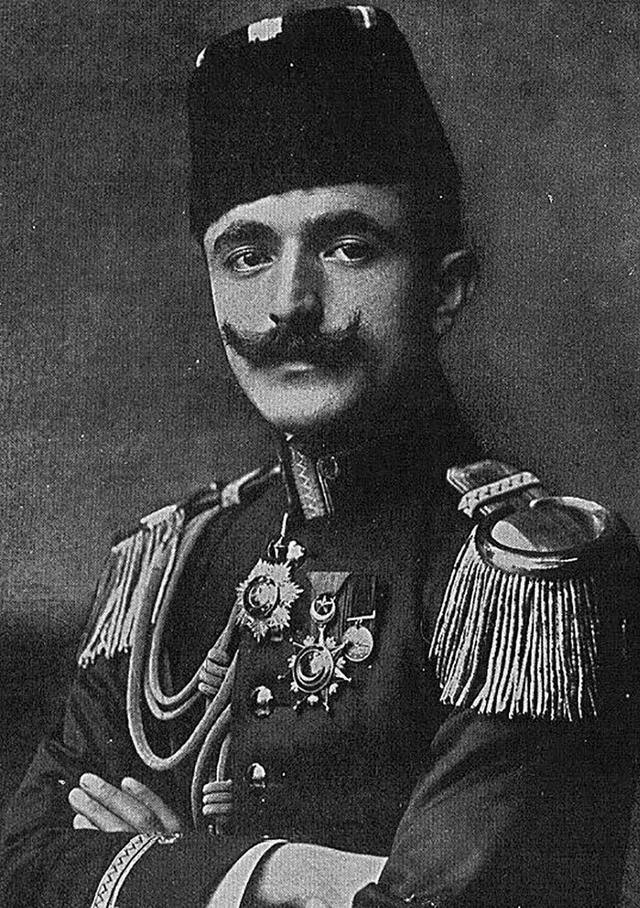
Madamin-bek was one of the most influential qurbashi in Fergana; in 1919 he formed a temporary alliance with Russian peasant settlers, then defected to the Soviet side around March 1920. Enver Pasha — the former Ottoman war minister — came to Bukhara in November 1921 and, instead of suppressing the revolt on the Bolshevik side, defected to the Basmachi and became their supreme commander; at one point he is said to have commanded around 16,000 fighters. Enver Pasha was killed on 4 August 1922; although he died in what is now Tajikistan, sources give the exact place differently (near Baljuan or near Dushanbe).
Ibrahim Bek (Ibrahim Laqay), a qurbashi of the Laqay Uzbeks of eastern Bukhara, crossed into Afghanistan in 1926 after Red Army blows and ran cross-border raids for several years. He returned to Soviet territory in 1931, was captured, and was executed that year (31 August).
Timeline
The movement's roots reach back to the 1916 Turkestan revolt. The abolition of the Kokand Autonomy in February 1918 set off the Fergana uprising. Its peak fell in 1920–1922 (Enver Pasha's command in 1921–1922). In most of Central Asia the movement largely subsided by 1926, but sporadic cross-border resistance continued into the early 1930s. The last major fighting was in October 1933, and the movement is considered to have ended by 1934.
The exodus across the Amu Darya
The suppression of the movement drove tens of thousands of fighters and civilians — together with their families — across the Amu Darya into Afghanistan; smaller flows went to Iran and to China's Eastern Turkestan (Xinjiang). In this way Central Asian émigré (muhojir) communities formed in northern Afghanistan. According to figures compiled by the historian Kamoliddin Abdullaev, by 1925–1926 the number of émigrés from Central Asia in Afghanistan was about 479,855 (including Turkmens, Uzbeks, Tajiks and Kyrgyz); these figures are estimates based on Soviet-era counts.
A second wave during collectivization
The largest early wave of flight took place in 1920–1926, during the struggle against Bolshevik power. Later, the Soviet collectivization and "dekulakization" of 1929–1932 produced a new, second wave of flight. In one documented example cited by Abdullaev, thousands of people (roughly a thousand families) crossed from the Soviet bank into Afghanistan in a single night at the Chubek crossing on 30 March 1931.
Conclusion and legacy
The Basmachi movement and its defeat were a major turning point in Central Asian history: they laid the basis for the émigré communities of Uzbeks and other Turkestan peoples that spread over decades to Afghanistan, Iran, Turkey and other countries. These communities later became an important part of diaspora history.
