The Bukharan émigrés: the Uzbek diaspora in Turkey and Saudi Arabia
The fall of the Emirate of Bukhara in 1920, the Basmachi movement and Soviet policy drove thousands of Central Asians into exile — via Afghanistan — to the Hijaz (Saudi Arabia) and Turkey. The formation of the "Turkistani"/"Bukhari" communities, with dates and sources.
Today's Uzbek diaspora is not only post-independence labor migration. Long before it — from the 1920s — the fall of the Emirate of Bukhara, the suppression of the Basmachi movement and Soviet anti-religious policy drove thousands of Central Asians to leave their homeland and emigrate, via Afghanistan, to the Hijaz (today's Saudi Arabia) and to Turkey. This article sets out the formation of these historical "émigré" (muhajir) communities, with dates, based on scholarly and reference sources.
The fall of the Emirate of Bukhara
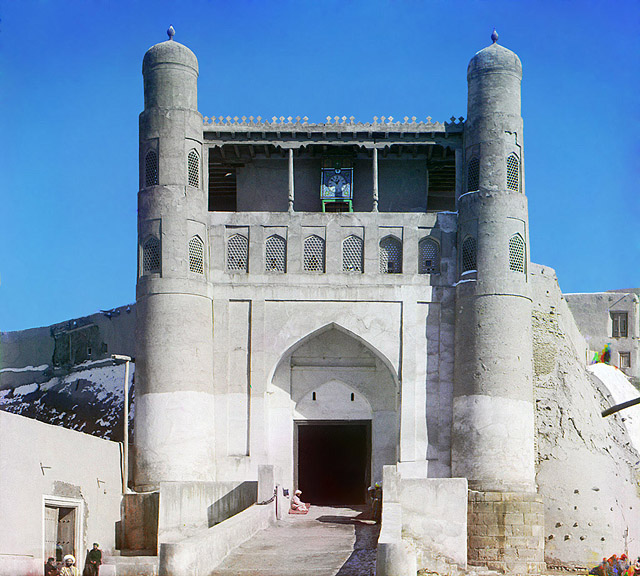
The last emir, Sayyid Alim Khan (Said Mir Muhammad Alim Khan, born 1880), reigned from 1911 to 1920. On 2 September 1920 the Red Army under Mikhail Frunze attacked Bukhara, and after several days of fighting the Ark citadel fell. The emir fled first toward eastern Bukhara (present-day Tajikistan), then to Kabul, Afghanistan, where he died on 28 April 1944.
The Basmachi movement and the waves of refugees
The armed resistance to Soviet rule — the Basmachi movement — lasted roughly from 1918 to the early 1930s; at its peak (1920–1922) the rebels are estimated at 20,000–30,000, fighting collectivization from bases in Afghanistan. According to scholarly sources, between 1917 and 1926 about 480,000 Tajiks, Uzbeks, Turkmens, Kazakhs and Kyrgyz left Central Asia, mostly for Afghanistan. The causes were the nationalization of land, the closure of mosques, madrasas and waqfs, the abolition of sharia courts and the hujum (unveiling) campaign.

To Saudi Arabia (the Hijaz)
From Afghanistan and along the pilgrimage routes, some of the émigrés moved on to the Hijaz — Mecca, Medina, Jeddah and Taif. In waves from the 1930s to the 1950s–1960s a "Turkistani"/"Bukhari" community took shape, with a further influx in the 1980s. Scholarship documents the "Bukhariyya" quarter of Medina (Hayy/Shari' al-Bukhariyya) as a real neighborhood associated with these émigrés.
To Turkey (Istanbul, Zeytinburnu)
In Turkey, Central Asian (Turkistani) émigrés formed communities over the 20th century in the Zeytinburnu district of Istanbul, as well as in Kayseri, İzmir and Ankara. Documented later waves: in 1981 many Afghan-Uzbek refugees in Pakistan moved to Turkey to join the existing communities; in 1982–1983 Turkey resettled about 3,000–4,000 Afghan refugees of Turkic origin (Turkmen, Kyrgyz, Uzbek, Hazara), first near Lake Van and later toward Istanbul. Precise figures for the early period (1920s–1930s) in Turkey are not firmly documented; the reliable numbers relate to the 1981–1983 waves.
Calling themselves "Turkistani" or "Bukhari"
Many émigrés called themselves not "Uzbek" or "Tajik" but "Turkistani" or "Bukhari" — because those names were familiar and respected abroad, especially in Saudi Arabia ("Bukhari" evoked Bukhara, home of the great hadith scholar Imam al-Bukhari). On arrival (1930s–1960s) they often presented themselves as religious émigrés (muhajirun), which improved their chances of acceptance.
The size of the community today
The exact size of the community today is unknown — there is no reliable census, and estimates vary. The Uzbek diaspora in Turkey is put at about 70,000 (a figure that may combine historical émigrés with later arrivals). Estimates for Saudi Arabia range widely — from 300,000 (around 2009) up to 1 million; these are approximate. A historical data point: in 1909 there were about 20,000 Turkic people in Mecca (about 13% of the city).
A note
This article is based on facts from scholarly and reference sources. Important distinctions: the Muslim "Bukhariyya" quarter of Medina should not be confused with the "Bukharan Quarter" of Jerusalem (a Bukharan Jewish neighborhood founded in the 1890s); and in Saudi Arabia the term "Turkistani" sometimes also refers to Uyghurs. Sources: Cambridge/IJMES ("Hijra from the Russian Empire and the Soviet Union"), the studies of Bayram Balci (REMI), Encyclopedia.com (Basmachi), Wikipedia ("Sayyid Mir Muhammad Alim Khan," "Uzbeks in Turkey") and Cultural Survival.

Sources
- Cambridge / IJMES — "Hijra from the Russian Empire and the Soviet Union" (~480,000 fled 1917–1926; routes to the Hijaz; Bukhariyya quarter)
- Bayram Balci — "The Uzbek Community in Saudi Arabia between Assimilation and Renewed Identity" (REMI, 2003)
- Wikipedia — Sayyid Mir Muhammad Alim Khan (reign 1911–1920; Bukhara falls 2 Sept 1920; d. 28 April 1944, Kabul)
- Encyclopedia.com — Basmachi movement (1918–early 1930s; 20,000–30,000 rebels at peak)
- Wikipedia — Uzbeks in Turkey (Zeytinburnu, Kayseri, İzmir, Ankara; 1981 Pakistan→Turkey move; ~70,000)
- Cultural Survival — "Afghanistan's Kirghiz in Turkey" (1982–1983 resettlement of Turkic-origin Afghan refugees)