Bukharan students sent to Germany (1922): the Jadids' dream of knowledge, and the purge
In 1922 the government of the Bukharan People's Soviet Republic sent a group of young people to Germany for higher education. In all, about 70 students from Bukhara and Turkestan were sent to Germany; roughly 56 of them were from Bukhara, and 44 were placed in Berlin schools that summer. The initiative is linked mainly to the education minister (later prime minister) Abdurauf Fitrat. After the republic was abolished in 1924 the students were recalled; in the 1930s purges many were shot or exiled as "nationalists" or under "foreign influence," while some remained abroad as émigrés. History — documented facts only.
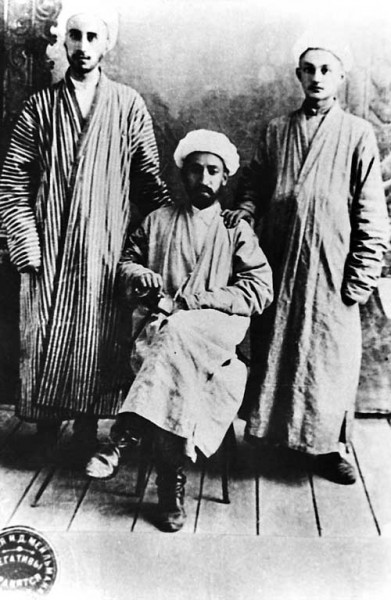
The year 1922 holds a special place in the history of Uzbek enlightenment: that year a group of young people from Bukhara were sent to Germany for higher education. It was the practical expression of the Jadids' dream of raising the country with modern knowledge. The following tells this story on documented facts only.
Background: the Bukharan People's Soviet Republic
In September 1920 the Emirate of Bukhara was overthrown and the Bukharan People's Soviet Republic (BPSR) was proclaimed in its place. Its leadership was strongly influenced by the Jadids — reformist, enlightenment forces. One of the new government's hardest problems was the absence of modern specialists, engineers and doctors. Hence the idea of sending students abroad to train its own cadres.
1922: the road to Germany
In 1922 the BPSR government decided to send a group of young people to study in Germany. According to the sources, about 70 students in all were sent from Bukhara and Turkestan; roughly 56 of them were from Bukhara, and 44 were placed in Berlin educational institutions that summer. The students studied in various fields — agriculture, textiles, chemistry, electrotechnics, mining, medicine, pedagogy and philosophy.

Fitrat and the initiators
The initiative to send youth abroad is largely associated with the education minister — later chairman of the BPSR Council of Ministers (prime minister) — Abdurauf Fitrat. Fitrat favored modernizing the education system and introducing secular sciences. Figures such as Muso Saidjonov were also among the initiators of sending and supporting the students; a "Koʻmak" (Help) society was formed to support them.
The first Uzbek women to study abroad
The group also included two women — Xayriniso Majidxonova and Maryam Sultonmurodova. They are counted among the first Uzbek women to receive higher education abroad. Xayriniso studied in a medical field in Germany, and Maryam studied journalism and German literature.
The republic abolished, the students recalled
In 1924 the national-territorial delimitation abolished the BPSR, and Bukhara's territory was incorporated mainly into the Uzbek SSR. By the end of the 1920s the students in Germany were gradually recalled home. Most returned with knowledge and modern professions, but the political situation had changed fundamentally.
The purge: execution and exile
During the mass repressions of the 1930s, having studied in Germany became an accusation for many: they were jailed as "nationalists" or "elements under foreign influence." Xayriniso Majidxonova was shot on 9 October 1938 (rehabilitated in 1999). Maryam Sultonmurodova was arrested in 1937, sentenced to 10 years in 1939, re-arrested in 1949 and exiled to Krasnoyarsk, and rehabilitated only in 1957. The initiator Abdurauf Fitrat himself also fell victim to the purge in 1938.
Those who stayed in emigration
Once it became clear that returning was dangerous, some of the students remained in Germany and Europe and chose the life of an émigré. In this way the 1922 study journey also became part of the history of Uzbek political emigration — among the traces of Turkestan's enlighteners in the West. In diaspora history this event forms a tragic chapter where knowledge and repression are intertwined.
Why it still matters today
In the years of independence these students' names were restored, the victims of repression were rehabilitated, and their fates began to be studied. The 1922 journey to Germany is remembered as one of the first serious attempts to connect Uzbek youth to world scholarship — a memory of both enlightenment and loss.

Sources
- Bukharan People's Soviet Republic — education reform, students sent to Germany (Abdurauf Fitrat)
- Abdurauf Fitrat — biography (education minister, 1938 repression)
- Kun.uz — Germaniyada oʻqigani uchun qatagʻon qilingan oʻzbek ayollari (Xayriniso Majidxonova, Maryam Sultonmurodova)
- Dov B. Yaroshevski — "Bukharan Students in Germany, 1922–1925" (Bamberger Zentralasienstudien)