Bukharan Jews: a history of migration to Israel and the USA
The Bukharan Jews are an ancient Central Asian Jewish community that formed around Bukhara and Samarkand and speaks Bukhori (Judeo-Tajik), a Persian dialect. This piece traces the community's life under the Emirate of Bukhara, the changes after the 1868 Russian conquest, the founding of the “Bukharan Quarter” in Jerusalem in the 1890s, Soviet-era suppression and — above all — the mass migration of the 1970s and after 1991 to Israel (the largest center) and the USA, especially Queens, New York. All population figures are estimates.
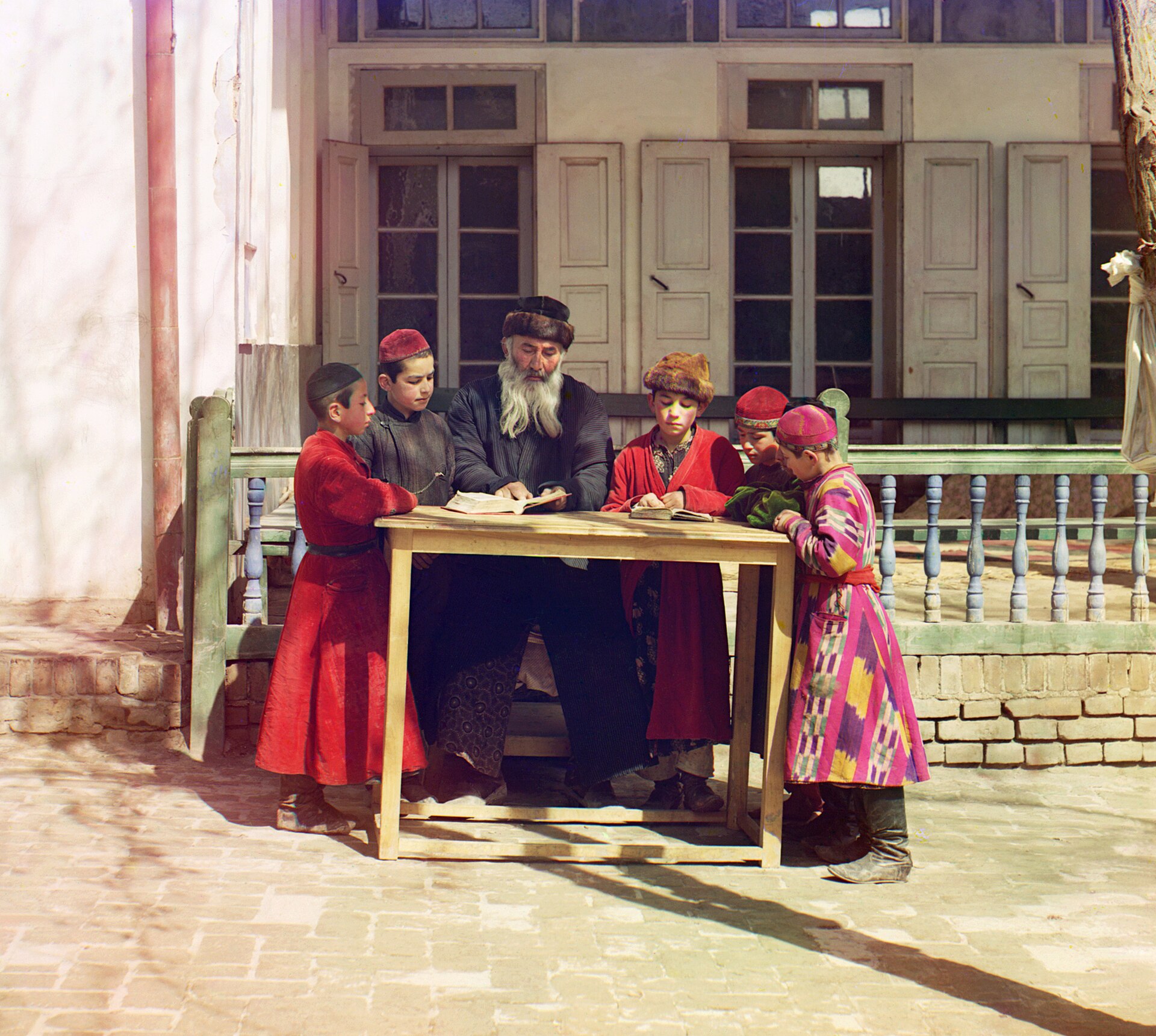
The Bukharan Jews are one of Central Asia's oldest ethno-religious groups, living historically around Bukhara and Samarkand (the former Emirate of Bukhara). They are a branch of Persian-speaking Jewry, culturally close to the Jews of Iran and Afghanistan. Below, the community's history and its migration as a diaspora to Israel and the USA are set out with facts (sources: Jewish Virtual Library, My Jewish Learning, Encyclopedia.com). Population figures are estimates that vary by source.
Language and ancient roots
The community speaks Bukhori, a Tajik-Persian dialect incorporating Hebrew and Aramaic words, traditionally written in Hebrew script. By tradition their roots trace to Jews who remained in the region after the Persian period; a continuous Jewish presence in Central Asian cities (Balkh, Merv, Khwarezm) is attested by the 8th–9th centuries CE. The first specific mention of a Bukharan Jewish community dates to 1240.
Life under the Emirate
In the Emirate of Bukhara, Jews held “dhimmi” (protected non-believer) status, lived in a separate mahalla (Jewish quarter), and faced a range of restrictions — such as distinctive dress and certain rules. In 1793, Rabbi Yosef Maimon (Maman), who arrived from the Maghreb, led the community to adopt Sephardic religious practice, which had a lasting effect on its religious life.

The Russian conquest and early migration
Russia took Tashkent in 1865 and conquered Turkestan in 1868, when Samarkand passed into Russian Turkestan; the city of Bukhara itself remained a protectorate under the emir for roughly another 50 years. Under the new conditions, freedom of movement and trade expanded; the Trans-Caspian railway (1880–1905) ended the region's isolation. It was in this period — from about 1872 — that Jews began migrating to Ottoman-ruled Palestine (Jerusalem).
The “Bukharan Quarter” in Jerusalem
In 1890, representatives of the Bukhara, Samarkand and Tashkent communities formed a Hovevei Zion association in Jerusalem; in 1891 they purchased land and chartered the Bukharan Quarter (Sh'hunat HaBucharim); the first structure, the Moussaieff Synagogue, was completed in 1894. At the time this was one of Jerusalem's most affluent Jewish neighborhoods. By World War I, about 8% of Bukhara-born Jews (roughly 1,500 people) had moved to Jerusalem.
The Soviet period
After the Soviet authorities redrew Central Asia in 1924, creating Uzbekistan and Tajikistan, the regime suppressed religion: synagogues and schools were closed, and Judeo-Tajik publications were banned between 1926 and 1940, while assimilation intensified. Emigration was largely blocked in this period. During a brief opening of the Soviet emigration gate in 1972–1975, about 8,000 people moved to Israel.
The mass migration after 1991
After the collapse of the Soviet Union, mass migration to Israel and the USA (and to Europe and Australia) accelerated. By some estimates, by 1993 about half of the ~50,000 Bukharan Jews of Uzbekistan and Tajikistan had left, and between 1989 and 2002 more than 90% of Uzbekistan's Jews departed. Today only a few hundred remain in Uzbekistan.
The USA: Queens, New York
In the U.S., the community concentrated in the Queens borough of New York — in Forest Hills, Rego Park and Kew Gardens; 108th Street is nicknamed “Bukharian Broadway.” New York is home to a Bukharian Jewish Community Center, the Bukharian Times newspaper, and the Bukharian Jewish Congress. The community has preserved its language, cuisine, and musical traditions.
Population (estimates)
There is no exact census, and figures vary by source. The largest center is Israel (~125,000–160,000, estimated); in the USA there are ~70,000–75,000, of whom about 50,000 are in the New York/Queens area (estimated). Worldwide totals cited range from about ~150,000–200,000 up to ~300,000–350,000 depending on the source. All of these are estimates, not a single census count.
