Dispute Over Iran Sanctions at the UN Security Council: An 11-to-2 Vote
The Council discussed the work of the 1737 Committee on Sept. 10. Russia and China voted against the agenda. On Sept. 8, Britain introduced legislation imposing new sectoral restrictions on Iran.
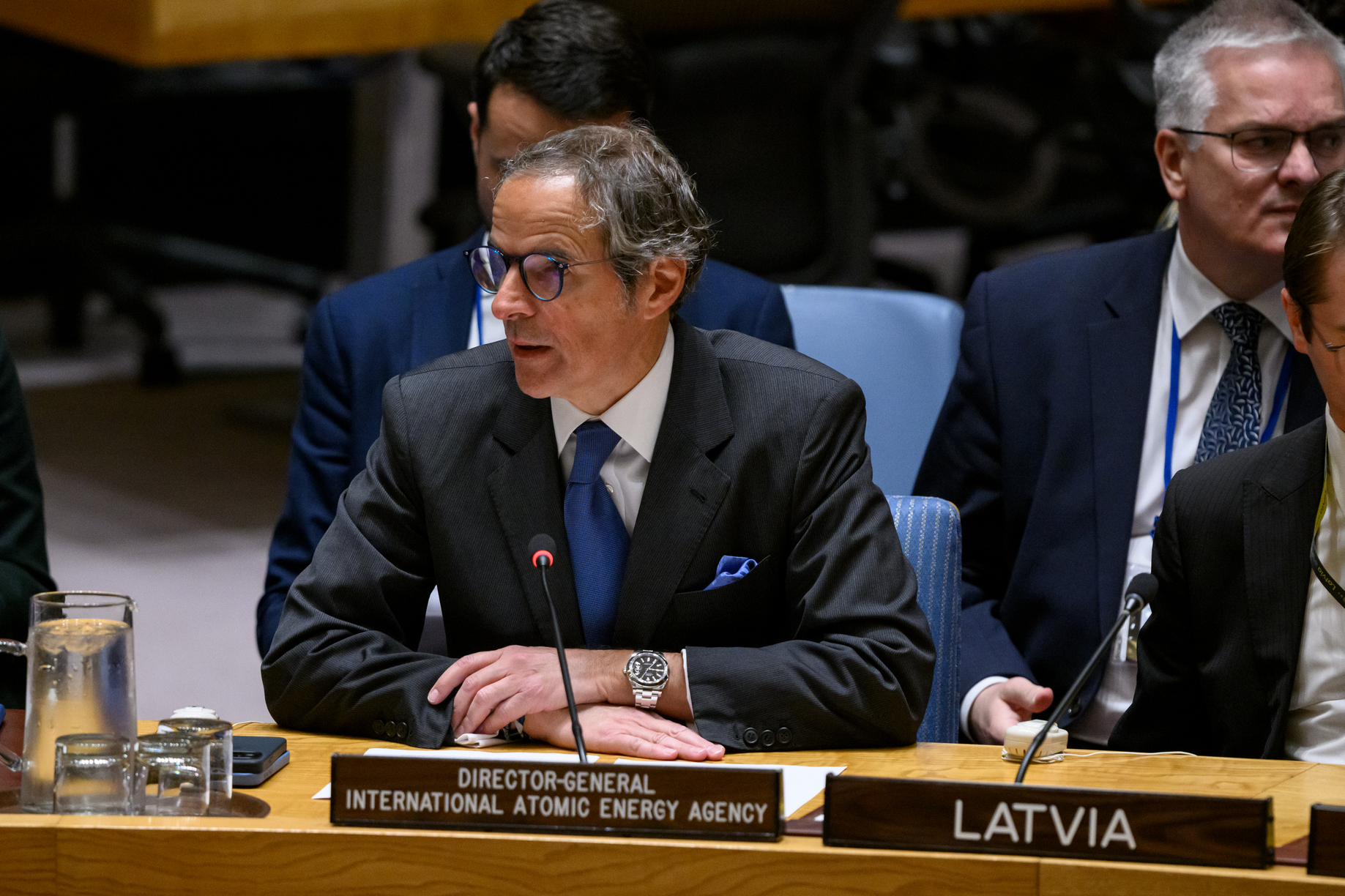
On Sept. 10, 2026, the UN Security Council discussed the work of the 1737 sanctions committee on Iran's nuclear program. The session was recorded as the Council's 10,218th meeting.
The meeting's agenda was adopted through a procedural vote: 11 members voted in favor, while Russia and China voted against; Somalia and Pakistan abstained.
The substance of the dispute
Council members cannot agree on whether sanctions relating to Iran's nuclear program have been reinstated. The dispute began in 2025: in August of that year, France, Germany and Britain triggered the automatic reinstatement mechanism known as “snapback.”
On the basis of that mechanism, Resolution 1737 (2006) and other restrictions are considered to have come back into force on Sept. 27, 2025.
China and Russia object to the legal and procedural basis of the three countries' action and hold that all sanctions were entirely lifted on Oct. 18, 2025 — the date on which the Joint Comprehensive Plan of Action (JCPOA) and Resolution 2231 expired.
Statements
Facts are facts. The 1737 Committee exists.
— Representative of the United States, UN Security Council (from UN Press Service translation, 10.09.2026)
Iran has chosen the path of nuclear escalation.
— Representative of the United Kingdom, UN Security Council (from UN Press Service translation, 10.09.2026)
Russia will not allow the Security Council to adopt any decision legitimizing claims that sanctions have been reinstated.
— Representative of the Russian Federation, UN Security Council (from UN Press Service translation, 10.09.2026)
The representative of France, who chaired the meeting, noted that Iran has halted cooperation with the International Atomic Energy Agency (IAEA). The Chinese representative pointed to the U.S. withdrawal from the agreement and to military action as the principal causes of the escalation.
By the numbers
- Meeting date: Sept. 10, 2026 (10,218th meeting)
- Procedural vote: 11 in favor, 2 against (Russia, China), 2 abstentions (Somalia, Pakistan)
- Snapback triggered: August 2025 (France, Germany, Britain)
- Date sanctions considered reinstated: Sept. 27, 2025
- Russian and Chinese position: all restrictions ended Oct. 18, 2025
- New British restrictions: Sept. 8, 2026
- Stockpile of uranium enriched to 60%: more than 400 kg
Nuclear program indicators
According to international assessments, Iran has accumulated more than 400 kilograms of uranium enriched to 60 percent. Iran is the only country without nuclear weapons that is enriching uranium to this level.
At the meeting, the French representative said the volume of highly enriched uranium accumulated in Iran is enough material to build ten explosive nuclear devices. The U.S. representative said the IAEA is unable to verify the status of nuclear materials in Iran.
British restrictions
On Sept. 8, the British government introduced in Parliament the “Iran (Sanctions) (Amendment) Regulations 2026,” imposing additional sectoral restrictions on Iran.
A ministerial statement on the instrument was published the same day. The specific sectors covered and the scope of the restrictions are set out in the text of the instrument.
Context
The JCPOA — an agreement providing for the phased lifting of sanctions in exchange for limits on Iran's nuclear program — was signed in 2015. The United States withdrew from the agreement in 2018 and reinstated sanctions.
In February 2026, the United States and Israel launched large-scale airstrikes on Iranian territory; Iran's supreme leader, Ali Khamenei, was killed in those strikes. Iran subsequently halted cooperation with the IAEA.
How the “snapback” mechanism works
“Snapback” is a mechanism written into the Joint Comprehensive Plan of Action (JCPOA) signed in 2015 and into UN Security Council Resolution 2231, which endorsed it. Its essence is that if one of the agreement's participants considers Iran to be failing to meet its obligations, the previous sanctions are automatically reinstated without a veto being applied in the Council.
The mechanism was designed precisely to circumvent the veto problem: normally, imposing new sanctions in the Security Council requires that no permanent member object. Under snapback, the reverse applies — halting the process requires the adoption of a new resolution.
France, Germany and Britain triggered this mechanism in August 2025. When the 30-day period expired, it was announced on Sept. 27 that the previous resolutions — including Resolution 1737 — had come back into force.
Two legal interpretations
Russia and China argue that the three countries had no right to trigger snapback. Their argument is that Resolution 2231 and the JCPOA expired on Oct. 18, 2025; consequently, no sanctions remain in force after that date.
The three countries and the states supporting them maintain that snapback was triggered before expiry, while the resolution was still in force, and that the reinstated restrictions therefore apply. On their reading, only the provisions of Resolution 2231 concerning the suspension of sanctions have expired.
In practice, these two interpretations create two different situations within the UN system: questions remain open as to who funds the work of the sanctions committee and the panel of experts, who receives the reports and what obligations member states are to fulfill.
Cooperation with the IAEA
The International Atomic Energy Agency is the only international body with authority to monitor Iran's nuclear facilities. The agency's inspectors measure enriched uranium stockpiles and keep account of the movement of materials.
At the meeting, the French representative noted that Iran has halted cooperation with the agency. The U.S. representative said the agency is unable to confirm the status of nuclear materials in Iran. With monitoring suspended, estimates of stockpile volumes rest on indirect information.
The balance of forces on the Council
The UN Security Council consists of 15 members: five permanent members — the United States, Britain, France, Russia and China — and ten members elected to two-year terms. The permanent members' veto does not apply to votes on procedural matters, which is why the opposing votes of Russia and China could not block adoption of the agenda.
Somalia and Pakistan abstained in the Sept. 10 vote. Pakistan borders Iran and is a member of the Shanghai Cooperation Organization; the declaration adopted in Bishkek on Sept. 1 had condemned military strikes against Iran.
Substantive decisions — that is, the adoption of new resolutions — require at least nine votes and the absence of a veto by permanent members. Given the current balance of forces, the adoption of a new resolution on Iran is unlikely.
The practical effect of the sanctions
Resolution 1737 and related instruments provide for asset freezes, travel restrictions and bans on technology supplies with respect to individuals and organizations connected to Iran's nuclear and missile programs.
In practice, however, the greatest effect on Iran's economy comes from unilateral U.S. sanctions: they cover oil exports, banking operations and dollar settlements. These restrictions are applied on the basis of national legislation, separately from UN resolutions.
The instrument Britain introduced in Parliament on Sept. 8 likewise concerns national-level restrictions and operates separately from the UN mechanism.
What it means for Central Asia
Iran is one of the alternative routes to the sea for Central Asian states. Part of the goods from Uzbekistan, Turkmenistan and Kazakhstan reaches Persian Gulf ports through Iranian territory.
The sanctions regime complicates banking settlements and insurance along this route. For that reason, the region's states are paying increasing attention to the Middle Corridor — the route running through the Caspian Sea, Azerbaijan, Georgia and Turkey.
The SCO declaration adopted in Bishkek on Sept. 1 condemned the military strikes against Iran and set out a position against unilateral sanctions. The declaration was signed by the leaders of China, Russia, India, Pakistan and the Central Asian states.
The dispute in the Security Council continues; as matters stand, no single position has formed on the legal status of the 1737 Committee's work.