Mass Attack on Kyiv: 5 Killed, 142 Drones and 31 Missiles Shot Down
The Sept. 8 attack on Ukraine's capital came after the end of a three-day pause that followed visits by U.S. envoys Steve Witkoff and Jared Kushner. According to Klitschko, 30 people were wounded.
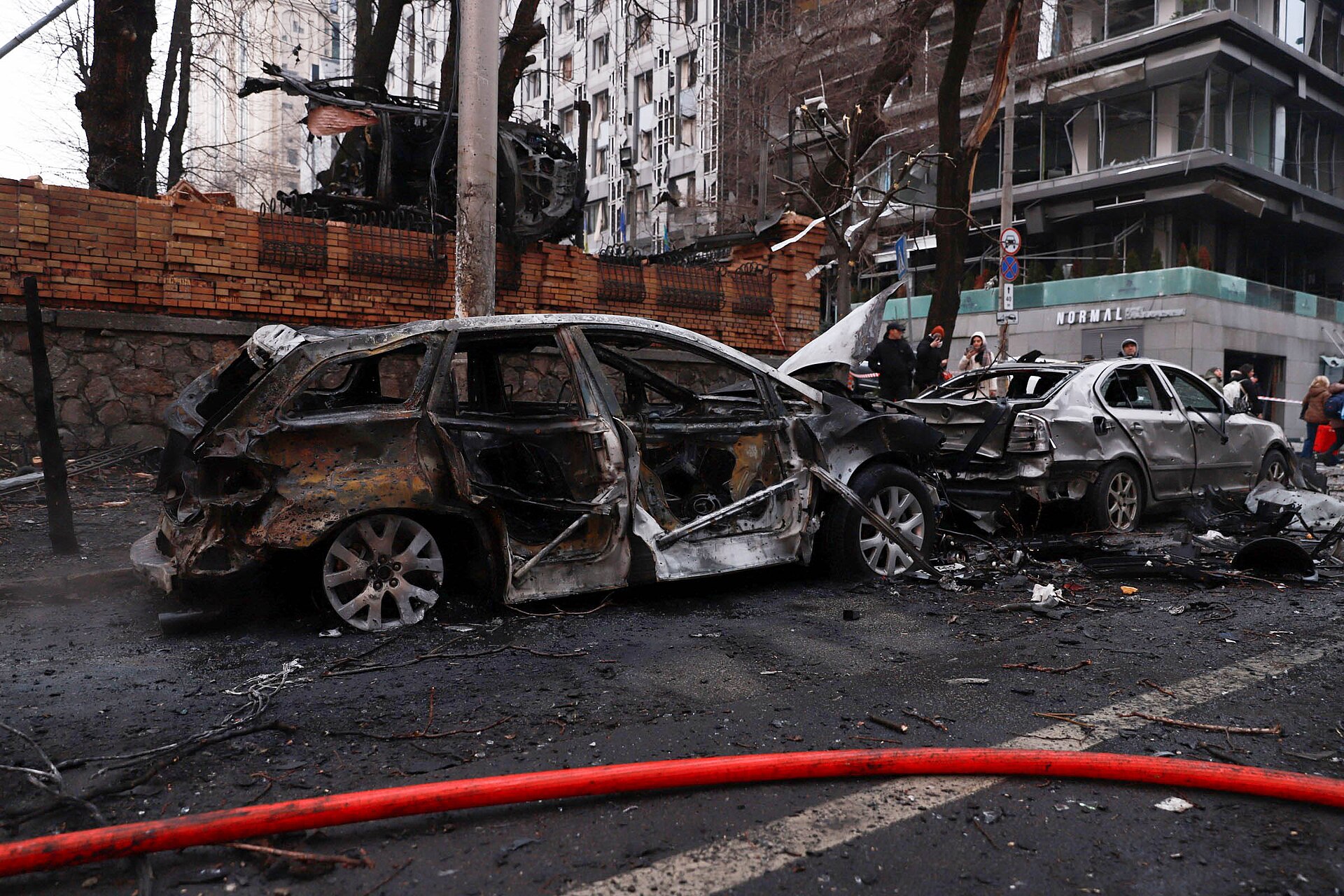
At least five people were killed and 30 wounded in an air attack on the Ukrainian capital, Kyiv, on Sept. 8, 2026. The city's mayor, Vitali Klitschko, reported the figures.
Strikes were recorded in several districts of the city — Darnytskyi, Holosiivskyi and Podilskyi. Drones also came down in areas on the capital's outskirts. One drone partly destroyed a television station building in Kyiv.
Air defense results
According to Ukraine's Air Force, 142 drones and 31 of 32 cruise missiles were shot down during the attack.
The three-day pause
The attack came after the end of a three-day pause. The pause was connected to visits to Moscow and Kyiv by U.S. President Donald Trump's special envoys, Steve Witkoff and Jared Kushner.
Russian President Vladimir Putin had received Trump's envoys at the Kremlin on Sept. 5.
Ukraine's foreign minister criticized the timing of the strikes: according to his statement, the next mass attack began as soon as the U.S. president's peace envoys departed.
By the numbers
- Date of the attack: Sept. 8, 2026
- Killed: at least 5 people
- Wounded: 30 people
- Drones shot down: 142
- Cruise missiles shot down: 31 of 32
- Districts struck: Darnytskyi, Holosiivskyi, Podilskyi
- Reception of U.S. envoys at the Kremlin: Sept. 5, 2026
Other cities
In the first days of September, Russian drone attacks were also recorded in Kyiv, Odesa and Dnipro. At least four people were killed in a strike on a shopping center in the central Ukrainian city of Pavlohrad.
Ukraine's retaliatory strikes
Ukraine, for its part, struck large Russian gas processing plants with long-range drones. This continues Kyiv's strategy of targeting Russian energy infrastructure.
Reports of casualties circulated in Russia's Bryansk and Kursk regions and on the annexed Crimean peninsula; this information has not been confirmed by independent sources.
The diplomatic track
The United States has continued its mediation efforts to halt the war through 2026. Steve Witkoff and Jared Kushner have visited the two capitals several times; the visit in early September was the next stage in that process.
On Sept. 2, Vladimir Putin and Volodymyr Zelensky exchanged sharp statements; strikes on the territory of both countries were recorded in those same days.
The overall picture of the war
The full-scale invasion began on Feb. 24, 2022. According to Ukraine's General Staff, total Russian troop losses stood at roughly 1,508,600 service members as of Sept. 14, 2026. These figures are the Ukrainian side's official estimates and have not been independently confirmed.
Russia does not publish regular official statistics on its own losses.
What it means for Central Asia
The war is affecting the economies of Central Asian states through several channels: labor migration, remittances, logistics routes and the sanctions regime.
According to Uzbekistan's Migration Agency, 96,415 Uzbek citizens returned home from Russia during the ten days between Aug. 25 and Sept. 5. Labor migration over that period fell 13.2 percent compared with a year earlier.
The region's states are developing the Middle Corridor — a transport route running through the Caspian Sea, Azerbaijan, Georgia and Turkey — as an alternative to routes passing through Russian territory.
The technical picture of the attack
According to Ukraine's Air Force, 142 drones and 31 of 32 cruise missiles were shot down during the Sept. 8 attack. Such mass attacks are typically carried out in several waves: cheap drones are sent first to occupy the air defenses, followed by a missile strike.
Strikes were recorded in Kyiv's Darnytskyi, Holosiivskyi and Podilskyi districts; drones also came down in areas on the capital's outskirts. One drone partly destroyed a television station building.
According to the city's mayor, Vitali Klitschko, at least five people were killed and 30 wounded.
Mediation efforts
The United States has continued its mediation efforts to halt the war through 2026. President Donald Trump's special envoys, Steve Witkoff and Jared Kushner, have visited the two capitals several times.
Vladimir Putin received Trump's envoys at the Kremlin on Sept. 5. A three-day pause was observed during the visit; once the envoys left the region, the attacks resumed.
Ukraine's foreign minister criticized the timing of the strikes: according to his statement, the next mass attack began as soon as the U.S. president's peace envoys departed.
Ukraine's strikes on energy targets
Ukraine, for its part, struck large Russian gas processing plants with long-range drones. This continues Kyiv's strategy of targeting Russian energy infrastructure, which has become one of the main lines of effort over the last two years of the war.
Reports of casualties circulated in Russia's Bryansk and Kursk regions and on the annexed Crimean peninsula; this information has not been confirmed by independent sources.
In the first days of September, Russian drone attacks were recorded in Kyiv, Odesa and Dnipro. At least four people were killed in a strike on a shopping center in the central Ukrainian city of Pavlohrad.
Overall indicators of the war
The full-scale invasion began on Feb. 24, 2022. According to Ukraine's General Staff, total Russian troop losses stood at roughly 1,508,600 service members as of Sept. 14, 2026.
These figures are the Ukrainian side's official estimates and have not been independently confirmed. Russia does not publish regular official statistics on its own losses; Western research centers and independent Russian outlets produce their own estimates using separate methodologies.
Data on civilian casualties is maintained by the UN Human Rights Monitoring Mission; the mission counts only verified cases and notes that the actual figure may be higher.
The diplomatic situation
On Sept. 2, Vladimir Putin and Volodymyr Zelensky exchanged sharp statements; strikes on the territory of both countries were recorded in those same days. The envoys' visit in early September was the next stage in the negotiation process aimed at halting the war.
No official document has been published on the outcome of the talks. The three-day pause had not been announced as a formally agreed ceasefire.
The impact on Central Asia
The war is affecting the economies of Central Asian states through several channels: labor migration, remittances, logistics routes and the sanctions regime.
According to Uzbekistan's Migration Agency, 96,415 Uzbek citizens returned home from Russia during the ten days between Aug. 25 and Sept. 5. Labor migration over that period fell 13.2 percent compared with a year earlier.
Remittances to Uzbekistan totaled $3.8 billion in the first quarter of 2026; Russia's share of total transfers fell from 77.6 percent to 72.4 percent.
The region's states are developing the Middle Corridor — a transport route running through the Caspian Sea, Azerbaijan, Georgia and Turkey — as an alternative to routes passing through Russian territory. In early September, Uzbekistan and Serbia also signed documents supporting this route.
Context
The BRICS declaration adopted in New Delhi on Sept. 12–13 did not name the Russia–Ukraine war separately; the text used only the phrase “conflicts in many parts of the world.”