How Labor Migration Actually Works: The Rules for Russia, Korea and Europe
An explainer on the three main legal routes for Uzbek labor migrants — Russia's patent system, South Korea's EPS program and organized recruitment — how each is structured, its rules and its numbers.
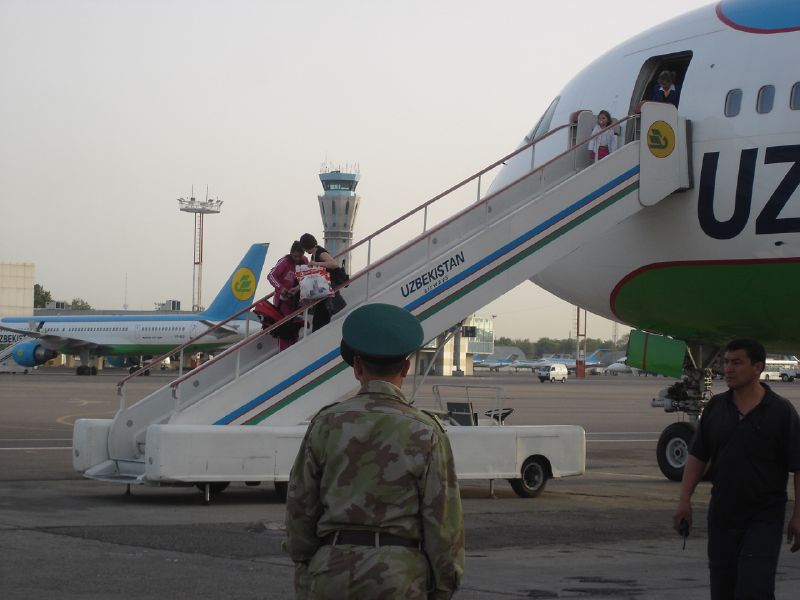
A large share of Uzbekistan's citizens work abroad, and the money they send home makes up a significant part of household income. This is not a one-day news story but a system. The following is a facts-based explainer of the three main legal routes for labor migration — the patent in Russia, South Korea's EPS program, and organized recruitment from Uzbekistan — how each works and the rules that govern it.
Russia: the patent system
Citizens of Eurasian Economic Union (EAEU) members — Armenia, Belarus, Kazakhstan and Kyrgyzstan — may work in Russia without a patent or a work permit. Uzbekistan is not a full member but an observer state, so Uzbek citizens must obtain a patent in order to work.
A migrant who enters visa-free must usually formalize the patent within 30 days of arrival. Its validity is tied to a prepaid monthly advance of personal income tax (NDFL): miss a payment and the patent lapses. In Moscow this monthly payment was 8,900 rubles from 1 January 2025 and 10,000 rubles from January 2026; the amount varies by region.

To obtain a patent, a migrant must pass an exam in the Russian language, Russian history and the basics of Russian law, buy health insurance, and obtain a taxpayer identification number (INN). The exam can be taken at accredited centers in Russia and abroad, including in Tashkent.
On 5 February 2025 Russia launched a “registry of controlled persons.” It lists foreign nationals with no legal grounds to stay; the list is publicly searchable, and those on it face restrictions on banking, transport and registering property, with deportation for repeat violations.
- Uzbekistan is not a full EAEU member — a patent is required
- Patent: formalized within 30 days of arrival
- Moscow monthly payment: 8,900 rubles (2025) → 10,000 rubles (2026)
- Requirements: Russian language/history/law exam, health insurance, INN
- 5 February 2025: “registry of controlled persons” launched
South Korea: the EPS (Employment Permit System)
EPS is a government-to-government program under which workers enter on an E-9 visa. It involves 16 partner countries, including Uzbekistan, and is run by the Human Resources Development Service of Korea (HRD Korea). Applicants must first pass the EPS-TOPIK Korean-language test.
A labor contract runs for an initial 3 years and, at the employer's request, may be extended to a total of up to 4 years and 10 months. Eligible sectors include manufacturing, construction, agriculture and livestock, fisheries, shipbuilding and, since 2024, parts of the service sector. Annual quotas are set by the government and change: 69,000 in 2022, 165,000 in 2024, and cut to 80,000 in 2026.
Organized recruitment and the Europe route
Uzbekistan has a state mechanism for organizing external labor migration. The Migration Agency coordinates organized recruitment, runs free pre-departure training courses (legal literacy, safety, contract and visa rules, cultural adaptation), and supports migrants through medical checks and adaptation centers.
On the Europe route, Uzbekistan is concluding skilled-labor agreements. On 15 September 2024 a migration and mobility agreement was signed with Germany in Samarkand, followed by a tripartite memorandum on 7 April 2025. Germany's labor shortage had reached more than 1.4 million unfilled positions by late 2024.
By the numbers: remittances
- Total remittances 2024: $14.8 billion (+29.8%)
- Russia's share: $11.5 billion (~77%)
- Other sources (2024): Kazakhstan $795m, USA $577m, Korea $534m, Turkey $405m
- Share of GDP: ~14%
- World Bank: without remittances the poverty rate would be 16.8%, not 9.6%
According to the World Bank, remittances from abroad substantially reduce poverty in Uzbekistan: without this source of income, the poverty rate would be 16.8 percent instead of 9.6 percent. It is an official indicator of how important labor migration is to the country's economy.
An important caveat
The patent's monthly fee, Korea's EPS quotas and some rules change almost every year — the figures above reflect the 2025–2026 situation. For accurate, up-to-date information, always consult official sources (Uzbekistan's Migration Agency, HRD Korea, Russia's Interior Ministry). This is a guide, not breaking news.
