Mirziyoyev Proposes an “SCO-2040: Common Space of Development” Concept
At the Bishkek summit, Uzbekistan's president called for making the SCO Development Bank operational, creating an Industrial Cooperation Map, building an open multilingual data corpus and restoring regular dialogue with Afghanistan.
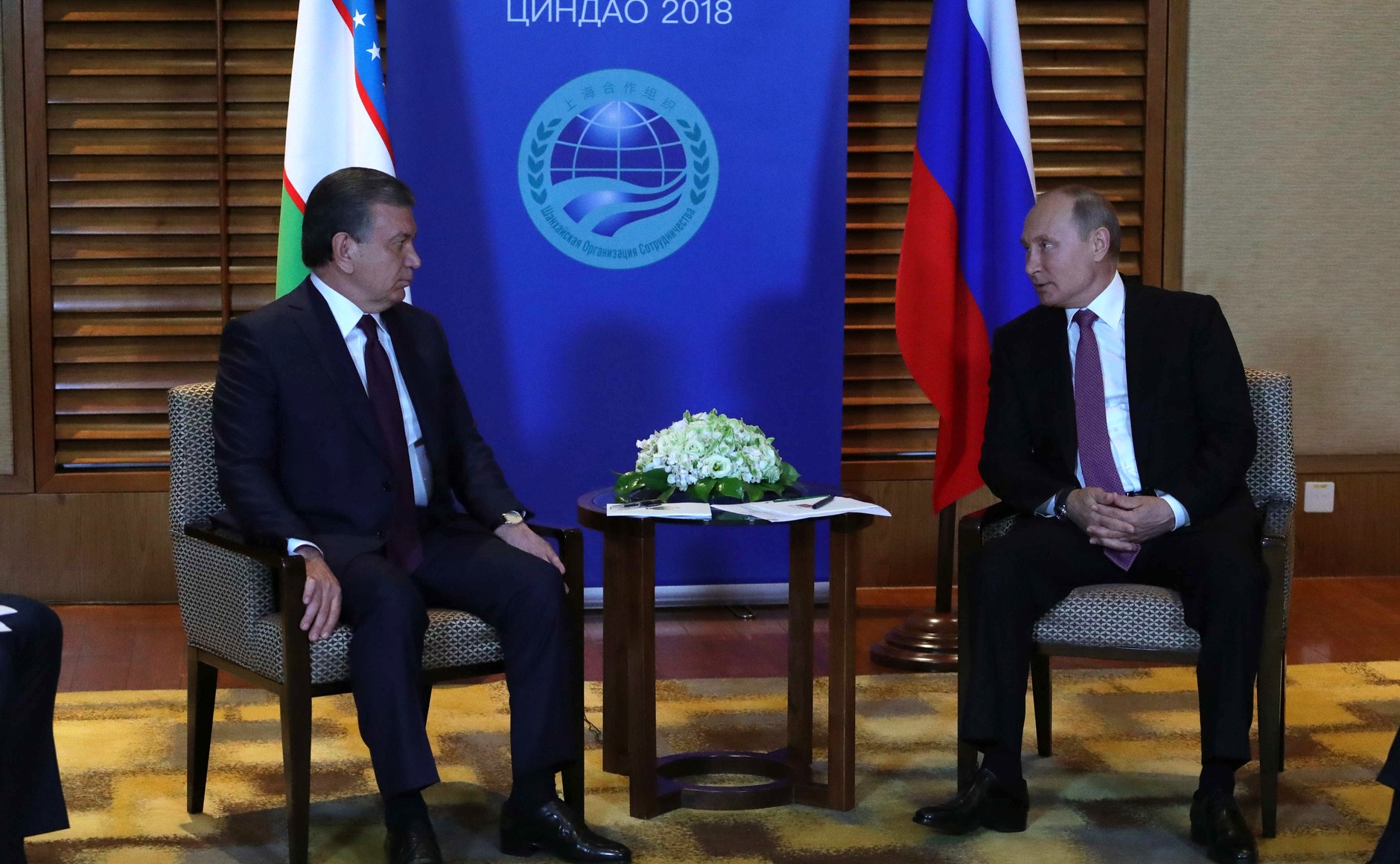
At the meeting of the Shanghai Cooperation Organization's Council of Heads of State held in Bishkek on Sept. 1, 2026, Uzbek President Shavkat Mirziyoyev proposed developing a conceptual document on the organization's long-term development titled “SCO-2040: Common Space of Development.”
The summit was devoted to the organization's 25th anniversary. Member states adopted the Bishkek Declaration and 27 other documents.
It is important not only to resolve emerging problems effectively, but also to have a clear vision of how we want to see the organization over the long term.
— Shavkat Mirziyoyev, President of Uzbekistan (from Gazeta.uz translation, 01.09.2026)
The substance of the concept
Under the Uzbek leader's proposal, the principal aim of the SCO-2040 concept is to build an interconnected and sustainable space in which investment, technology and knowledge move freely, major infrastructure and industrial projects are carried out, and direct ties between regions, businesses and people expand.
An interconnected and sustainable space in which investment, technology and knowledge are exchanged freely.
— Shavkat Mirziyoyev, President of Uzbekistan (from Gazeta.uz translation, 01.09.2026)
The list of proposals
- Developing the SCO-2040 conceptual document
- Creating an SCO Industrial Cooperation Map
- Making the SCO Development Bank operational
- Building an open multilingual SCO data corpus
- Holding a forum on artificial intelligence and new digital solutions in Tashkent
- Establishing a council on integrating railway networks
- A program on water and energy efficiency through 2035
- A 2028–2030 program on traditional art and intangible cultural heritage
The Industrial Cooperation Map
Mirziyoyev proposed creating an Industrial Cooperation Map within the SCO. Under the proposal, special economic zones, production capacity, markets and logistics networks would be brought together on a single digital platform. The platform is intended for entrepreneurs, investors and government agencies.
The Uzbek leader also proposed that the SCO Council of Heads of Government begin selecting a portfolio of projects in transport, energy, industrial cooperation and digital infrastructure. It was noted that these projects could be financed once the SCO Development Bank becomes operational.
The idea of establishing an SCO Development Bank has been under discussion for several years, but the bank has not yet been fully launched.
Artificial intelligence and the digital track
Mirziyoyev proposed that the SCO cooperate with China's World Artificial Intelligence Cooperation Organization. He also advanced the idea of creating an open multilingual SCO data corpus — intended as a shared resource for training artificial intelligence models in the languages of the organization's members.
Uzbekistan said it is prepared to host an SCO forum on artificial intelligence and new digital solutions in Tashkent next year.
Water, energy and food
The Uzbek side proposed establishing a new SCO mechanism to coordinate efforts on food, water and energy security. It is envisioned that this would include a technological cooperation program on water and energy efficiency running through 2035.
The water question carries systemic importance for Central Asia. The main flow of the region's rivers originates in the glaciers of the Tian Shan and the Pamirs; glacier areas have been shrinking in recent decades. In early September, the Kyrgyz government put a national climate adaptation plan through 2035 up for public discussion.
Transport and railways
Mirziyoyev proposed establishing a council on integrating the railway networks of SCO member states and noted the need to continue developing international transport corridors.
Uzbekistan is a landlocked country, and its export and import flows depend on railways and roads running through neighboring countries. The question of transport corridors has therefore been a priority for Tashkent for many years.
The proposal on Afghanistan
The question of Afghanistan was raised separately at the summit. Uzbekistan's president said that maintaining peace and stability in Afghanistan is the foundation for the region's development.
The time has come to restore regular dialogue between the Shanghai Cooperation Organization and Afghanistan — to discuss a broad range of issues concerning security and economic cooperation.
— Shavkat Mirziyoyev, President of Uzbekistan (from Gazeta.uz translation, 01.09.2026)
Economic ties with Afghanistan are of practical importance to Uzbekistan: the Termez–Mazar-i-Sharif route, electricity exports and the Trans-Afghan railway project are a permanent part of the bilateral agenda.
Cultural cooperation
The Uzbek leader proposed preparing a program for 2028–2030 on preserving and promoting traditional art and intangible cultural heritage.
Context
The setting of the summit
The Bishkek summit was held on Aug. 31 and Sept. 1 and was the fourth time Kyrgyzstan has hosted the SCO. Kyrgyz President Sadyr Japarov chaired the meeting. Attending were Chinese President Xi Jinping, Russian President Vladimir Putin, Indian Prime Minister Narendra Modi, Iranian President Masoud Pezeshkian, Belarusian President Alexander Lukashenko and Pakistani Prime Minister Shehbaz Sharif. From partner states, the leaders of Turkey, Azerbaijan, Armenia and Mongolia were present, as was UN Secretary-General António Guterres. For Uzbekistan's president, this was an arena for engaging with dozens of heads of state within a few days.
The final document — the Bishkek Declaration — condemned the military strikes carried out on Iranian territory, recognized Iran's rights under the Treaty on the Non-Proliferation of Nuclear Weapons and reiterated a position against unilateral sanctions. The document stressed separately that the SCO is not a military-political bloc and rejects bloc-to-bloc confrontation. Uzbekistan's proposals were advanced within precisely this general framework — along the lines of deepening economic and technological cooperation.
The practical dimension of the proposals
Most of the proposals put forward by Uzbekistan are at an organizational stage for now: developing a conceptual document, establishing a council, creating a map, preparing a program. Which of them are actually implemented depends on agreements at the level of the SCO Council of Heads of Government and the relevant ministries. SCO decisions are taken by consensus — meaning every member state must agree.
The SCO Development Bank is a case in point. The idea of establishing the bank was advanced by China several years ago, but the project has not been fully launched because member states have not reached agreement on shareholdings, governance and currency questions. Mirziyoyev's proposal aims at making the bank operational and attaching a concrete portfolio of projects to it.
Uzbekistan's place in the SCO
Uzbekistan is one of the SCO's founding members — the organization was established in 2001 in Shanghai with the participation of China, Russia, Kazakhstan, Kyrgyzstan, Tajikistan and Uzbekistan. India, Pakistan, Iran and Belarus joined later. In 2004, Tashkent began hosting the executive committee of the SCO's Regional Anti-Terrorist Structure; that body still operates in the Uzbek capital.
Uzbekistan hosted an SCO summit in Samarkand in 2022. On that occasion as well, Tashkent sought to place transport corridors, food security and Afghanistan on the organization's agenda. The 2026 proposals continue that line, with the addition of artificial intelligence and digital infrastructure.
The next stage
At the summit's close, the SCO chairmanship passed from Kyrgyzstan to Pakistan. The next meeting of the Council of Heads of State will be held in Islamabad in 2027. The forum on artificial intelligence and new digital solutions proposed by Uzbekistan is envisioned for Tashkent — though no date has been announced.
The SCO was established in 2001. Its members today are China, Russia, India, Pakistan, Iran, Belarus, Uzbekistan, Kazakhstan, Kyrgyzstan and Tajikistan. At the summit's close, the chairmanship passed from Kyrgyzstan to Pakistan; the 2027 meeting will be held in Islamabad.
Two weeks after the Bishkek summit, Uzbekistan's president made a state visit to South Korea: bilateral talks and the first Korea–Central Asia summit were held in Seoul on Sept. 13–16. In early September, Mirziyoyev had made an official visit to Serbia.