Ecological Migration: The Aral Sea Disaster and the Exodus from Karakalpakstan
The drying of the Aral Sea was not only a natural catastrophe but a human one: as the fishery collapsed and the air and water turned toxic, tens of thousands left their homeland in Karakalpakstan. Here is the history, the figures, and the present state of this "ecological migration".
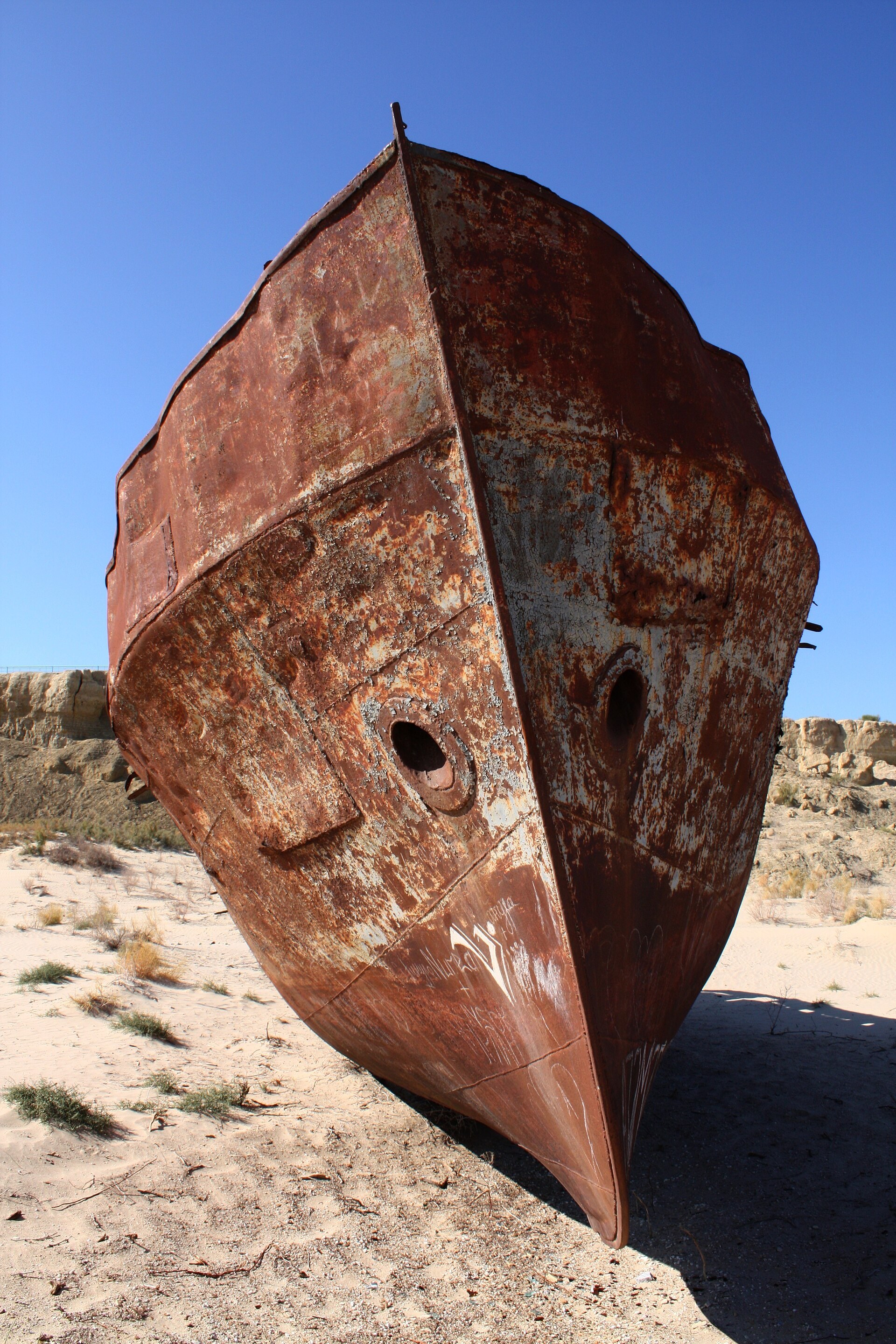
The drying of the Aral Sea is usually remembered as a natural disaster. But behind it lies a second, less-discussed tragedy: the people forced to leave their homeland. As the fishery died, the soil turned saline, and the air and water became toxic, part of the population of Karakalpakstan and Khorezm moved elsewhere. This is the clearest example in Uzbekistan of what is called "ecological migration" (Source: UNDP — Beyond a Disappearing Lake; Minority Rights Group — Karakalpaks).
How the disaster began
In 1960 the Aral Sea covered 68,000 square kilometres and was the world's fourth-largest inland lake. In those years the Soviet leadership diverted the water of the Amu Darya and Syr Darya to irrigate cotton — "white gold" — and the inflow to the sea collapsed. By 1987 the sea had split into two — the North (Small) and the South (Large) Aral — and in 2014 NASA satellite imagery showed that the eastern part of the South Aral had completely dried out, forming the Aralkum Desert. The event is often described as one of the worst human-caused environmental disasters of the twentieth century (Source: Wikipedia — Aral Sea; NASA Earth Observatory; The Diplomat).
Moynaq: a port that lost its sea
The place that became a symbol of this tragedy is the town of Moynaq. Once a busy fishing port on the Aral, today its shoreline has receded roughly 150 kilometres, leaving the town in the middle of the Aralkum Desert. In the old harbour, rusting ships sit stranded in the sand — this "ship graveyard" has become a tourist site. Fishing fell into crisis after the 1960s river diversions and had effectively ceased by 1987 (Source: Wikipedia — Moynaq; Wikipedia — Aral Sea).

Why people left: health and livelihoods
The causes of the migration were simple but harsh. First, livelihoods: at its peak the Aral fishery employed about 40,000 people and supplied nearly one-sixth of the entire Soviet fish catch — all of it lost. In Karakalpakstan, another roughly 48,000 people lost their main source of income as upstream water ceased and harvests failed. Second, health: dust storms rising from the exposed seabed, laden with salt and pesticides, and contaminated drinking water caused respiratory, kidney, and liver disease. Tuberculosis in Karakalpakstan reached around 220 cases per 100,000 people, several times the epidemic threshold set by the World Health Organization (Source: Médecins Sans Frontières; The New Humanitarian; Wikipedia — Karakalpakstan).
How large was the exodus
It is hard to say exactly how many left — sources give different figures, cover different periods, and the ecological cause is tightly bound up with economic and social ones. According to the Uzbek government, about 63,000 people moved from Karakalpakstan to Kazakhstan between 1991 and 2001; the UN refugee agency (UNHCR) cites around 50,000 leaving over the 1990s. Some estimates are far higher — the Karakalpak diaspora in Kazakhstan is now put at around 300,000 and in Russia at around 100,000 (figures that also include non-ecological causes). In short, a reliable estimate ranges from 50,000 to as many as 200,000–300,000 (Source: Wikipedia — Karakalpaks; IWPR; UNHCR data).
Karakalpakstan: the hardest-hit region
Karakalpakstan is an autonomous republic within Uzbekistan occupying the country's northwest; its capital is Nukus. Its population today is around 2 million (reports from the early 2000s cited about 1.5 million). The Karakalpak people, historically bound to the Aral delta and to fishing, suffered the most from this disaster: they lost both their traditional livelihood and their environment. The migration therefore left an especially heavy social mark here (Source: Wikipedia — Karakalpakstan; Minority Rights Group — Karakalpaks).
International recognition and aid
The Aral tragedy has been recognized internationally. On 27 November 2018, at UN Headquarters, on the joint initiative of the President of Uzbekistan and the UN Secretary-General, the Multi-Partner Human Security Trust Fund for the Aral Sea Region (administered through UNDP) was established, aimed at improving the health, water, and living standards of the region's people. UNDP describes the drying of the Aral as "one of the world's worst environmental disasters" (Source: UNDP Uzbekistan — Aral Sea Trust Fund; UNDP — Beyond a Disappearing Lake).
Today: the north recovers, the south does not
The sea's fate diverged. In Kazakhstan, the Kok-Aral Dam was built in 2005 with World Bank support (a project of about USD 86 million, of which USD 64.5 million came from the Bank); it held back Syr Darya water in the North Aral, so the level rose, salinity fell, and fish returned. The South Aral in Uzbekistan remains largely dry and intensely saline. Uzbekistan is now planting saxaul trees on the exposed seabed to curb the toxic dust storms and stabilize the soil — an effort to keep the region livable for the descendants of those who were once forced to leave (Source: Britannica — Kok-Aral Dam; World Bank — Saving a Corner of the Aral Sea; Times of Central Asia).

Sources
- UNDP — Beyond a Disappearing Lake (Aral Sea)
- Wikipedia — Aral Sea
- Wikipedia — Moynaq
- Wikipedia — Karakalpaks
- Wikipedia — Karakalpakstan
- Médecins Sans Frontières — The Aral Sea disappears while tuberculosis climbs
- UNDP Uzbekistan — Multi-Partner Human Security Trust Fund for the Aral Sea Region
- World Bank — Saving a Corner of the Aral Sea
- Britannica — Kok-Aral Dam