The Changed Aral: A Dried Sea, a Saxaul Forest, and the Aral School in Nukus
The Aral Sea has lost about 90% of its size, and a new desert, the Aralkum, has formed in its place. Now a forest is being planted on the dried seabed, and ACDF has opened the Aral School residency in Nukus.
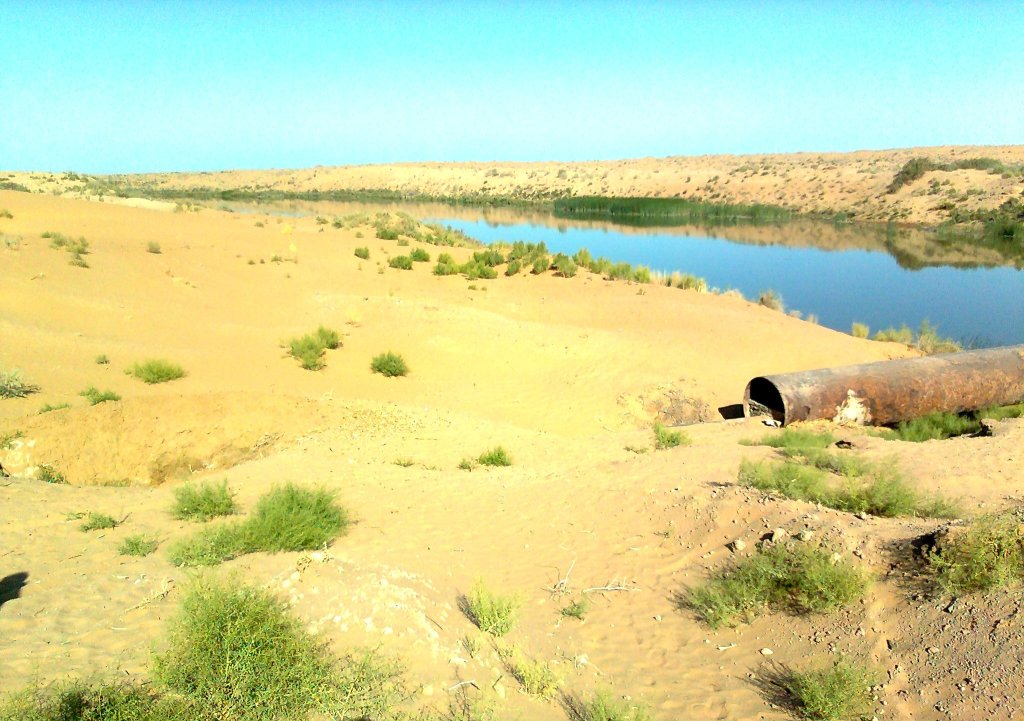
The Aral Sea was once the world's fourth-largest lake — about 68,000 km² in area and roughly 40 m deep (UNCCD). Today a new desert, the Aralkum, lies where it once was; a forest is being planted on the dried seabed, and an international residency called the Aral School is running in Nukus.
What happened?
Soviet-era irrigation diverted the Amu Darya and Syr Darya (mainly for cotton), and since the 1960s the lake has lost about 90% of its size (UNCCD). A new desert, the Aralkum (about 60,000 km²), formed on the dried seabed; the dried lakebed in Uzbekistan totals about 6.8 million hectares (Mongabay/scientific sources).
People and health
Sand and dust storms carry an estimated 15–75 million tonnes of sand, dust and salt from the Aralkum each year (World Bank, cited by Kun.uz). These storms affect the health and livelihoods of communities in Karakalpakstan.

The lost sea — by the numbers
- Original area: ~68,000 km² (UNCCD)
- Size lost: ~90% (UNCCD)
- Aralkum desert: ~60,000 km²
- Dried lakebed (Uzbekistan): ~6.8 million ha (Mongabay)
Afforestation
Over five years, about 1.7 million hectares of saxaul have been planted, with 150,000–200,000 ha planned for 2024 (Mongabay). UNCCD cites about 1.5 million of some 3 million degraded hectares restored.
A mature saxaul shrub (7–10 years old) anchors about 2–4 tonnes of shifting sand; its roots reach ~10–15 m; each hectare absorbs about 1.1 tonnes of CO₂ and releases ~0.8 tonnes of O₂ per year (UNDP/Mongabay). Seedling survival is about 30% in low rainfall, rising to 50–70% with adequate rain.
On 27 February 2026, UNDP and Uzbekistan's Art & Culture Development Foundation (ACDF) launched a reforestation drive: 90,000 saxaul/halophyte seedlings on 90 hectares near Moynaq (Muynak). The original "Green Aral Sea" crowdfunding drive launched on 11 March 2020 (UNDP/Kun.uz).
The Aral School
The Aral School is an ACDF international six-month postgraduate residency based in Nukus, Karakalpakstan, focused on the region's social, ecological and cultural regeneration. It is chaired by Gayane Umerova; the programme director is Joseph Grima. The first cohort exhibited 12 objects in Milan in April 2026.
A second cohort, "Climate and Landscape," runs January–June 2027; applications are open 14 September – 25 October 2026.
The Aral School was never conceived as a single cohort or a single event. It's a long-term commitment.
— Gayane Umerova, Chair of ACDF (The Times of Central Asia)
Recovery
Kazakhstan's Kokaral Dam (completed in 2005) raised the North (Small) Aral and revived fish stocks; the southern (Large) Aral in Uzbekistan remains largely desiccated.
By the numbers
- Kokaral Dam: 2005 (North Aral revived)
- Second cohort: January–June 2027
- Milan exhibition: 12 objects (April 2026)
- Applications close: 25 October 2026
