Uzbeks in Tajikistan: the historic community of Sughd and the south
Uzbeks in Tajikistan are the country's largest ethnic minority. They are not an immigrant diaspora but a settled community that has long lived here; their position on the other side of the state border resulted from the Soviet national-territorial delimitation of 1924. The community is concentrated mainly in the north — Sughd Province, around Khujand — and in the south — Khatlon Province. Below, the community's historic roots, demographics, and changes over recent decades are presented neutrally and strictly on the basis of reputable sources.
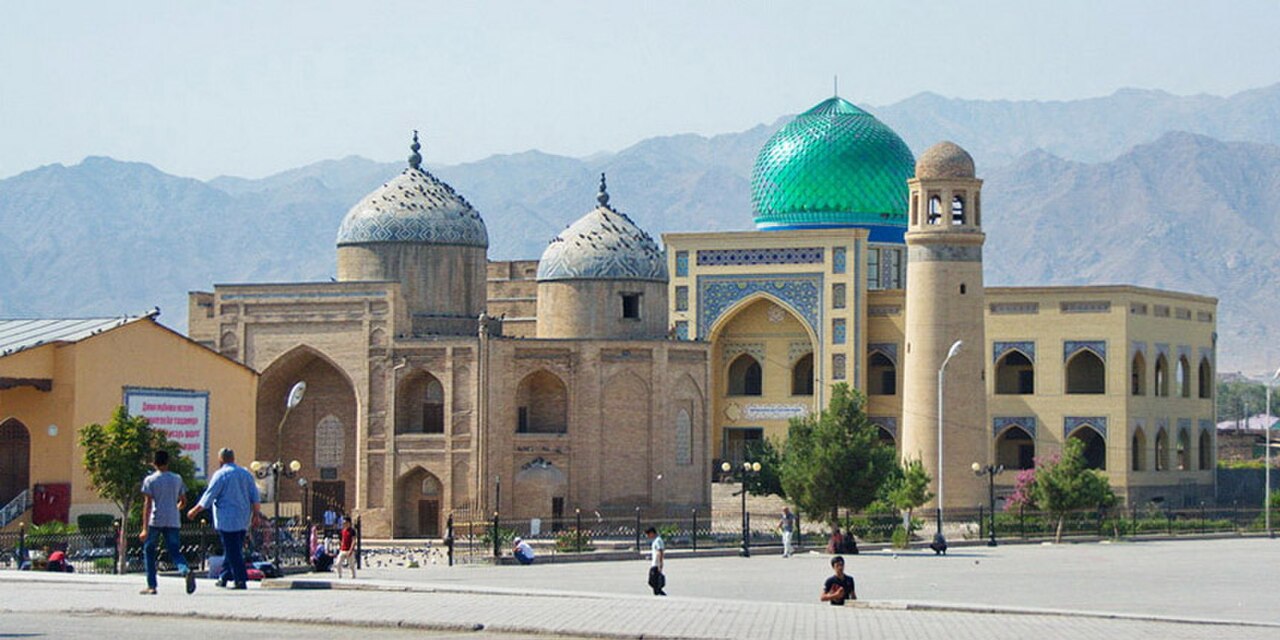
Uzbeks in Tajikistan are one of the large Uzbek communities in Central Asia and Tajikistan's largest ethnic minority. This article presents the community's historic roots, location, demographics, and changes over recent decades strictly on the basis of reputable sources — Tajikistan's official censuses, Minority Rights Group, and academic data — neutrally and on a facts-only basis. The aim is not to judge events but to present documented facts.
Not an immigrant diaspora but a local community
Uzbeks in Tajikistan are not recent immigrants but descendants of a settled population that has lived for centuries on the edge of the Fergana Valley and in the Zarafshan Valley. Khujand, Uroteppa (now Istaravshan), and other towns were long centers of trade and crafts. The modern minority status arose from the Soviet national-territorial delimitation of 1924: that process created Tajikistan (at first an autonomous republic within the Uzbek SSR, and from 1929 a union republic) and the Uzbek SSR. Because the borders did not exactly match ethnic settlement, a large part of the Uzbek population remained on Tajik territory.
Demographics: figures and decline
The share of Uzbeks in Tajikistan's population has declined significantly since independence. According to the 1989 Soviet census they made up about 23.5 percent of the population; the 2000 census recorded 936,703 people (15.3 percent), and the 2010 census recorded 926,344 people (12.2 percent). Even so, Uzbeks remain Tajikistan's largest ethnic minority today; by some estimates their number reaches about 1.2 million people.

Location: Sughd and Khatlon
The community is concentrated mainly in two regions. In the north — Sughd Province, including the districts of Jabbor Rasulov, Devashtich, Asht, Shahriston, Zafarobod, Spitamen, and Bobojon Ghafurov; this area adjoins the western part of the Fergana Valley. In the south — Khatlon Province, including the districts of Bokhtar, Vakhsh, Temurmalik, Kubodiyon, and Shaartuz; and in the capital, Dushanbe. The community has traditionally been active in trade, crafts, and agriculture.
Language and culture
Uzbeks in Tajikistan mainly speak Uzbek (Northern Uzbek) and also know Tajik and Russian. Because of centuries of Uzbek-Tajik coexistence, the cultures of the two peoples — cuisine, architecture, music, and religious traditions (Sunni Islam of the Hanafi school) — are closely intertwined. At the same time, the scope of Uzbek-language education and media has remained limited in recent decades.
The civil war and the 1990s
During the Tajikistani Civil War of 1992–1997, all communities, including Uzbeks, went through severe hardship. In the post-war years relations between Dushanbe and Tashkent were tense; visas were introduced on the border between the two states and some sections were mined, which made contact difficult for Uzbek and Tajik families living near the border. From 2016–2018, after a new leadership came to power in Uzbekistan, relations between the two states normalized: border crossings were reopened, mines were cleared, and travel was eased.
Causes of the decline
Several factors are cited for the decline in the Uzbek share: the emigration of part of the population to Uzbekistan and other countries after independence, changes in how ethnic identity was recorded in censuses, and general migration flows. At the same time, Uzbeks continue to hold a significant place in Tajikistan's economic and social life — especially in Sughd and Khatlon.
Conclusion
The Uzbek community of Tajikistan is an integral part of the region's shared ethnic and historical space. This article presents only documented facts — demographics, historic roots, and location — on the basis of reputable sources; a full analysis of the community's history is the subject of scholarly research.

Sources
- Minority Rights Group — Uzbeks in Tajikistan (joylashuv, tumanlar, maqom)
- Wikipedia — Uzbeks in Tajikistan (soni, 1924 chegaralanish, til)
- Wikipedia — Demographics of Tajikistan (1989, 2000, 2010 roʻyxatlari; 23,5% → 15,3% → 12,2%)
- Wikipedia — Sughd Region / Khatlon Region (oʻzbeklar zich yashaydigan hududlar)
- Wikipedia — Tajikistani Civil War (1992–1997) va Oʻzbekiston-Tojikiston munosabatlari