Mirziyoyev and Pashinyan Hold Phone Call: Trade Up 2.1-Fold Over Seven Months
The Sept. 11 conversation covered industrial cooperation and the unblocking of regional communications.
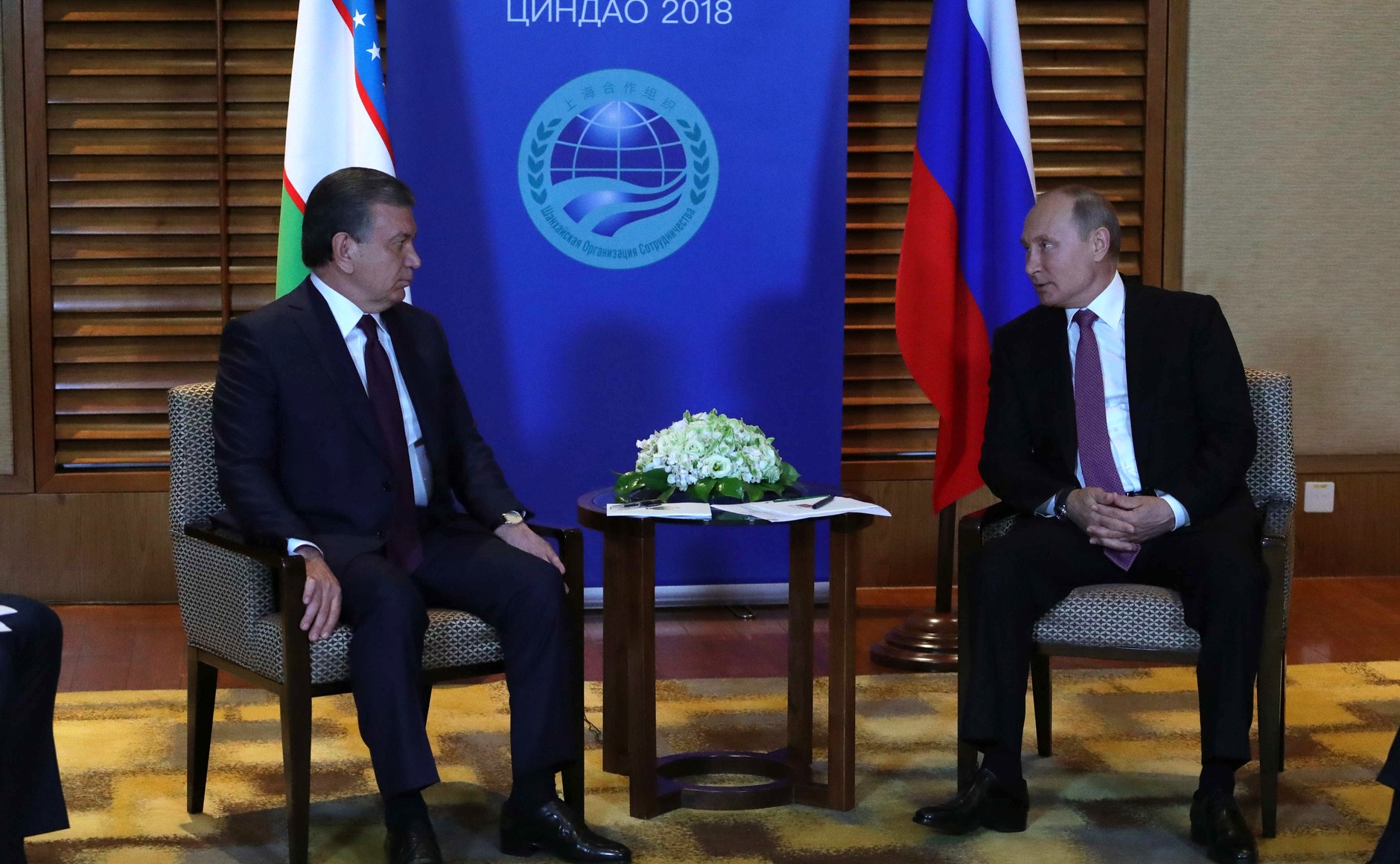
On Sept. 11, 2026, Uzbek President Shavkat Mirziyoyev and Armenian Prime Minister Nikol Pashinyan spoke by telephone. Mirziyoyev congratulated Pashinyan on his reappointment as prime minister.
The conversation covered the development of bilateral relations, the expansion of trade and economic ties, and industrial cooperation.
Trade figures
According to Armenia's Statistical Committee (Armstat), foreign trade turnover between Armenia and Uzbekistan rose 2.1-fold in the first seven months of 2026 to $46.1 million.
In absolute terms the figure remains small: by comparison, Uzbekistan's trade with China reached $9.5 billion over the same period.
The question of unblocking communications
The two sides exchanged views on developments in the region, including work on the unblocking of communications. The phrase refers to negotiations on restoring transport and transit routes in the South Caucasus.
For Central Asian states this issue carries practical significance: the route through the South Caucasus is the western link of the Trans-Caspian route (the “Middle Corridor”). Freight traffic along this route rose 22 percent in January–August 2026.
- Date: Sept. 11, 2026
- Format: telephone conversation
- Trade (January–July 2026): $46.1 million, a 2.1-fold increase
- Topics discussed: industrial cooperation, trade, regional communications
The backdrop of diplomatic activity
September was a dense period for Uzbekistan's foreign policy. The SCO summit in Bishkek concluded on Sept. 1; on Sept. 7 the country appointed its first-ever ambassador to Syria; on Sept. 8 a strategic partnership was established with Serbia in Belgrade and 20 documents were signed.
From Sept. 13 to 16, the president made a state visit to South Korea; 13 documents were signed in Seoul.
The Armenian track
Relations between Uzbekistan and Armenia have developed in recent years mainly around trade and transport. The two countries share no direct land border; cargo passes through Iran, Georgia or the Caspian Sea.
For that reason, growth in trade volumes depends largely on the opening of transport routes and transit terms.
A note
Relations between the two countries
Diplomatic relations between Uzbekistan and Armenia were established in the 1990s. Ties remained at a relatively low level for a long time; a pickup has been observed over the past five years.
The two countries share no direct land border. Cargo passes through Iran, Georgia or the Caspian Sea, which raises logistics costs.
For that reason, growth in trade volumes depends largely on the opening of transport routes and transit terms.
Trade figures
According to Armenia's Statistical Committee, foreign trade turnover between the two countries rose 2.1-fold in the first seven months of 2026 to $46.1 million.
Although the percentage growth appears high, the absolute volume remains small. By comparison: over the same period, Uzbekistan's trade with China amounted to $9.5 billion, with Russia $7 billion and with Kazakhstan $2.8 billion.
This is characteristic of statistics calculated from a low base: at a small starting volume, even a small increase produces a large percentage figure.
Unblocking communications
The phrase “unblocking of communications” mentioned in the conversation refers to negotiations on restoring transport and transit routes in the South Caucasus.
This track carries practical significance for Central Asia: the route through the South Caucasus is the western link of the Trans-Caspian corridor (the “Middle Corridor”).
In January–August 2026, freight traffic along this route rose 22 percent and East–West transit 55 percent. Eighty percent of the cargo flow moves west and 20 percent east.
Industrial cooperation
Industrial cooperation was also discussed in the conversation. For Armenia, Uzbekistan is a partner with a relatively large domestic market; for Uzbekistan, Armenia is of interest as a member of the Eurasian Economic Union.
Industrial cooperation typically takes the form of component supplies, the establishment of joint ventures and technology exchange.
Diplomatic activity in September
September was a dense period for Uzbekistan's foreign policy.
- Sept. 1: the SCO summit in Bishkek concluded, 28 documents signed
- Sept. 7: the first-ever ambassador to Syria appointed
- Sept. 8: a strategic partnership established with Serbia in Belgrade, 20 documents signed
- Sept. 11: the 18th meeting of the Uzbekistan–Japan committees held in Tashkent
- Sept. 13–16: state visit to South Korea, 13 documents signed in Seoul
Telephone conversations are a standard instrument on such a schedule: they require no official visit and allow pressing matters to be discussed.
The political backdrop in Armenia
In the conversation, Mirziyoyev congratulated Pashinyan on his reappointment as prime minister. In diplomatic practice, such congratulations are regarded as a signal of continuity in working relations with a new government.
Political developments in the South Caucasus have a direct effect on the region's transport projects, which is why Central Asian states follow related changes closely.
The nature of the announcements
Official accounts of telephone conversations are generally brief and contain no specific agreements. Practical documents on the matters discussed may be signed at a later stage.
The two sides' statements often differ in emphasis; comparing both official accounts therefore gives a fuller picture.
The Central Asia–Caucasus link
Ties between Central Asia and the South Caucasus have grown more active in recent years around the subject of transport corridors. The Caspian Sea separates the two regions, and crossing it requires ferry and maritime transport.
The ports of Aktau and Kuryk on the Kazakh side and the port of Alat on the Azerbaijani side are the main hubs. The program supported by the World Bank is aimed precisely at improving the efficiency of these ports.
Armenia is not a direct part of this corridor, but the opening of transport hubs in the region could expand its opportunities as well.
Uzbekistan's multi-vector policy
Uzbekistan has declared a principle of multi-vector foreign policy: the country is simultaneously developing ties with Russia, China, the United States, the European Union, Turkey and South Asian states.
Maintaining relations with smaller trading partners is also part of this policy: while they are not a priority direction, they broaden the diplomatic network.
Official accounts of telephone conversations are generally brief and contain no specific agreements. Practical documents on the matters discussed may be signed at a later stage.