Uzbekistan's Religious Revival: The Return of Mosques, the Hajj and Religious Education (1989–1992)
A fact-based article on the revival of Islam in Uzbekistan during the late Soviet and early independence years — roughly 1988–1992: the reopening of mosques, the resumption of the Hajj, the revival of religious education and the reorganization of the muftiate. Verified facts only; contested figures are given with attribution.
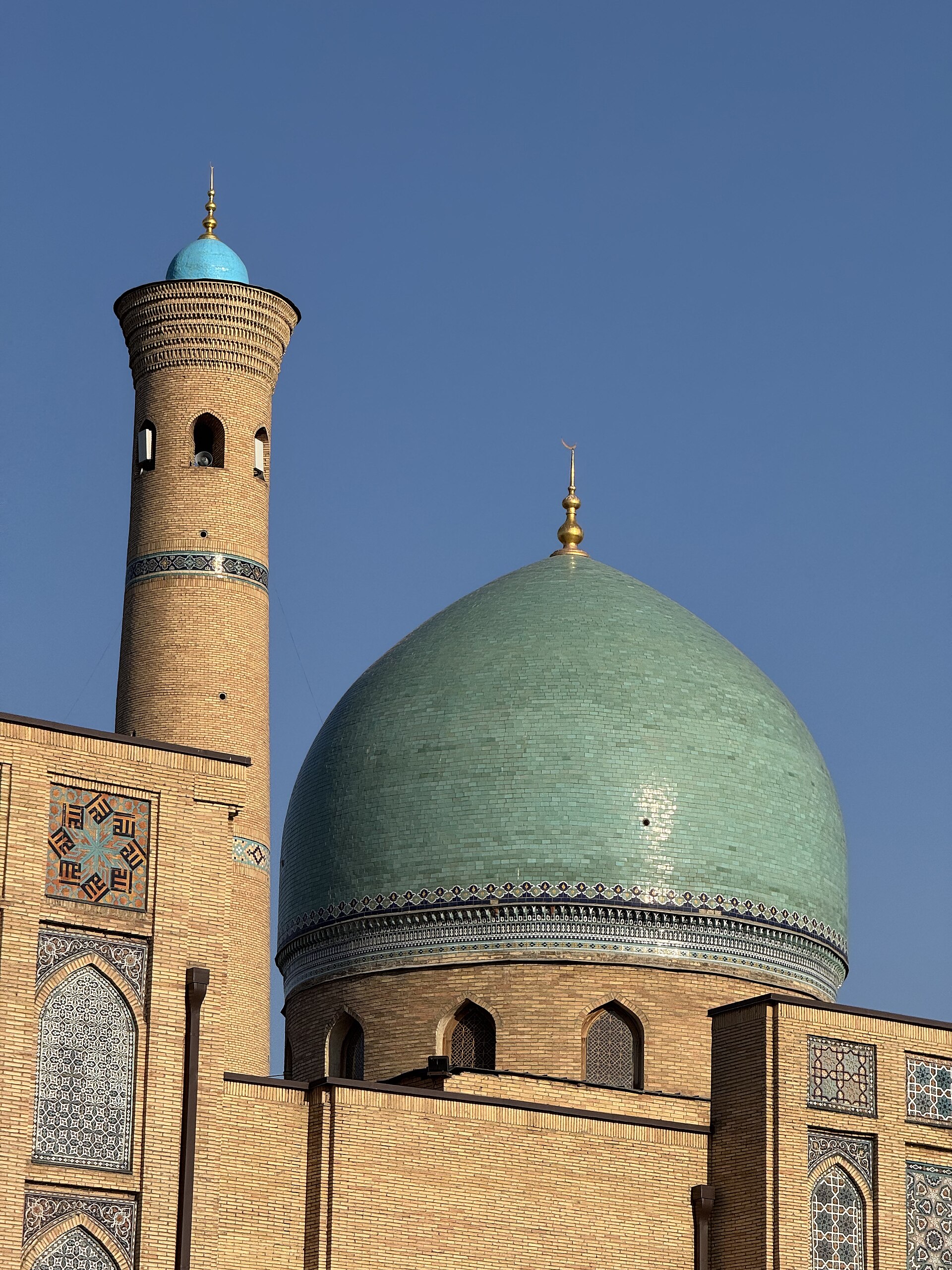
The return of Islam to public life in Uzbekistan began a few years before independence and accelerated during the independence years. Between the late 1980s and the early 1990s, mosques reopened, the Hajj expanded, religious education revived and the official religious administration was reorganized.
The Soviet context and SADUM
Under Soviet rule religion was tightly controlled. The Spiritual Administration of the Muslims of Central Asia and Kazakhstan (SADUM), established in Tashkent on 20 October 1943, was the official body governing Islam across the five republics. The number of officially functioning mosques was very small, and official religious education was effectively limited to two institutions: the Mir-i-Arab madrasa in Bukhara (reopened in 1946) and the Imam al-Bukhari Islamic Institute in Tashkent. With Mikhail Gorbachev's perestroika and glasnost, attitudes toward religion eased from 1988, opening the way to a rapid revival of Islam.
The reorganization of the muftiate
Muhammad Sodiq Muhammad Yusuf was appointed head of SADUM — the mufti — in 1989. That same year he was elected a deputy to the USSR Supreme Soviet and used that platform to win expanded Hajj access and permission to open mosques and religious schools. As the USSR broke apart, SADUM split along republic lines; in 1992 the Muslim Board of Uzbekistan was established as an independent religious administration. Muhammad Sodiq Muhammad Yusuf was independent Uzbekistan's first mufti, serving until 1993.

The reopening of mosques and historic monuments
According to researchers, the number of mosques in Uzbekistan rose from around 80 in 1989 to nearly 1,500 by 1991 — a large share of them, about 800, in the Fergana Valley. During this period historic mosques and madrasas were restored and reopened for worship. The Hazrati Imam (Khast Imam) complex in Tashkent became the seat of the religious administration; it holds historic madrasas and the famous Uthman Quran (Mushaf), which was transferred to the religious administration in 1989.
The expansion of the Hajj
Under Soviet rule, pilgrimage to Mecca was severely restricted. As the restrictions eased during perestroika, the opportunity to perform the Hajj expanded significantly from the late 1980s and from 1990. As a USSR Supreme Soviet deputy, Mufti Muhammad Sodiq Muhammad Yusuf helped increase the Hajj quota for Soviet Muslims.
Religious education and the 1990 law
During the revival, madrasas and religious institutes were reopened or founded. On 1 October 1990 the USSR Supreme Soviet adopted the Law "On Freedom of Conscience and Religious Organizations"; it ended state atheism and granted religious organizations legal-entity status and the right to own property, to establish religious educational institutions and to distribute religious literature. After independence, Uzbekistan adopted its own law on freedom of conscience.
Independence and a symbolic moment
Uzbekistan declared independence on 31 August 1991. Islam Karimov had led the republic since 1989 and became president in 1991. At his inauguration as president (1991) he took the oath holding the Quran in one hand — a symbol of recognizing Islam as part of the national heritage while maintaining the principle of a secular state.
Note: this article sets out historical facts. Some figures for the number of mosques and Hajj participants rely on researchers' accounts and may differ between sources; they are therefore given "according to researchers."
