Uzbekistan joins the Economic Cooperation Organization (ECO), 1992
On 28 November 1992 Uzbekistan, together with six other newly independent states, joined the Economic Cooperation Organization (ECO) founded by Iran, Pakistan and Turkey. The step opened sea-access routes and regional trade corridors for the young state — the organization's history, aims and significance for Uzbekistan, facts only.
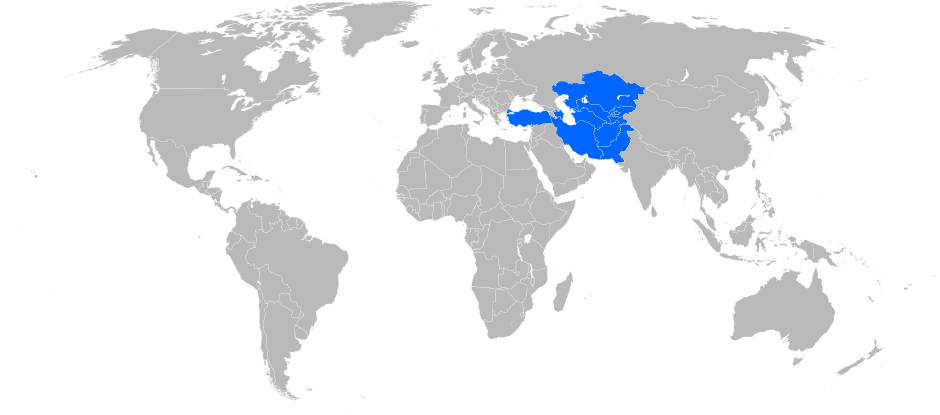
When Uzbekistan became independent on 31 August 1991, a practical question arose at once: how would a young, doubly landlocked state that had traded for decades only through Moscow find its way to the region and the world? One of those routes was to join the Economic Cooperation Organization (ECO), founded by Iran, Pakistan and Turkey. The following sets out that 1992 step, facts only.
What ECO is
The Economic Cooperation Organization is an intergovernmental regional body founded in 1985 by Iran, Pakistan and Turkey. It is the successor to the Regional Cooperation for Development (RCD), which operated from 1964 to 1979. Its founding charter is the 1977 Treaty of Izmir, and its secretariat is based in Tehran, the capital of Iran.
1992: seven new members
After the Soviet Union dissolved, the door opened for the newly independent states. On 28 November 1992, ECO admitted seven new members at once: Afghanistan, Azerbaijan, Kazakhstan, Kyrgyzstan, Tajikistan, Turkmenistan and Uzbekistan. That raised the organization's membership from three to ten. For this reason 28 November is marked as "ECO Day."

For Uzbekistan the move was one of the first foreign-policy steps of independence — alongside membership of the UN, the IMF and the World Bank, and the opening of relations with the CIS and neighboring states. ECO's first summit had been held in Tehran on 16–17 February 1992; the young republics attended as observers and became full members within months.
What the organization aims at
ECO's stated goals are to liberalize trade, pursue a single market (modeled on the European Union), connect transport, energy and telecommunications networks, and pool regional resources. Its main trade instrument is the ECO Trade Agreement (ECOTA), signed in Islamabad on 17 July 2003.
- Members today: 10 states;
- Combined population: about 580 million;
- Combined area: 8.2 million square kilometers;
- Secretariat: Tehran (Iran);
- Observer: Northern Cyprus.
Why it mattered for Uzbekistan
Uzbekistan is one of only two doubly landlocked countries in the world: reaching the sea means crossing at least two borders. Through ECO the young state gained a formal link to transport corridors toward Iran (the port of Bandar Abbas), Turkey and Pakistan. Within the organization rail and road corridors were developed, including the Islamabad–Tehran–Istanbul (ITI) route.
In later decades the cooperation deepened: ECO's 16th summit was held in Tashkent on 8–9 November 2023, and the 17th in Khankendi, Azerbaijan, on 3–4 July 2025. Thus the 1992 membership remained one of independent Uzbekistan's first, and longest-lasting, steps toward regional economic integration.

Sources
- Economic Cooperation Organization — founding (1985), Treaty of Izmir, Tehran secretariat, 28 Nov 1992 expansion, 10 members
- ECO Secretariat — ECO Day (28 November), member states and objectives
- 1st ECO Summit, Tehran, 16–17 February 1992
- ECO Trade Agreement (ECOTA), signed Islamabad, 17 July 2003
- 16th ECO Summit, Tashkent, 8–9 November 2023