Pezeshkian at the BRICS Summit: “Unilateral Sanctions Directly Affect Food Security”
At the summit in New Delhi, Iran's president called for expanding trade in national currencies and said international mechanisms need reform.
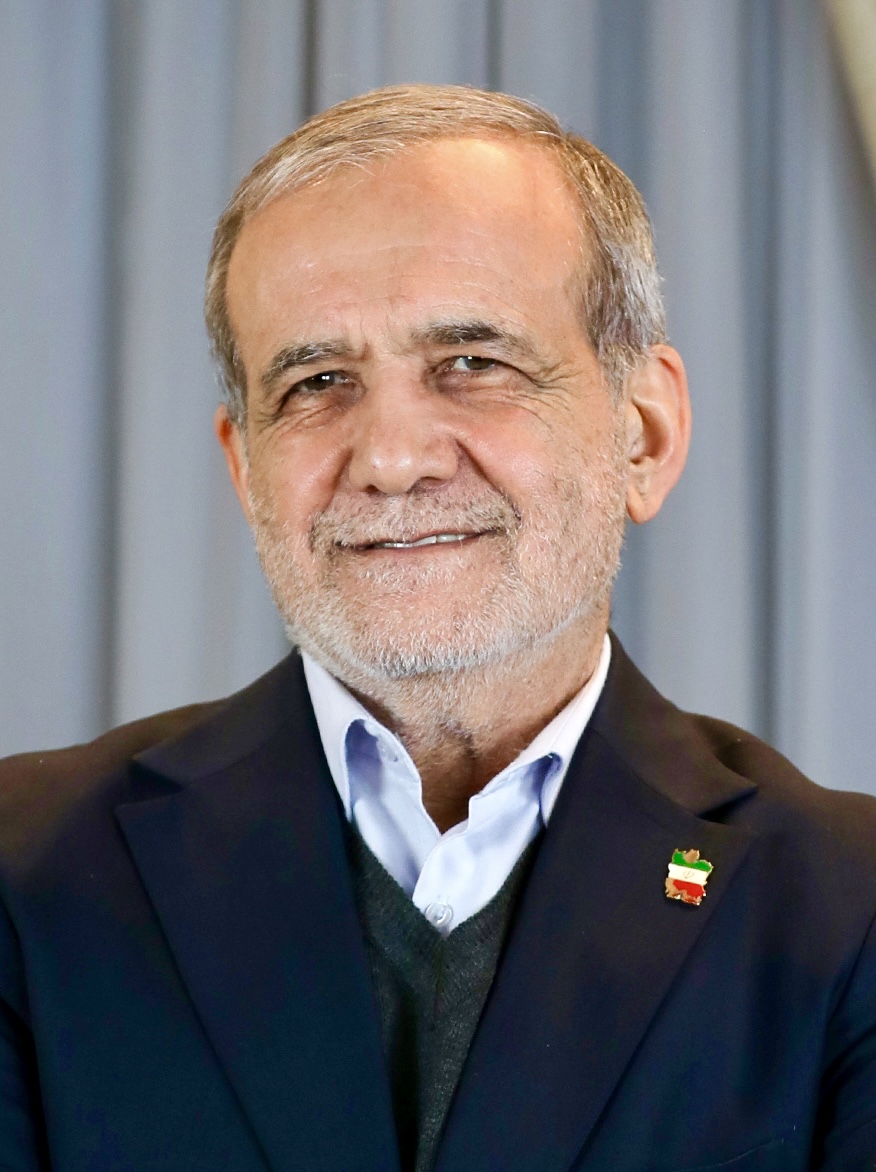
Iranian President Masoud Pezeshkian spoke at the BRICS summit held in New Delhi on Sept. 12–13, 2026. He criticized unilateral sanctions, saying they have a direct effect on global food security and on public welfare.
Pezeshkian said that excessive dependence on existing financial and trade systems has left developing economies vulnerable to political shocks, and called for expanding trade in national currencies within BRICS.
The directions proposed
- Coordinating efforts to defend the UN Charter
- Expanding economic and financial cooperation
- Strengthening cooperation in science and technology
- Working together on energy and food security
- Increasing the volume of trade in national currencies
He also stressed the need for genuine reform of international mechanisms.
The summit and the declaration
The 18th BRICS summit was held at the Bharat Mandapam center in New Delhi under the theme “Building for Resilience, Innovation, Cooperation and Sustainability.” Indian Prime Minister Narendra Modi chaired the summit.
The leaders adopted the New Delhi Declaration on Sept. 12. The document consists of 140 paragraphs and covers global governance reform, international conflicts, trade and finance, energy and climate policy, technology, health care, agriculture and people-to-people ties.
The sanctions context
Sanctions on Iran under the UN Security Council mechanism were reinstated on Sept. 27, 2025. They include an arms embargo, the freezing of assets of certain individuals and entities, and travel restrictions.
A new dispute over Iran sanctions took place in the UN Security Council on Sept. 10, 2026; the vote was recorded as 11 to 2. On Sept. 9, the IAEA Board of Governors adopted a resolution calling on Iran to cooperate with the agency.
Iran's position
Tehran considers the reinstatement of sanctions to be without legal basis. In statements after the summit, Pezeshkian reiterated that Iran gives priority to peace and demands respect for its rights and the lifting of sanctions.
Why it matters for Central Asia
Iran is one of Central Asia's routes to the sea: freight routes through the ports of Bandar Abbas and Chabahar are under discussion. The sanctions regime complicates the use of these routes.
Tension in the region also affects world oil prices. Analysis of inflation in Kyrgyzstan in 2026 cited the rising price of imported fuel as one of the main factors.
A note
About BRICS
BRICS took shape initially as a format uniting Brazil, Russia, India and China; South Africa joined later. The organization's membership has expanded in recent years, with new members admitted, Iran among them.
The format is not a formal international organization: it has no charter and no permanent secretariat. Decisions are taken by consensus and are advisory in nature.
For that reason, summit declarations generally consist of broad formulations that generalize members' differing positions.
Trade in national currencies
The idea of trading in national currencies advanced by Pezeshkian has been under discussion within BRICS for several years. Its practical substance is to reduce the use of a third country's currency in bilateral trade.
In practice this raises a number of technical issues: exchange rate volatility, imbalances in the trade balance and where to place accumulated funds.
When the trade balance is uneven, one side accumulates a surplus of the other's currency and may have limited opportunities to use it.
The New Delhi Declaration
The declaration adopted on Sept. 12 consists of 140 paragraphs. It covers global governance reform, international conflicts, trade and finance, energy and climate policy, technology, health care, agriculture and people-to-people ties.
The summit was held at the Bharat Mandapam center under the theme “Building for Resilience, Innovation, Cooperation and Sustainability” and was chaired by India's prime minister.
Sanctions on Iran
Sanctions on Iran under the UN Security Council mechanism were reinstated on Sept. 27, 2025. They include an arms embargo, asset freezes and travel restrictions, and give states the right to inspect cargo bound for Iran.
On Sept. 9, 2026, the IAEA Board of Governors adopted a resolution calling on Iran to cooperate with the agency. On Sept. 10, a vote on sanctions in the UN Security Council ended 11 to 2.
Tehran considers the reinstatement of sanctions to be without legal basis.
The military context
Military clashes between Iran and the United States and Israel have continued since February 2026. Several incidents were recorded in September, including the U.S. announcement on Sept. 5 that it had struck three oil tankers in the area of the Strait of Hormuz.
In his address to the summit, Pezeshkian said economic stability cannot be secured without security.
Why it matters for Central Asia
Iran is one of Central Asia's routes to the sea: freight routes through the ports of Bandar Abbas and Chabahar are under discussion. The sanctions regime complicates the use of these routes.
Tension in the region also affects world oil prices. Analysis of inflation in Kyrgyzstan in 2026 cited the rising price of imported fuel as one of the main factors.
Kazakhstan and Uzbekistan are not BRICS members, but both countries engage with the format: Kazakhstan's president met with the U.S. special envoy on the sidelines of the summit on Sept. 12.
The food security question
Pezeshkian's address gave particular emphasis to the effect of sanctions on food security. In international practice, food and medicine are generally included in lists of humanitarian exemptions.
In practice, however, restrictions on payment channels and logistics make such exemptions difficult to apply: banks may refuse transactions to avoid additional risk.
This phenomenon is known in the international literature as “over-compliance” and occupies a central place in discussions of the humanitarian consequences of sanctions regimes.
Reforming international mechanisms
The declaration also covers the question of global governance reform. BRICS members have for many years demanded a review of the distribution of votes at the UN Security Council, the International Monetary Fund and the World Bank.
The basis for these demands is that developing economies' share of world output has grown while their representation in international institutions has not changed accordingly.
Iran and BRICS
Iran was admitted to BRICS as part of a wave of expansion. For Tehran, the format is seen as a means of maintaining economic and political ties under sanctions.
At the same time, the organization's members hold differing positions on relations with Iran, and this is reflected in the declaration's text through general formulations.
Bilateral meetings on the sidelines of a summit generally produce more concrete results than multilateral documents.
Addresses at the summit express states' official positions. The text of the declaration is a document adopted by consensus, in which certain issues are expressed in general formulations.