Kyrgyzstan Announces an $850 Million Climate Adaptation Plan
The national plan, running through 2035, has been put up for public discussion. According to the document, the country's glacier area has shrunk 16 to 17 percent since the start of the 21st century, and the rivers' peak flow period has shifted 50 days earlier.
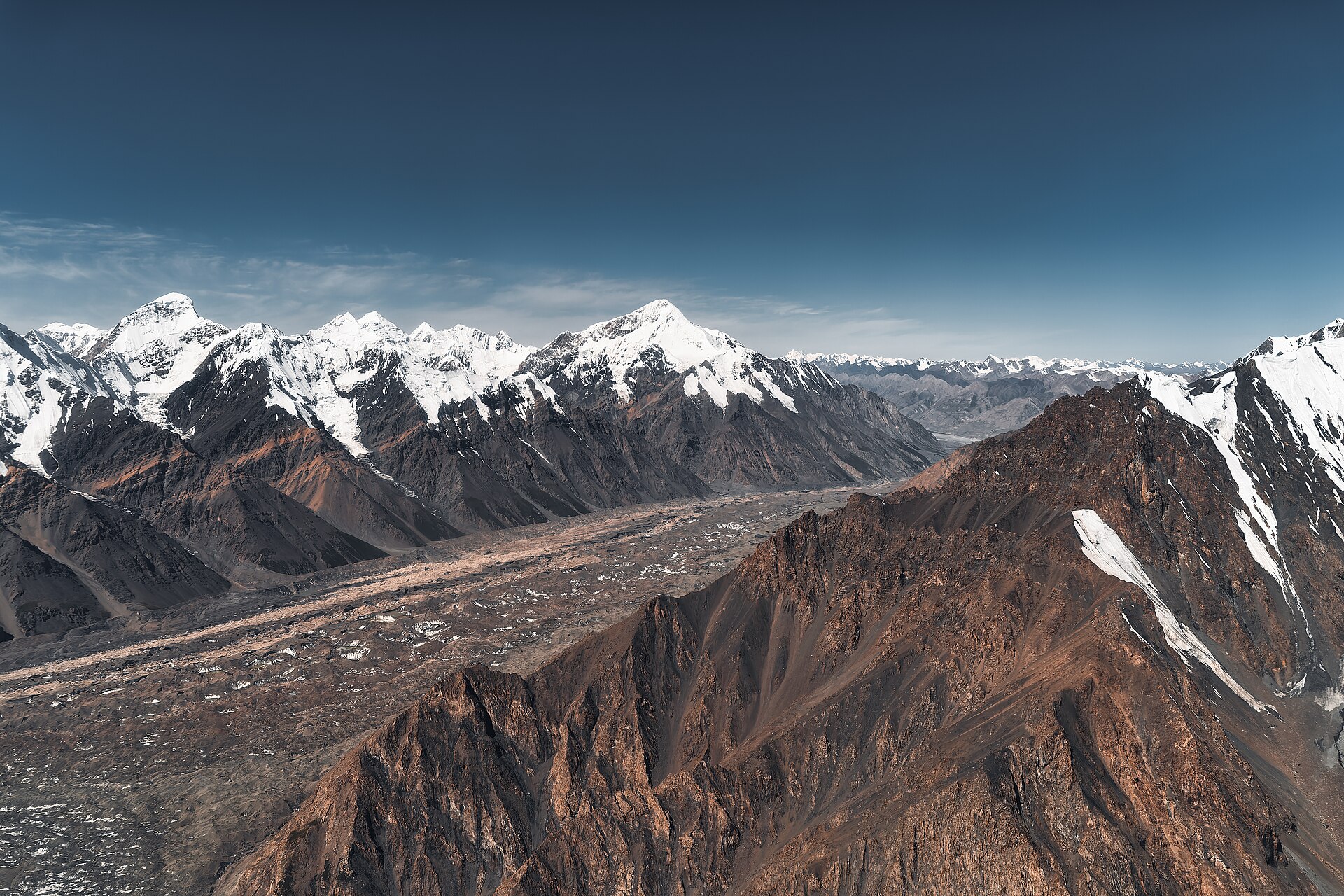
Kyrgyzstan's Ministry of Natural Resources has prepared a national climate adaptation plan running through 2035 and put it up for public discussion. The document cites the shrinking of glaciers and changes in river flows as threats to irrigation, agriculture and hydropower.
Cost and financing
The plan's preliminary cost for 2026–2035 is estimated at 74.5 billion som — roughly $850 million. More than half of the funds are expected to come from international climate funds and partner countries.
The Green Climate Fund currently supports seven projects in Kyrgyzstan with a total value of roughly $149 million. They include initiatives on water infrastructure and on making agriculture more climate-resilient.
By the numbers
- Plan period: 2026–2035
- Preliminary cost: 74.5 billion som (~$850 million)
- Expected share from international sources: more than half
- Shrinkage of glacier area (since 2000): 16–17%
- Temperature rise (1981–2020): ~0.28 °C per decade
- Shift in peak river flow: ~50 days earlier
- Losses in water conveyance: 26%
- Green Climate Fund projects: 7, ~$149 million
Climate indicators
According to the document, average temperatures in Kyrgyzstan rose by roughly 0.28 degrees per decade between 1981 and 2020. The area covered by glaciers has shrunk 16 to 17 percent since the start of the 21st century.
On the major rivers, the peak flow period has shifted roughly 50 days earlier relative to historical readings. This means snow and ice are melting earlier; as a result, water flows in spring rather than in the summer months when irrigation needs are greatest.
Measures in the plan
The document provides for mapping climate risks, strengthening the system for forecasting droughts and floods, upgrading the monitoring network and modernizing irrigation systems.
The main aim of upgrading the irrigation system is to reduce losses during water conveyance. These losses currently amount to 26 percent.
Water security, public health, food systems and infrastructure are among the priority areas. The plan also provides for improving warning systems for mudflows and floods.
Economic consequences
According to World Bank estimates, without adaptation measures Kyrgyzstan could lose 2 to 3 percent of its gross domestic product by 2040. The document notes that 24 percent of demand for irrigation water may go unmet by mid-century.
Mountain rivers supply the hydroelectric plants that generate most of the country's electricity. In other words, changes in the water regime affect agriculture and the energy system at the same time.
Regional significance
The rivers rising in Kyrgyzstan's Tian Shan mountains feed the water system of all Central Asia. The Naryn River is the main tributary of the Syr Darya; the Syr Darya, in turn, supports irrigation in Uzbekistan and Kazakhstan.
For that reason, adaptation measures in Kyrgyzstan carry practical significance for neighboring countries as well. Negotiations among the region's states on water and energy issues have been under way for decades.
At the SCO summit in Bishkek on Sept. 1, Uzbekistan's president proposed a new mechanism for coordinating food, water and energy security, along with a program on water and energy efficiency through 2035.
Context
Kyrgyzstan was previously the first country in Central Asia to adopt a framework law on climate. The national adaptation plan is being prepared with support from the UN Development Programme.
Why glaciers matter
The glaciers of the Tian Shan and Pamir ranges serve as a natural reservoir for Central Asia: they accumulate as snow and ice in winter and melt in summer to feed the rivers. This cycle is the foundation of the region's irrigation system.
Shrinking glacier area can increase flows in the short term as melting accelerates. Over the long term, however, summer flows decline as the reserve is depleted. The plan notes that even without additional warming, glacier volume could shrink by more than another third by mid-century.
The Naryn River, which rises in Kyrgyzstan, is the main tributary of the Syr Darya. The Syr Darya supports irrigation in Uzbekistan and Kazakhstan and flows into the Aral Sea basin.
Hydropower
Most of Kyrgyzstan's electricity is generated at hydroelectric plants. The largest facility is the Toktogul hydropower complex on the Naryn River, whose reservoir is among the largest in the region.
Changes in the water regime affect two systems at once: when water is used to generate electricity in winter, downstream countries receive excess water in spring, while the reserve for summer irrigation shrinks. This is the central subject of the region's water and energy negotiations.
Sources of financing
More than half of the plan's 74.5 billion som cost is expected from international climate funds and partner countries. The Green Climate Fund currently supports seven projects in Kyrgyzstan with a total value of roughly $149 million.
These projects include initiatives on water infrastructure and on making agriculture more climate-resilient. No precise breakdown of the remaining funding sources or the domestic budget share has been announced.
The status of the document
The plan is at the draft stage for now: it has been put up for public discussion. The document was prepared by the Ministry of Natural Resources with support from the UN Development Programme.
Kyrgyzstan was previously the first country in Central Asia to adopt a framework law on climate. No date has been announced for approval of the national adaptation plan.
The problem of water losses
Modernizing the irrigation system is set out as a separate area in the plan. Losses during water conveyance currently amount to 26 percent — that is, one in every four liters of water does not reach the field.
The main cause of these losses is the conveyance of water through open earthen canals, where it seeps away and evaporates. Proposed solutions include lining canals with concrete, switching to piped networks and introducing drip irrigation technologies.
The plan also notes that 24 percent of demand for irrigation water may go unmet by mid-century.
Warning systems
The document provides for mapping climate risks, strengthening the system for forecasting droughts and floods, and upgrading the monitoring network.
Mudflows and the sudden bursting of mountain lakes are a particular hazard for Kyrgyzstan: lakes formed by melting glaciers accumulate water and can then send a mudflow down onto villages below when their natural dam fails.
Water security, public health, food systems and infrastructure are among the priority areas.
Regional cooperation
Adaptation measures in Kyrgyzstan carry practical significance for neighboring countries as well. The country is an exporter of water resources: much of the flow formed on its territory goes to fields in Uzbekistan and Kazakhstan.
Negotiations among the region's states on water and energy issues have been under way for decades. The central tension is between downstream countries' summer irrigation needs and upstream countries' need to generate electricity in winter.
At the SCO summit in Bishkek on Sept. 1, Uzbekistan's president proposed a new mechanism for coordinating food, water and energy security, along with a technological cooperation program on water and energy efficiency through 2035.
The plan is at the draft stage for now: it is expected to be approved by the government once public discussion concludes. No approval date has been announced.
The summer of 2026 was hot across Central Asia: according to Uzhydromet, it was the second-hottest summer on observational record in Uzbekistan.