CSTO “Rubezh-2026” Exercises Begin in Kazakhstan, With a Cross-Border Incursion as the Main Scenario
From Sept. 12 to 19, rapid deployment forces are training in mountain and desert conditions at the Koktal range in the Zhetysu region.
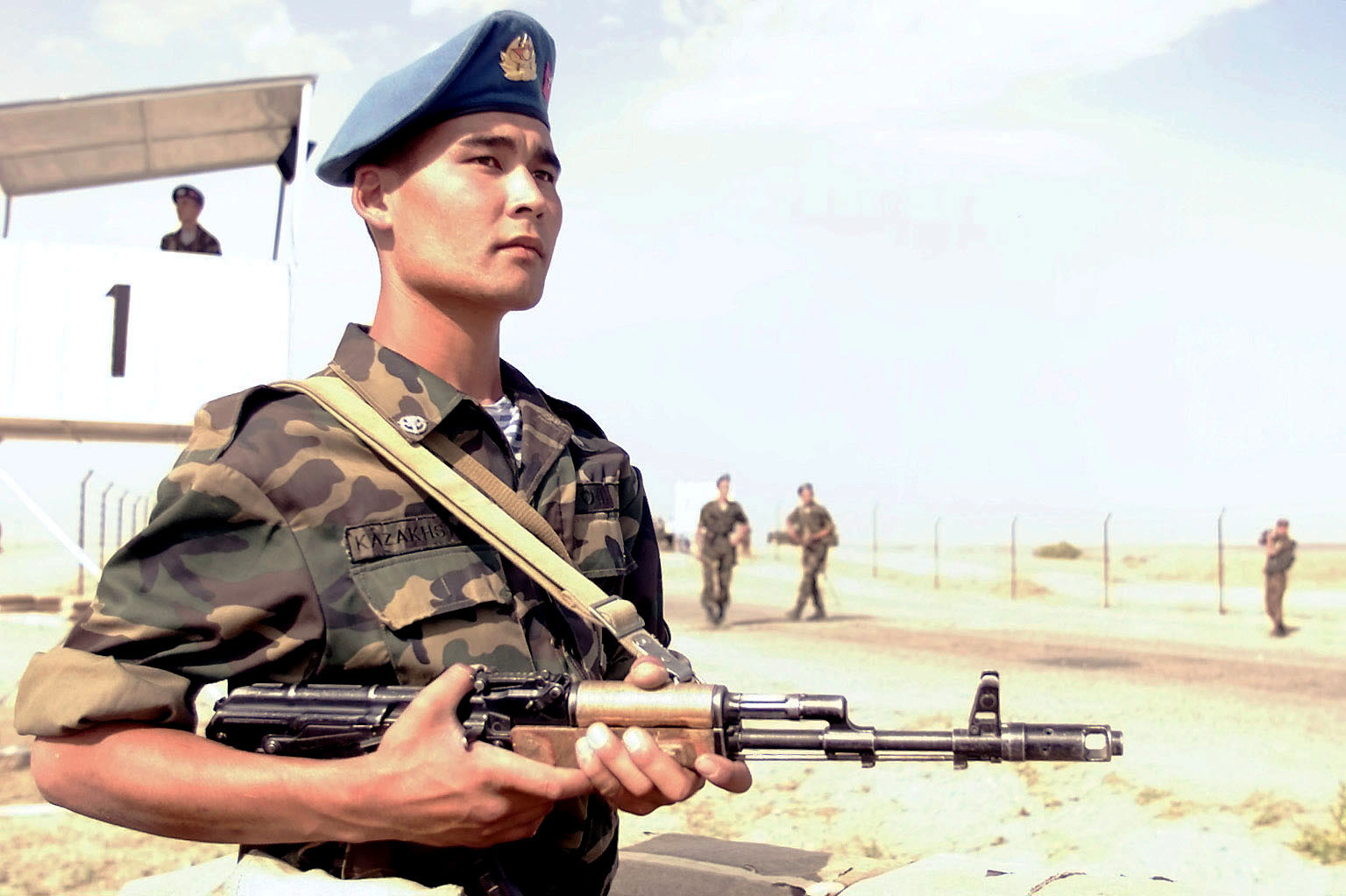
The Collective Security Treaty Organization (CSTO) is holding the “Rubezh-2026” (“Frontier-2026”) military exercises from Sept. 12 to 19, 2026. The exercises are taking place at the Koktal range in Kazakhstan's southeastern Zhetysu region.
The organization's Rapid Deployment Forces are taking part. The main scenario is repelling attempted cross-border incursions in mountain and desert conditions.
What is identified as the main threat
CSTO documents identify non-state armed groups based on Afghan territory, including ISKP (Islamic State – Khorasan Province), as the main danger to the region's southern borders.
The organization also lists cross-border arms trafficking and narcotics smuggling among the threats.
- Exercise name: “Rubezh-2026”
- Dates: Sept. 12–19
- Location: Koktal range, Zhetysu region, Kazakhstan
- Participants: CSTO Rapid Deployment Forces
- Scenario: repelling a cross-border incursion
The Tajik-Afghan border
CSTO officials continue to assess the security situation on the Tajikistan–Afghanistan border as “complicated.” Russia's 201st military base in Tajikistan is the largest external military presence in the region.
In August 2026, the Taliban administration responded to CSTO plans to strengthen the Tajik-Afghan border by stating that no threat to neighboring countries emanates from Afghan territory.
The debate around the organization
An analysis published in The Times of Central Asia discussed how the Afghan track is the only commonly acknowledged threat remaining for the CSTO. Positions among the organization's members often differ on other issues.
The CSTO comprises Russia, Belarus, Kazakhstan, Kyrgyzstan and Tajikistan. Uzbekistan suspended its participation in the organization's activities in 2012 and is not currently a member.
The regional backdrop
Central Asian states take part in several security formats at once. The SCO summit concluded in Bishkek on Sept. 1 with the signing of 28 documents. Uzbekistan, for its part, proposed a “Common Space of Development through 2040” concept within the SCO.
Economic ties with Afghanistan are also expanding: trade between Uzbekistan and Afghanistan reached $915.8 million in the first months of 2026.
What the exercises signify
Such exercises generally serve two purposes: increasing interoperability among forces and sending a political signal. An official report on their results is published once the exercises conclude.
The structure of the CSTO
The Collective Security Treaty Organization was established in 2002. Its members are Russia, Belarus, Kazakhstan, Kyrgyzstan, Tajikistan and Armenia.
The organization's founding document provides that an act of aggression against one member state be regarded as aggression against all. In practice, this provision has rarely been invoked.
Uzbekistan suspended its participation in the organization's activities in 2012 and is not currently a member. Turkmenistan does not take part in military blocs because of its neutral status.
The Rapid Deployment Forces
The CSTO's Collective Rapid Deployment Forces are formed from member states' armed forces. They are intended to respond to regional crises.
The exercises generally consist of several stages: sharing intelligence, deploying forces, sealing the border area and neutralizing a notional armed group.
The Koktal range
The Koktal range where the exercises are taking place is located in Kazakhstan's southeastern Zhetysu region. The area combines mountain and desert terrain, allowing training in varied conditions.
The Zhetysu region was created as a result of a 2022 administrative reform and covers territory bordering China.
The Afghan track
CSTO documents identify non-state armed groups based on Afghan territory as the main danger to the region's southern borders. Among them, ISKP — Islamic State – Khorasan Province — is singled out.
The organization also lists cross-border arms trafficking and narcotics smuggling among the threats. Afghanistan has traditionally been the world's largest opiate-producing area.
In August 2026, the Taliban administration responded to CSTO plans to strengthen the Tajik-Afghan border by stating that no threat to neighboring countries emanates from Afghan territory.
The Tajik-Afghan border
The border between Tajikistan and Afghanistan is more than 1,300 kilometers long and runs mainly along the Panj River. Because the border area is mountainous, it is difficult to control.
Russia's 201st military base in Tajikistan is the largest external military presence in the region. CSTO officials continue to assess the security situation on the border as “complicated.”
Alternative formats
Central Asian states take part in several security formats at once. A regional anti-terrorist structure also operates within the SCO.
The SCO summit concluded in Bishkek on Sept. 1 with the signing of 28 documents. Uzbekistan proposed a “Common Space of Development through 2040” concept within the organization.
In addition, the region's states cooperate with the United States in the “C5+1” format and with the European Union, China and other partners on separate platforms.
Economic ties with Afghanistan
Alongside security, the region's states are expanding economic ties with Afghanistan. Trade between Uzbekistan and Afghanistan reached $915.8 million in the first months of 2026.
The international trade center in Termez received more than 800,000 Afghan citizens last year; export volumes amounted to $320 million.
Turkmenistan has signed a memorandum on gas cooperation with Afghanistan; the document provides for developing gas infrastructure in Herat province.
What the exercises signify
Such exercises generally serve two purposes: increasing interoperability among forces and sending a political signal. An official report on their results is published once the exercises conclude.
Precise figures for the personnel and equipment involved in the exercises are not cited identically across all sources.
Military cooperation in the region
Central Asian states train their armed forces in cooperation with various partners. Alongside Russia, Turkey, China and the United States also have military-technical cooperation programs in the region.
Kazakhstan and Uzbekistan have diversified their arms and equipment purchases in recent years; Turkish-made drones, among others, have become widespread in the region.
A multi-vector approach is one of the common principles in the region's states' foreign policy, and it is observed in the military sphere as well.
Exercises and diplomacy
Military exercises are often read in a diplomatic context. Their timing, location and the composition of participants are taken as political signals.
The “Rubezh-2026” exercises coincided with the week of major diplomatic events such as the BRICS summit and the Central Asia–Korea summit.
Sources of information
The main information about the exercises rests on official statements from the organization and member states' defense ministries. Opportunities for independent observation are limited.
For that reason, information on the exercise scenario and the number of participants may differ across sources.
Precise figures for the personnel and equipment involved in the exercises are not cited identically across all sources.