The SCO Summit in Bishkek: 28 Documents Signed, Strikes on Iran Condemned
The summit marking the Shanghai Cooperation Organization's 25th anniversary was held in Bishkek on Aug. 31–Sept. 1. The final declaration assessed the military strikes on Iranian territory as a violation of international law, and the chairmanship passed to Pakistan.
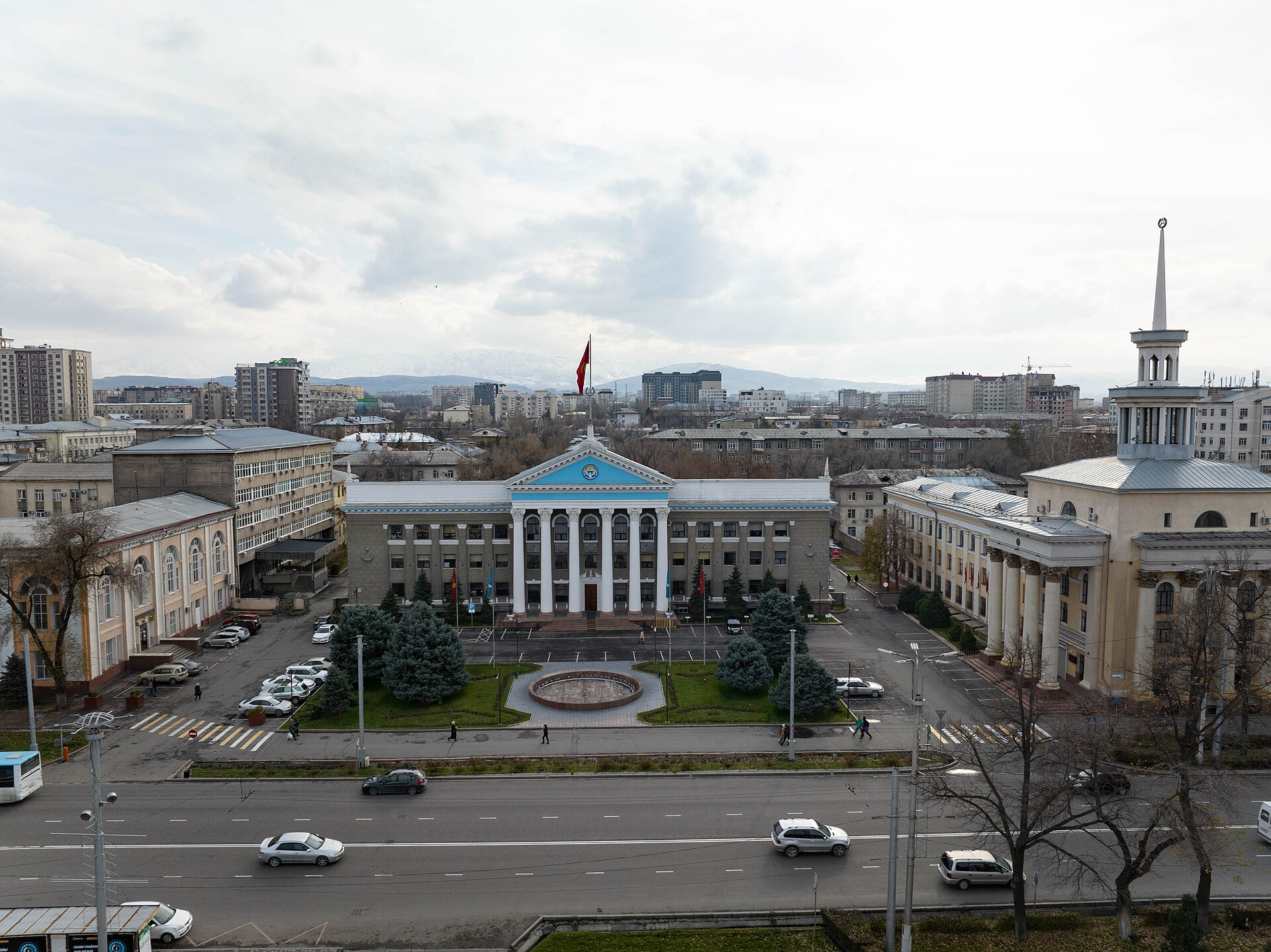
The 26th meeting of the Shanghai Cooperation Organization (SCO) Council of Heads of State was held in the Kyrgyz capital, Bishkek, on Aug. 31 and Sept. 1, 2026. The meeting coincided with the organization's 25th anniversary and was the fourth time Kyrgyzstan has hosted an SCO summit.
Kyrgyz President Sadyr Japarov chaired the summit. The meeting was held under the slogan “25 Years of the SCO: Together Toward Sustainable Peace, Development and Prosperity.”
Who attended
Among the leaders of member states, Chinese President Xi Jinping, Russian President Vladimir Putin, Indian Prime Minister Narendra Modi, Iranian President Masoud Pezeshkian, Belarusian President Alexander Lukashenko and Pakistani Prime Minister Shehbaz Sharif took part. The heads of state of Uzbekistan, Kazakhstan and Tajikistan also attended.
From partner states, Turkish President Recep Tayyip Erdoğan, Azerbaijani President Ilham Aliyev, Armenian Prime Minister Nikol Pashinyan and Mongolian President Ukhnaagiin Khurelsukh were invited. Representatives of Egypt, Laos, Togo and Vietnam were also present. UN Secretary-General António Guterres attended the summit as well.
By the numbers
- Summit dates: Aug. 31 – Sept. 1, 2026
- Meeting number: 26th
- Documents signed: 28
- Age of the organization: 25 years
- Kyrgyzstan as host: 4th time
- Next summit: 2027, Islamabad
The Bishkek Declaration
On Sept. 1, the heads of state signed the Bishkek Declaration marking the SCO's 25th anniversary. Along with that document, 27 other documents were adopted covering security, counternarcotics, artificial intelligence, biodiversity, energy and climate cooperation, nuclear safety and regional logistics.
The declaration condemned the military strikes carried out on the territory of the Islamic Republic of Iran. The text assessed these strikes as a violation of the norms of international law. The document expressed condolences over the death of Iran's supreme leader, Ali Khamenei, in an airstrike in February 2026.
Military strikes on the territory of the Islamic Republic of Iran that have resulted in numerous civilian casualties.
— From the text of the Bishkek declaration (Al Jazeera translation, 01.09.2026)
The declaration noted that Iran's right to a nuclear program for peaceful purposes under the Treaty on the Non-Proliferation of Nuclear Weapons must be recognized without discrimination. At the same time, member states stated their opposition to unilateral sanctions that run counter to the UN Charter and World Trade Organization rules.
“Not a military-political bloc”
The document stressed separately that the SCO is not a military-political bloc. Member states stated that they reject bloc-to-bloc confrontation in international relations and called for resolving conflicts through diplomatic means.
The section on combating terrorism, separatism and extremism noted the need for an approach free of “double standards.” Indian Prime Minister Narendra Modi said double standards in counterterrorism must be eliminated. An exchange of accusations over terrorism between India and Pakistan was observed during the summit.
The paragraph on the Palestinian question stressed the need for a comprehensive resolution of the issue for the sake of stability in the Middle East.
The economic portion
Member states committed to implementing economic and energy cooperation strategies running through 2030. The documents set out the task of stabilizing global trade flows disrupted by regional conflicts and instability along sea routes.
On the sidelines of the summit, Chinese President Xi Jinping and Kyrgyz President Sadyr Japarov signed a treaty on “permanent good-neighborliness, friendship and cooperation.”
Organizational decisions
The Pakistani city of Lahore was designated the SCO's Tourism and Culture Capital for 2026–2027.
At the summit's close, Kyrgyzstan handed the organization's next chairmanship to Pakistan. The 2027 summit will be held in Islamabad.
Context
The situation before the summit
The Bishkek summit took place against the tensest geopolitical backdrop of 2026. In February, the United States and Israel launched large-scale airstrikes on Iranian territory; Iran's supreme leader, Ali Khamenei, was killed in those strikes. Clashes between Iran and the United States continued through the spring and summer. Meanwhile, the Russia–Ukraine war entered its fourth year, and in Gaza, although the ceasefire agreement announced in October 2025 formally remained in force, strikes did not stop.
Much of the summit's agenda was therefore devoted to security matters. The portion of the declaration concerning Iran was one of the sharpest statements the organization has adopted in its history regarding attacks on a member state's territory.
What the documents cover
The 28 documents adopted include security agreements, a program to combat narcotics trafficking, documents on cooperation in artificial intelligence, and accords on biodiversity conservation, energy and climate, nuclear safety and regional logistics.
In the economic bloc, member states committed to implementing economic cooperation and energy strategies running through 2030. The documents set out the task of reducing losses caused by disruptions on global trade routes — including instability along sea routes.
What it means for Central Asia
Four Central Asian states — Uzbekistan, Kazakhstan, Kyrgyzstan and Tajikistan — are SCO members. Turkmenistan does not join the organization because of its permanent neutrality. Holding the summit in one of the region's capitals gave Central Asian states the chance to hold bilateral meetings with the leaders of China, Russia, India and Iran within a single week.
Uzbek President Shavkat Mirziyoyev proposed at the summit that a conceptual document titled “SCO-2040: Common Space of Development” be developed, and raised the question of making the SCO Development Bank operational. Tashkent said it was ready to host an SCO forum on artificial intelligence and new digital solutions next year.
The Afghanistan question
The question of restoring dialogue on Afghanistan was raised at the summit. The Uzbek side said the time had come to resume regular dialogue between the SCO and Afghanistan. For the region's states, this issue is directly connected to security, transport routes and water resources.
India-Pakistan tensions
An open exchange of accusations over terrorism was observed between the Indian and Pakistani delegations during the summit. Narendra Modi called for eliminating “double standards” in counterterrorism. The final declaration retained a paragraph on not permitting double standards in combating terrorism, separatism and extremism.
At the same time, Narendra Modi and Xi Jinping were filmed greeting each other in Bishkek — noted separately in international media as a marker of the state of relations between the two countries since the 2020 border clashes.
What changed and what did not
At the summit's close, Kyrgyzstan handed the chairmanship to Pakistan; the next meeting will be held in Islamabad in 2027. The Pakistani city of Lahore was designated the SCO's Tourism and Culture Capital for 2026–2027.
The declaration's statement that the SCO is not a military-political bloc repeats the organization's consistent position over its 25-year history. Member states' stance on unilateral sanctions also remained unchanged: the text rejects restrictions that run counter to the UN Charter and World Trade Organization rules.