The Soviet–Afghan War and Afghan Displacement (1979–1992): Afghan Uzbeks and the Refugee Wave
The 1979 Soviet invasion caused the largest refugee exodus since World War II — by 1989 more than six million Afghans had fled to Pakistan and Iran. The Afghan Uzbeks of the north were part of this displacement too.
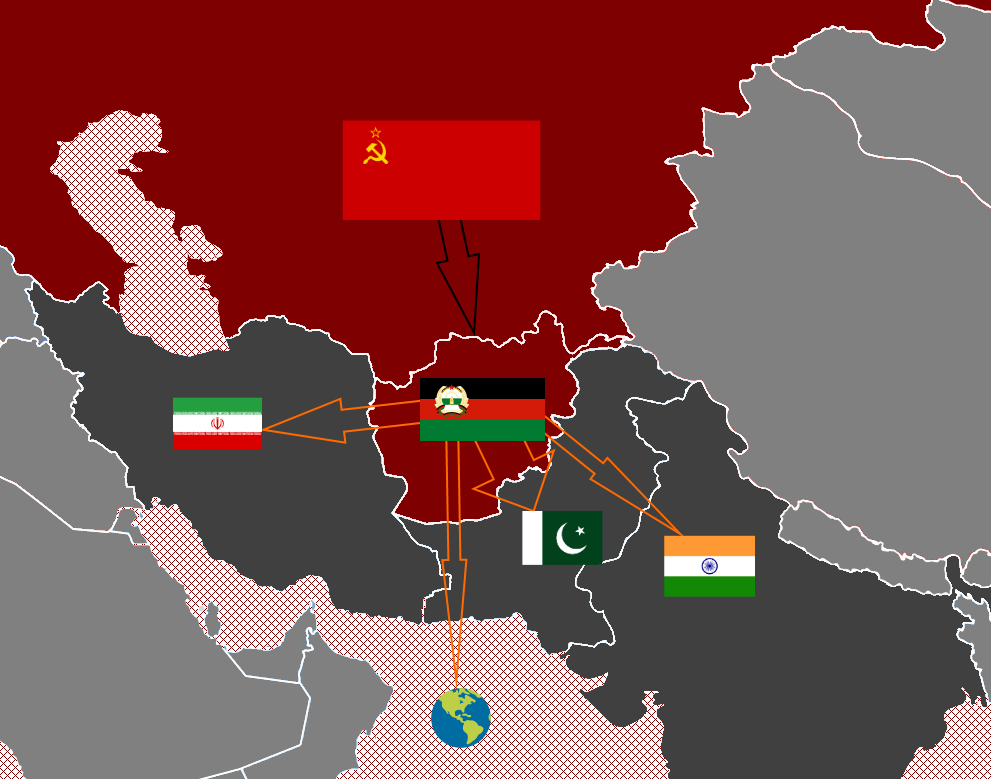
In December 1979 the Soviet Union sent troops into Afghanistan, beginning a war that lasted almost a decade. Soviet forces withdrew completely on 15 February 1989. The war caused the largest refugee exodus since World War II: by 15 February 1989 the number of Afghan refugees had reached 6.2 million, split almost equally between the two neighboring states, Pakistan and Iran (Source: UNHCR — Afghanistan: 10 Years After Soviet Pull-out; Amnesty International — Afghanistan's Refugees: Forty Years of Dispossession).
How the refugee numbers grew
The exodus grew in stages. By the end of 1979 there were already around 400,000 refugees in Pakistan and 200,000 in Iran. By 1981 the figure reached 1.5 million, and by 1986 nearly 5 million, mostly in Pakistan and Iran. In addition, about 2 million Afghans were displaced inside their own country — often from villages to cities. Pakistan and Iran remained among the world's largest refugee-hosting states throughout the decade (Source: Forced Migration Review — Afghanistan: Conflict and Displacement 1978–2001; UNHCR).
The Afghan Uzbeks of the north
Afghanistan's northern provinces — Balkh, Jowzjan, Faryab, Samangan, and Sar-e Pol — have long been home to ethnic Uzbeks, Turkmens, and Tajiks. Part of this community traces its roots to the Turkistan emigration of the 1920s–1930s — the Basmachi-era muhajirs who fled Soviet rule into Afghanistan. During the war the Afghan Uzbeks became part of the general exodus: studies note that about 40,000 Afghan Uzbek refugees settled in Karachi, Pakistan in the 1980s, with ethnically Uzbek Afghans scattering beyond Peshawar (Source: Wikipedia — Afghans in Pakistan; Forced Migration Review).

Why people fled
The drivers of displacement were military operations against villages, aerial bombing, mined fields, and food shortages. Resistance (mujahideen) forces fought the Soviet army and Afghanistan's Moscow-backed government; that struggle received backing from the U.S., Saudi Arabia, and Pakistan. Refugees settled mainly in camps in Pakistan's Khyber Pakhtunkhwa and Balochistan provinces and in Iran's eastern provinces (Source: Amnesty International; Forced Migration Review).
After the war: 1992 and independent Uzbekistan
Peace did not come even after the Soviet withdrawal. In 1992, a year after Uzbekistan gained independence, the fall of the Moscow-backed government in Kabul triggered a bloody civil war, and refugees began crossing the border of the newly independent Uzbekistan — along the Amu Darya — in large numbers. They were ethnically diverse: along with Uzbeks and Tajiks from the north there were Pashtuns, Hazaras, and Baluchis (Source: IWPR — Uzbekistan Gives Afghans No Reason to Stay; UNHCR).
Uzbekistan's cautious policy
Uzbekistan took a cautious approach to refugees. It remained the only former Soviet state not to sign the 1951 UN Convention on refugees' rights. According to Abdul Karim Gul, a former head of the UNHCR mission in Uzbekistan, the overwhelming majority of Afghan refugees were eventually resettled in third countries — from Russia to Canada. Thus the war not only scattered the Afghan Uzbek community once more but reshaped the migration map of the whole region (Source: IWPR — Uzbekistan Gives Afghans No Reason to Stay).
Legacy
The 1979–1989 war and the civil war that followed condemned several generations of Afghans — including Afghan Uzbeks — to lives in exile. Many refugees stayed in Pakistan and Iran for decades; some moved on to Turkey, Europe, and North America, forming the base of today's Afghan diaspora. In northern Afghanistan the ethnic Uzbek community endured and, in the decades that followed, came to play a visible role in the country's political life (Source: Amnesty International; Forced Migration Review).
