Tokayev Meets U.S. Special Envoy Sergio Gor on the Sidelines of the BRICS Summit
Cooperation in artificial intelligence and digitalization was discussed at the Sept. 12 meeting in New Delhi. Gor conveyed Donald Trump's personal congratulations; Tokayev reiterated his invitation for Trump to visit Kazakhstan.
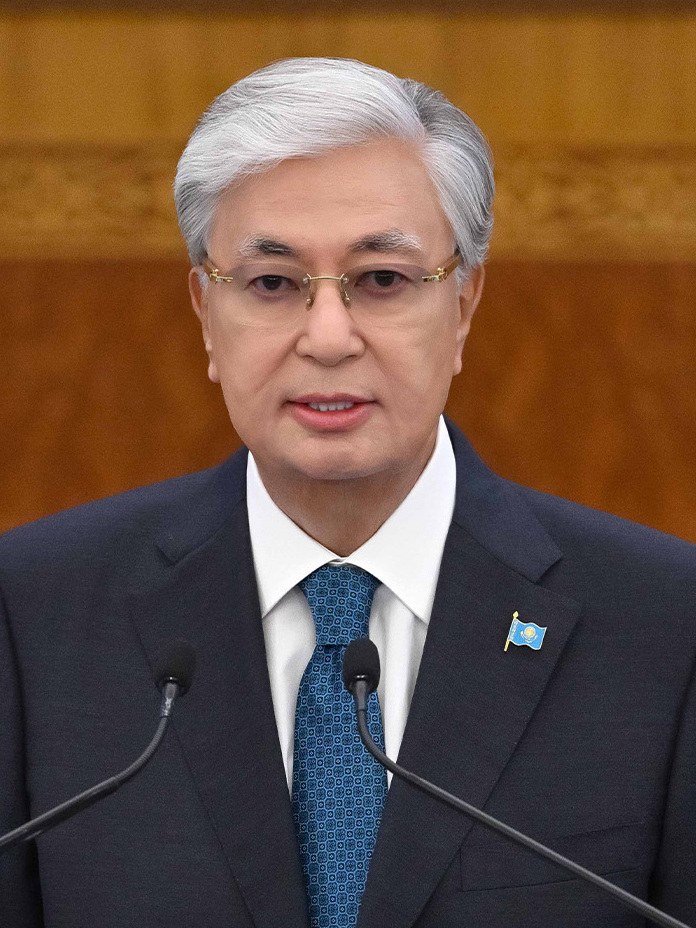
On Sept. 12, 2026, on the sidelines of the 18th BRICS summit under way in New Delhi, Kazakh President Kassym-Jomart Tokayev met with Sergio Gor, the U.S. president's special envoy for South and Central Asia.
According to the official readout, Gor conveyed the personal congratulations of U.S. President Donald Trump — offered on the occasion of the 35th anniversary of Kazakhstan's independence.
What was discussed
The main part of the conversation was devoted to developing the strategic partnership between Kazakhstan and the United States. Particular attention was given to cooperation in artificial intelligence and digitalization.
The two sides also discussed Tokayev's participation in the G20 summit to be held in Miami in December.
We prefer not fine words but concrete results and practical steps that advance our cooperation.
— Kassym-Jomart Tokayev, President of Kazakhstan (from The Times of Central Asia translation, 12.09.2026)
Tokayev expressed gratitude to the U.S. president and reiterated that he had invited him to visit Kazakhstan.
By the numbers
- Meeting date: Sept. 12, 2026
- Location: New Delhi, sidelines of the 18th BRICS summit
- U.S. representative: Sergio Gor — special envoy for South and Central Asia
- Occasion: the 35th anniversary of Kazakhstan's independence
- Topics discussed: artificial intelligence, digitalization, the G20 summit
- G20 summit: December 2026, Miami
Intensifying U.S.–Central Asia contacts
The meeting took place against a backdrop of intensifying contacts between U.S. and Central Asian officials. In June, Sergio Gor met with Kazakhstan's foreign minister.
That same month, Tokayev held talks with Ben Black, head of the U.S. International Development Finance Corporation (DFC), on critical minerals and artificial intelligence. In July, Tokayev and Trump spoke by telephone.
On Sept. 9, a meeting of the C5+1 format's secretariat was held in Ashgabat. C5+1 is a coordination format between the United States and the five Central Asian states that has operated since 2015.
The critical minerals context
Over the past two years, critical minerals have taken a central place in U.S. diplomacy toward Central Asia. In February 2026, the United States and Uzbekistan signed a joint investment framework on critical minerals.
Kazakhstan holds reserves of uranium, chromite, titanium, beryllium, tantalum and zinc. The country is the world's largest uranium producer; Uzbekistan ranks fifth in uranium production.
The BRICS summit
The 18th BRICS summit was held on Sept. 12–13 at the Bharat Mandapam center in New Delhi. Held under India's chairmanship, the summit's theme was “Building for Resilience, Innovation, Cooperation and Sustainability.”
Kazakhstan is not a BRICS member; Tokayev attended the summit as a guest. On the sidelines he also held a bilateral meeting with Indian Prime Minister Narendra Modi.
Multi-vector policy
Kazakhstan officially pursues a multi-vector foreign policy: the country is simultaneously a member of the Russia-led Eurasian Economic Union and the Collective Security Treaty Organization, cooperates with China under the Belt and Road Initiative, and develops economic ties with Western countries.
On Sept. 2, Tokayev appointed Mukhtar Tleuberdi as foreign minister. Tleuberdi held the post in 2019–2023 as well; over the past three years he represented Kazakhstan in Austria and at international organizations in Vienna. He was appointed in place of Yermek Kosherbayev.
The appointment coincided with a restructuring of the country's political system — the launch of the unicameral Qurultai parliament.
Context
The C5+1 format
C5+1 is a coordination format between the United States and the five Central Asian states: Kazakhstan, Uzbekistan, Kyrgyzstan, Tajikistan and Turkmenistan. It was created in Samarkand in 2015 and initially operated at the level of foreign ministers.
A meeting of the format's secretariat was held in Ashgabat on Sept. 9. Working groups operate within the format on security, the economy, energy and the environment.
Critical minerals have taken a central place on the C5+1 agenda in recent years. In February 2026, the United States and Uzbekistan signed a joint investment framework on critical minerals; the document is being implemented through the U.S. International Development Finance Corporation (DFC).
Who Sergio Gor is
Sergio Gor is the U.S. president's special envoy for South and Central Asia. His remit covers India, Pakistan, Afghanistan and the five Central Asian states.
Gor met with Kazakhstan's foreign minister in June. That same month, Tokayev held talks with DFC head Ben Black on critical minerals and artificial intelligence; in July, Tokayev and Trump spoke by telephone.
Competition over critical minerals
Central Asia is a focus of attention for several major players because of its critical mineral reserves. Kazakhstan holds reserves of uranium, chromite, titanium, beryllium, tantalum and zinc; a joint research center on rare earth metals has been established at Satbayev University in the country.
Uzbekistan has announced a $4.2 billion critical minerals program for 2026–2030, comprising 120 projects. Its aims include producing high-purity selenium, tellurium and rhenium.
On Sept. 14, South Korean President Lee Jae-myung met in Seoul with Asian Development Bank President Masato Kanda; he committed $500 million each to a financing fund established by Korea Eximbank and K-SURE.
Kazakhstan's multi-vector policy
Kazakhstan officially pursues a multi-vector foreign policy. The country is a member of the Russia-led Eurasian Economic Union and the Collective Security Treaty Organization; it cooperates with China under the Belt and Road Initiative; and at the same time it develops economic ties with Western countries.
Tokayev attended the BRICS summit as a guest on Sept. 12; on the sidelines he also held a bilateral meeting with Indian Prime Minister Narendra Modi. Kazakhstan is not a BRICS member.
Changes in Kazakhstan's domestic politics
On Sept. 2, Tokayev appointed Mukhtar Tleuberdi as foreign minister. Tleuberdi held the post in 2019–2023 as well; over the past three years he represented Kazakhstan in Austria and at international organizations in Vienna.
He was appointed in place of Yermek Kosherbayev, who had led the ministry since September 2025. The appointment coincided with a restructuring of the country's political system — the launch of the unicameral Qurultai parliament — and was one of the first major personnel decisions of that stage.
Tokayev has announced that he will address the nation in October; the address is expected to set out the country's goals and priorities.
The December schedule
The meeting discussed Tokayev's participation in the G20 summit to be held in Miami in December. Kazakhstan is not a G20 member; the country's leader is expected to attend as an invited guest.
The 35th anniversary of Kazakhstan's independence will be marked during this period. At the meeting, Sergio Gor conveyed the personal congratulations offered on that occasion by U.S. President Donald Trump.
No official information has been released on the date of a U.S. presidential visit to Kazakhstan.
At a ceremony in Astana on Sept. 11 honoring the winners of the World Nomad Games, Tokayev announced that he would address the nation in October. The address is expected to set out the country's goals and priorities.
No official information has been released on the date of a U.S. presidential visit to Kazakhstan.