Saida Mirziyoyeva Appointed Manager of the Tashkent International Financial Centre
Under a presidential decree, the head of the Presidential Administration will perform the new role concurrently. The center operates under a separate regime based on English law and is scheduled to launch in 2027.
On Sept. 10, 2026, Uzbek President Shavkat Mirziyoyev signed a decree appointing Saida Mirziyoyeva, head of the Presidential Administration, as manager of the Tashkent International Financial Centre. Presidential press secretary Sherzod Asadov announced the decision.
The appointment was made on a concurrent basis — that is, Saida Mirziyoyeva remains head of the Presidential Administration and will perform the new role in parallel.
What the manager does
According to the official information, the manager serves as secretary general of the financial center's Council. The manager sets the Council's agenda and chairs its meetings in the chairman's absence.
- Serving as secretary general of the financial center's Council
- Setting the Council's agenda and chairing meetings
- Coordinating the center's launch
- Preparing priority documents and establishing interagency cooperation
- Representing the center before international organizations, investors and partners
- Taking part in personnel matters, including appointing the executive director
- Concluding contracts and forming working groups
One of the manager's principal tasks is coordinating the center's launch. This includes preparing priority documents and organizing cooperation between state agencies and the center's structures.
The manager represents the center before international organizations, investors and partners both within the country and abroad. The role carries authority over personnel matters — including appointing the center's executive director, concluding contracts and forming working groups.
What the center is
The Tashkent International Financial Centre was established by Presidential Decree No. 48, signed on March 31, 2026. In July, the Oliy Majlis adopted a constitutional law on the center.
The constitutional law establishes a separate legal regime for the center: commercial disputes within its scope are heard under a system based on English law. This model resembles the experience of the Dubai International Financial Centre and the Astana International Financial Centre.
Tax incentives for companies operating in the center apply through 2076 — that is, they are set for a fifty-year term. The center's full launch is planned for 2027.
By the numbers
- Appointment date: Sept. 10, 2026
- Decree establishing the center: March 31, 2026, No. 48
- Constitutional law: July 2026
- Duration of tax incentives: through 2076
- Planned launch: 2027
- Legal model: a system based on English law
Who Saida Mirziyoyeva is
Saida Mirziyoyeva is 41. She has served as head of the Presidential Administration since 2025. She is also deputy chair of the Security Council.
Before that, she oversaw information policy and mass communications at the Presidential Administration and worked at the Agency for Information and Mass Communications. Saida Mirziyoyeva is President Shavkat Mirziyoyev's eldest daughter.
Competition with Astana
The first project on the international financial center model in Central Asia — the Astana International Financial Centre (AIFC) — was launched in 2018. It too has a separate court system based on English common law and operates under a regime set apart from Kazakh legislation.
The Tashkent project replicates that model and will be the region's second such center. The stated aim is to attract international financial companies, asset management funds and law firms to the country.
The economic backdrop
The appointment came during a period of major economic reforms in Uzbekistan. A decree signed Aug. 28 provides for state stakes in 62 companies to be put up for auction by 2028; the total value of the assets to be sold is estimated at 100 trillion soums.
The government has announced targets for 2026 of 6.6 percent economic growth, raising GDP above $150 billion and holding inflation below 7 percent. Gold and foreign exchange reserves rose 35 percent over the year to reach $55 billion.
Uzbekistan has formally set a goal of achieving an investment-grade credit rating. The international financial center project is being presented as a component of that task.
How the international financial center model works
International financial centers are special zones established on a country's territory but partly set apart from its general legal and tax regime. Their purpose is to create a familiar legal environment to attract foreign banks, insurance companies, asset management funds and law firms.
Such centers generally rest on three elements: a separate commercial court or arbitration center, an independent financial regulator and long-term tax incentives. All three are provided for in the Tashkent project — the court system is based on English law, and tax incentives are set through 2076.
The best-known examples of this model are the Dubai International Financial Centre (2004), the Qatar Financial Centre (2005), Abu Dhabi Global Market (2015) and the Astana International Financial Centre (2018). All of them use a court system based on English common law.
Why English law
International investors and banks generally structure large transactions under English or New York law. Practice in corporate contracts, collateral and dispute resolution has developed over many years in these legal systems and is considered predictable.
Resolving disputes through a national court system is regarded as an additional risk by foreign investors. Introducing a separate regime is therefore seen as an instrument for attracting investment.
The project's stages
The first official document on the center was Presidential Decree No. 48, signed on March 31. In July, the Oliy Majlis adopted a constitutional law; a law of that status ranks above ordinary laws and is amended through a more complex procedure.
The Sept. 10 appointment is the next step in the project's organizational stage. The position of manager was created to coordinate the process of launching the center.
The Tashkent city context
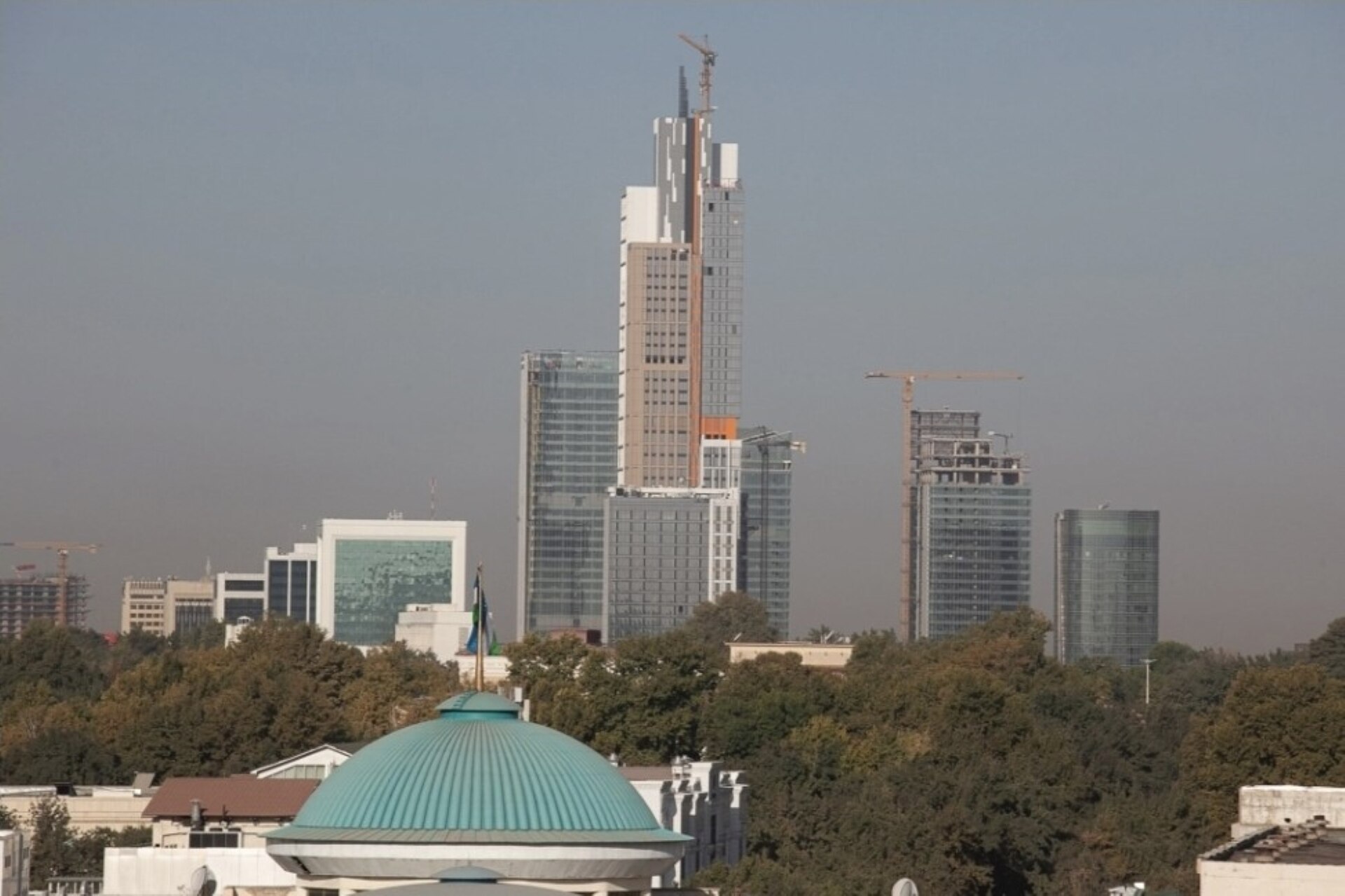
The center is being discussed in connection with the new business district known as Tashkent City. This is a multifunctional complex under construction in the capital's center, containing office buildings, hotels and residential complexes.
For now, no official information has been released on the center's exact address or infrastructure. Decisions on real estate are expected to be set out in subsequent documents.
Open questions
The official announcements do not indicate who will serve as the center's executive director, the composition of the Council or who will chair it. No detailed information has been given on where the center will be physically located or how it will be financed.
How the court system within the center will be constituted — where judges will be recruited from and how rulings will be coordinated with Uzbekistan's court system — is likewise expected to be set out in separate documents.
The center is planned to launch in 2027; no specific date has been announced.