How the Two Eids — Eid al-Fitr and Eid al-Adha — Are Observed: The Eid Prayer, the Takbir, and Zakat al-Fitr
When the two Islamic festivals fall, how the Eid prayer is performed, and what the takbir and Zakat al-Fitr are — a facts-only explainer. (Differences between schools are shown neutrally; Uzbekistan mainly follows the Hanafi school.)
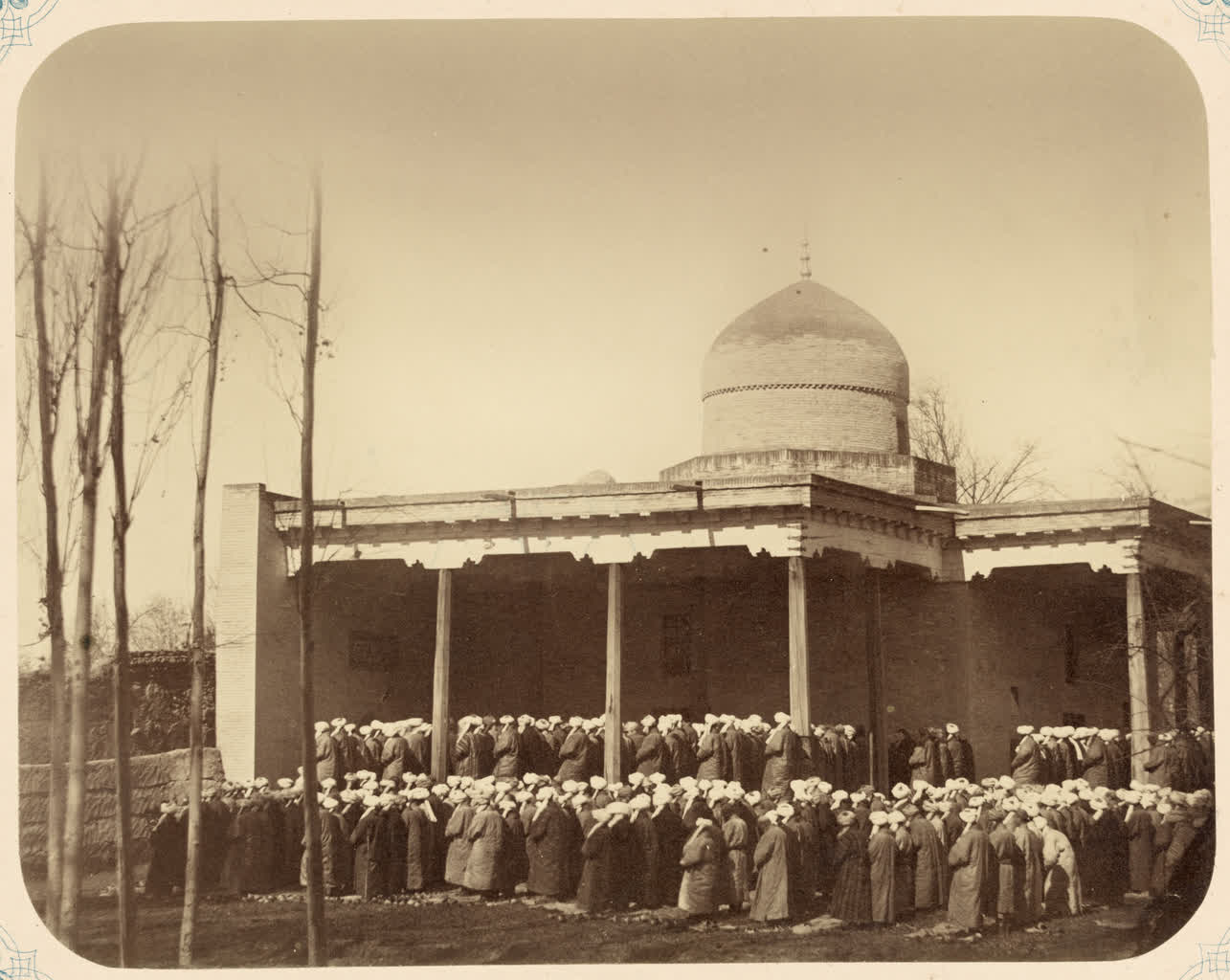
Islam has two main festivals (Eid): Eid al-Fitr (Uzbek: Ramazon hayiti) and Eid al-Adha (Qurbon hayiti). Both are tied to the lunar (Hijri) calendar and are marked with a special congregational festival prayer, the Eid prayer. This explainer sets out, in facts, the timing of each festival, the Eid prayer, the takbir, and Zakat al-Fitr. On some points the Sunni schools (madhhabs) differ; these are presented neutrally, and the ruling of the Hanafi school — widespread in Uzbekistan — is noted separately.
Eid al-Fitr (Ramazon hayiti)
Eid al-Fitr falls on the 1st of Shawwal, the tenth month of the lunar calendar, once the fasting month of Ramadan ends. The Arabic word fitr means breaking the fast — the conclusion of a month of dawn-to-sunset fasting (Source: Britannica). Ramadan lasts 29 or 30 days; the festival begins once the new crescent of Shawwal is sighted.
Eid al-Adha (Qurbon hayiti)
Eid al-Adha falls on the 10th of Dhu al-Hijjah, the final month of the lunar calendar, during the Hajj season. The festival commemorates the Prophet Ibrahim's (Abraham's) willingness to sacrifice his son in obedience to God, upon which God provided a ram (Source: Islamic Relief; Britannica). The celebration continues into the days of Tashriq, 11-13 Dhu al-Hijjah. It is directly linked to the Hajj and is marked by the sacrifice (qurbani/udhiyah) of a permitted animal (sheep, goat, cow, or camel); by tradition the meat is divided three ways — for the family, for relatives and friends, and for the poor. The sacrifice window begins after the Eid prayer and runs through the 13th (Source: Islamic Relief; Muslim Aid).

How the Eid Prayer Is Performed
The Eid prayer is performed in congregation in the morning, after sunrise and before noon. It consists of two rak'ahs with extra takbirs that are not part of an ordinary prayer (the number of takbirs varies slightly by school); no adhan or iqama is called before it. Unlike the Friday prayer, the sermon (khutbah) comes after the prayer (Source: Islamic encyclopaedic sources). It is often performed in a large open ground (an eidgah / musalla) as well as in mosques. The ruling differs by school: in the Hanafi and Hanbali schools the Eid prayer is wajib (obligatory), while in the Maliki and Shafi'i schools it is a strongly emphasised sunnah. Because Uzbekistan mainly follows the Hanafi school, the wajib ruling applies there.
The Takbir
Reciting the takbir during the days of Eid is an important part of the festival. The text is: Allahu akbar, Allahu akbar, la ilaha illa Allah, wa-llahu akbar, Allahu akbar wa li-llahi l-hamd (God is greatest, God is greatest; there is no deity but God; God is greatest, God is greatest, and to God belongs all praise). For Eid al-Fitr the takbir is recited from the eve of the festival (once the Shawwal crescent is sighted) and on the way to the prayer ground. For Eid al-Adha, the takbir al-tashriq is recited after every obligatory prayer from the dawn prayer of the Day of Arafah (9 Dhu al-Hijjah) through the end of the days of Tashriq (until the afternoon prayer of the 13th); in the Hanafi school this is considered wajib (Source: Islamic sources).
Zakat al-Fitr (Fitr sadaqasi)
Zakat al-Fitr is an obligatory charity that must be given before the Eid al-Fitr prayer. If given after the prayer it counts only as ordinary voluntary charity; scholars therefore recommend giving it a day or two earlier so it reaches the poor in time for the festival. The amount is one sa' (about 2.5-3 kg) of a staple food (wheat, barley, dates, rice, and the like) per person, or its cash equivalent; giving it in cash is permitted in the Hanafi school (some schools prefer food in kind). Its purpose is to purify the fasting person of shortcomings and to let the poor also share in the festival. The head of the household gives it on behalf of dependents, including children (Source: Islamic legal sources).
Customs
Eid etiquette includes performing ghusl (a full ritual wash) before the prayer and wearing one's best or new clothes; on Eid al-Fitr, eating a little something sweet BEFORE the prayer — traditionally an odd number of dates (signalling that the fast is over, since fasting on Eid is forbidden); on Eid al-Adha, by contrast, not eating before the prayer, and eating from the sacrifice afterwards is the sunnah. People greet one another with Eid Mubarak and Taqabbal Allahu minna wa minkum (May God accept it from us and from you); they visit relatives, give gifts to children, and give to charity. Visiting graves is also a widespread folk custom; however, many scholars regard it not as something specific to Eid but as a generally permitted practice — so it is presented here as a cultural custom, not a religious obligation (Source: Islamic sources). In Uzbekistan both festivals — Ramazon hayit and Qurbon hayit — are official public holidays (Qurbon hayit a state holiday since 1991 and Ramazon hayit since 1992; Source: list of public holidays in Uzbekistan).
Why the Dates Shift Each Year
The Islamic (Hijri) calendar is purely lunar and has about 354 days — roughly 10-11 days shorter than the Gregorian (solar) year. For this reason both Eids move about 10-11 days earlier each year on the Gregorian calendar, cycling through all the seasons over roughly 33 years (Source: Islamic calendar sources).
