The switch to the Latin script: the 1993 alphabet reform and its stages
After independence Uzbekistan, on 2 September 1993, adopted a law introducing a Latin-based Uzbek alphabet. This historical explainer sets out the succession of Arabic, Latin and Cyrillic scripts, the 1993 law, the 1995 revision and the three-decade-long transition — on the basis of sources, with precise dates and facts.
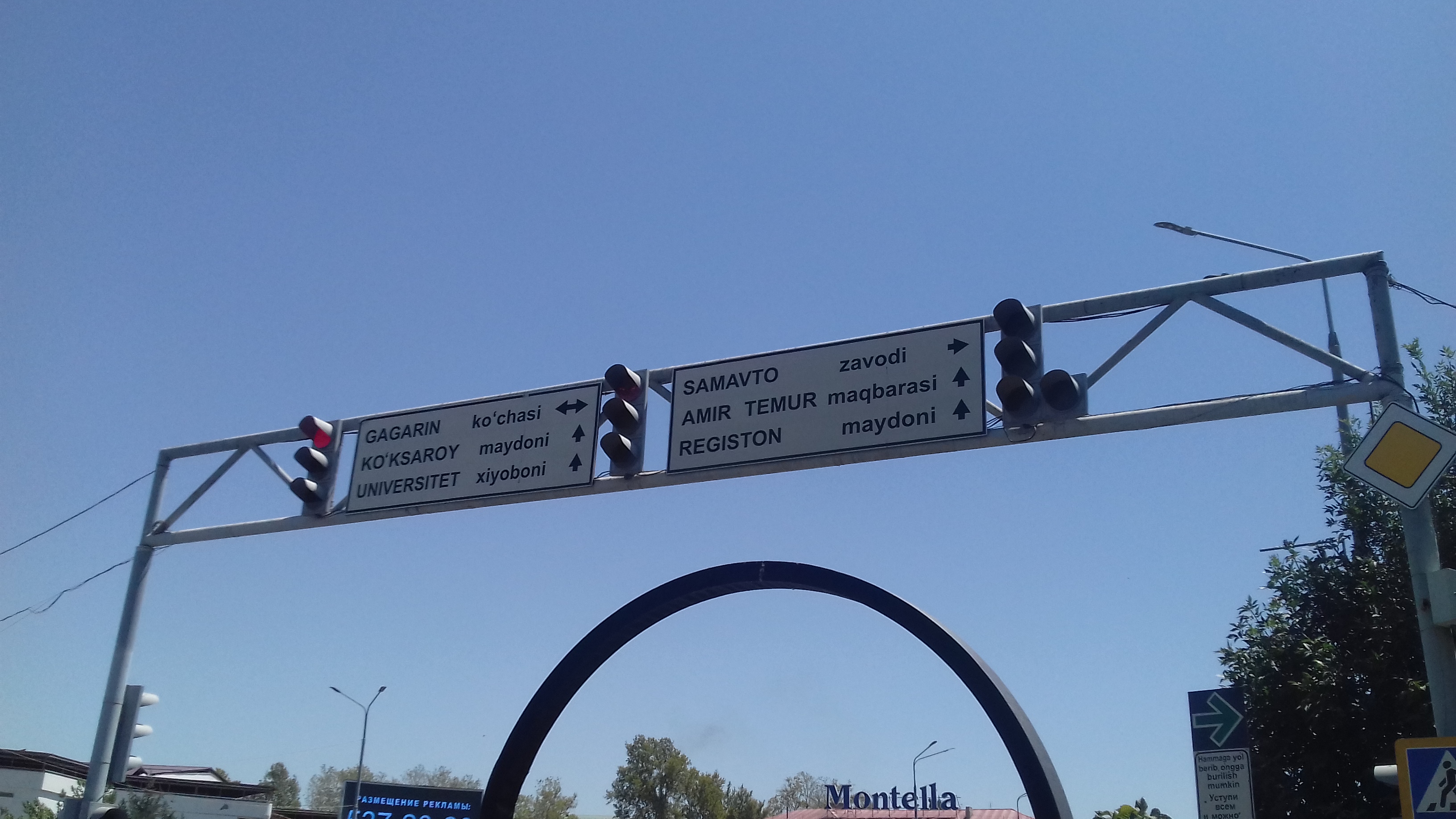
On gaining independence, Uzbekistan chose to return from the Cyrillic script to the Latin script. Below the history of the Uzbek alphabet and the 1993 reform — its historical background, its legal stages and its implementation — is set out as sourced facts only, with precise dates and details.
Historical background: Arabic, Latin, Cyrillic
Until 1929 the Uzbek language was written mainly in the Arabic script. At a spelling conference held in Samarkand in 1929 a Latin-based alphabet (initially 34 letters) was adopted and used from 1929 to 1940; a 1934 reform simplified it. In 1940, under Stalin, Uzbek was switched to the Cyrillic script, which remained in place until the end of the Soviet era.
2 September 1993: the Latin script returns
On 2 September 1993 Uzbekistan adopted the law "On the Introduction of the Uzbek Alphabet Based on the Latin Script". The law stated that the decision was based on the positive experience of 1929–1940 and on the wishes expressed by representatives of the general public. The initial alphabet contained diacritical letters such as Ç, Ş, Ö and Ğ; a full transition was planned to be completed by September 2010.

The 1995 revision
The 1993 alphabet was revised in May 1995, and on 24 August 1995 the Cabinet of Ministers approved the "Principal Orthographic Rules for the Uzbek Language" (Resolution No. 339). The revision replaced the diacritical letters with digraphs (Sh, Ch) and apostrophe letters (Oʻ, Gʻ). The alphabet thus consisted of 26 basic Latin letters plus the combinations Sh, Ch, Ng, the letters Oʻ and Gʻ, and the apostrophe sign; this standard remained in force for roughly three decades.
Implementation
From 1996 the educational process in all institutions was conducted fully in the Latin script, and textbooks were printed in the Latin alphabet. However, the deadline for full transition was repeatedly extended (first to 2005, then to 2010), while Cyrillic remained widely used in the press and in official use. In February 2021 the government announced a plan to move document management fully to the Latin script by 1 January 2023.
Toward a new revision (2019–2026)
In 2019–2021 drafts for a new revision of the alphabet were proposed. On 10 September 2026 the Senate of Uzbekistan's Oliy Majlis approved a law updating the alphabet: it provides for the changes Oʻ → Ö, Gʻ → Ğ, Sh → Ş and Ch → Ç, so that the alphabet comes to consist of 28 letters and one apostrophe sign. Under the law, first-grade textbooks are to be printed in the new version from 2027, with the full transition planned by 2031.
Conclusion
Since the 1993 reform, the Latinization of Uzbek writing has been a process lasting more than thirty years. Today the Latin and Cyrillic scripts continue to be used side by side in Uzbekistan — a situation that also requires the Uzbek diaspora abroad to know both scripts.
