The Turkestani Émigré Press: the Journals Yangi Turkistan and Yosh Turkistan (1927–1939)
Two journals published far from home in the Soviet era — Yangi Turkistan in Istanbul and Yosh Turkistan printed in Berlin — became the voice of Turkestan's émigré intellectuals. Here is their history, with exact dates and figures.
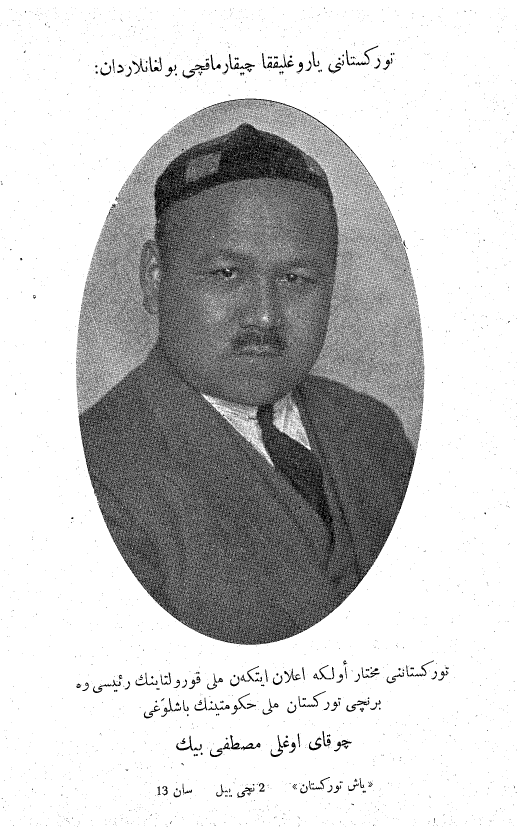
In the 1920s, Turkestani intellectuals who had left Bolshevik rule formed a political émigré community in Europe, centred mainly in Istanbul, Berlin, Paris and Warsaw. A first wave had fled largely via Afghanistan and Iran; others were former prisoners of war or students who remained in Germany. In this milieu a press emerged to cover Turkestan's fate from abroad (Source: academia.edu — The Early Turkestani Émigré Struggle and Turkestanism; einfolib.uz — Collecting exile).
Yangi Turkistan (Istanbul, 1927–1931)
The first issue of the journal Yangi Turkistan (Yeni Türkistan) appeared in Istanbul in June 1927. It was run by the Bashkir historian-politician Ahmet Zeki Velidi Togan together with Abdülkadir İnan. The journal ran about four years and was shut down by the Turkish government in 1931 — a period when Soviet–Turkish relations were improving (Source: Wikipedia — Zeki Velidi Togan; TESAM Akademi).
Yosh Turkistan (Berlin, 1929–1939)
The first issue of Yosh Turkistan (Yaş Türkistan) appeared in December 1929. It was edited in Nogent-sur-Marne near Paris and printed in Berlin — so calling it simply a 'Berlin journal' is not fully accurate. Its editor and leading figure was Mustafa Chokay. Over ten years it produced about 117 issues; the last appeared in September 1939, ending with the outbreak of the Second World War. It was printed in Chagatai (Turkestani) Turkic in Arabic script, so that readers in Germany, Iran, India and Afghanistan who did not know the new Latin alphabet could read it (Source: Atatürk University — Yaş Türkistan Dergisi (1929–1939); uz.wikipedia; einfolib.uz).

Mustafa Chokay (1890–1941)
Mustafa Chokay was born in 1890 in the Syr Darya area of Russian Turkestan (in what is today southern Kazakhstan). He led the short-lived Turkestan (Kokand) Autonomy from December 1917 to February 1918; he later became the recognized leader of the Turkestani political emigration. Chokay reached Paris in 1921 and from 1923 lived in Nogent-sur-Marne, where he spent about eighteen years (Source: Wikipedia — Mustafa Shokay; TDV İslâm Ansiklopedisi).
He was an anti-Soviet publicist who wrote works such as Turkestan under Soviet Rule (1935) and memoirs of the events of 1917. On 22 June 1941 — the day Germany attacked the USSR — he was arrested by the Nazis and taken to Berlin; he refused to lead the German-sponsored Turkestan Legion and died in Berlin on 27 December 1941. The official cause of death was given as typhus (blood poisoning); the memoirs of his wife, Maria Chokay, also raised the possibility of poisoning — a claim resting on her account alone (Source: Wikipedia — Mustafa Shokay).
Warsaw, the Promethean movement and the press's purpose
Part of the émigré press was tied to the Polish-led 'Promethean' (Prometheism) network — a project launched by Poland's leader Józef Piłsudski to support the independence movements of the non-Russian peoples of the Russian Empire/USSR, headquartered in Warsaw from 1928 and listing Turkestan among its peoples. Some sources (the French Wikipedia and the einfolib.uz project) state that Yosh Turkistan was financed by Poland; other sources do not mention it. Broadly, the purpose of the émigré press is described as informing the diaspora, documenting Soviet policy in Turkestan (collectivization, the Five-Year Plans) and keeping the national idea alive (Source: Wikipedia — Prometheism; einfolib.uz; Atatürk University).
Legacy
These journals are a written record of Turkestan's history kept outside Soviet censorship, and in their time they kept the diaspora's national consciousness alive; after independence they were studied anew in Uzbekistan and Kazakhstan. Some details — including Chokay's exact birthplace, the journals' circulation, and the total issue count of Yangi Turkistan — differ across sources or are not reliably confirmed, so this article states only facts confirmed by multiple sources (Source: Wikipedia — Mustafa Shokay; Atatürk University — Yaş Türkistan Dergisi).
