How the US Federal Reserve (the Fed) works
The Federal Reserve (the "Fed") is the central bank of the United States, created by the Federal Reserve Act signed by President Woodrow Wilson on 23 December 1913. It consists of the Board of Governors in Washington (7 members, 14-year terms) and 12 regional Federal Reserve Banks; monetary policy is set by the Federal Open Market Committee (FOMC). Its dual mandate is maximum employment and stable prices (a 2% annual inflation target adopted in January 2012). Its main tool is the federal funds rate: at the 28 October 2026 meeting it was held at 3.75–4.00%. Based on official sources (federalreserve.gov).
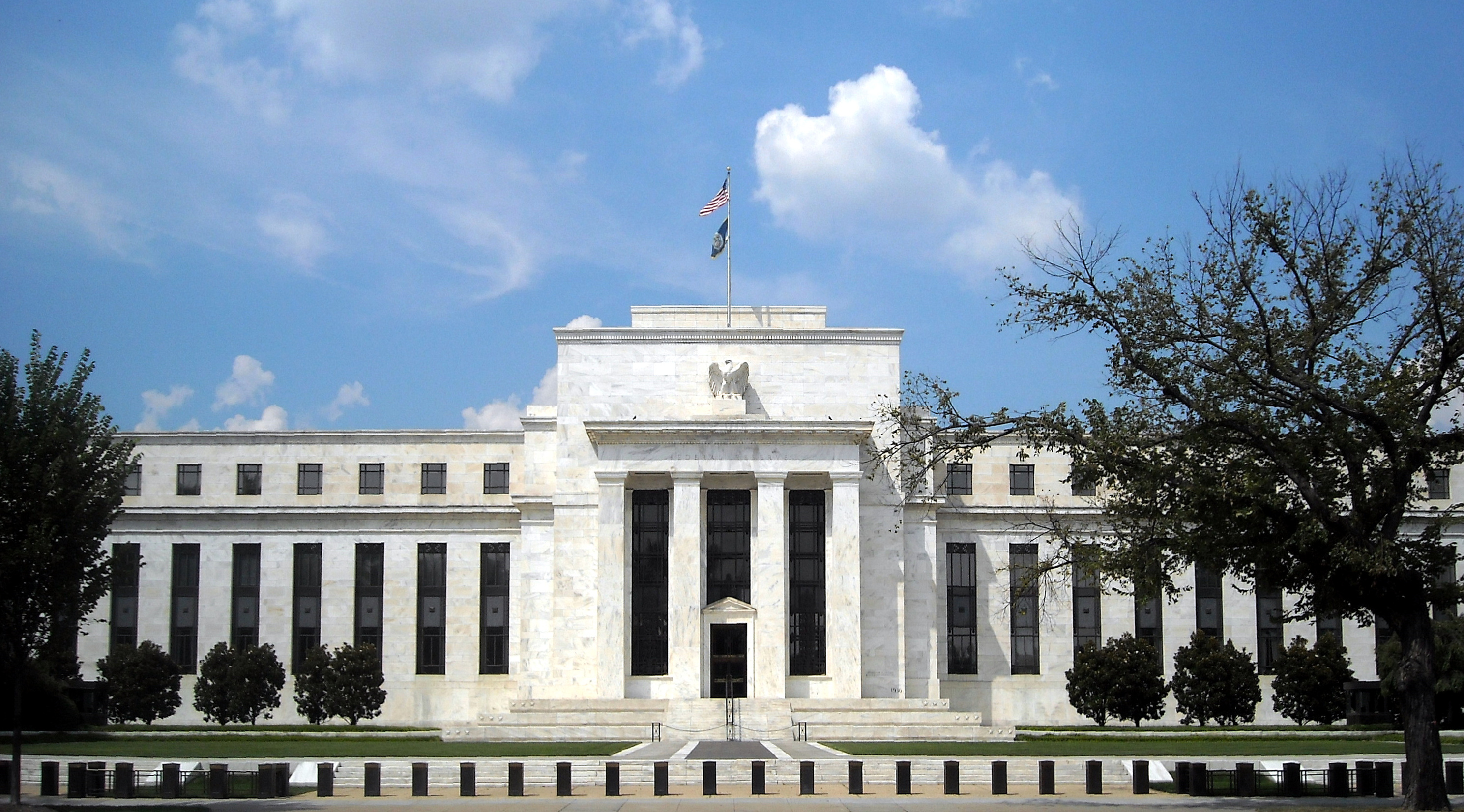
The Federal Reserve is the central bank of the United States. Its decisions affect lending and savings rates, the value of the dollar, and prices — which makes them directly relevant to Uzbeks abroad as well. Below, the Fed is explained on a facts-only basis, drawing on the Federal Reserve's official information.
What the Fed is and when it was created
The Federal Reserve System was created by the Federal Reserve Act, signed by President Woodrow Wilson on 23 December 1913. The Act gave the country a central bank: it manages the money supply, regulates and supervises banks, and acts as the "lender of last resort" in a crisis. The Act provided for at least 8 and no more than 12 regional reserve banks plus a central board.
Structure: the Board, 12 banks and the FOMC
The Fed has three main parts. First, the Board of Governors in Washington: 7 members, each appointed to a 14-year term; this federal agency oversees the 12 reserve banks. Second, the 12 regional Federal Reserve Banks (including Boston, New York, Chicago and San Francisco), the system's operating arms. Third, the Federal Open Market Committee (FOMC), the body that sets monetary policy. The FOMC has 12 voting members — the 7 governors, the president of the New York Fed, and 4 reserve-bank presidents who rotate. The committee meets eight times a year.

Who chairs the Fed
The Fed Chair is the chair of the Board of Governors. Since 22 May 2026 the post has been held by Kevin Warsh; his term as Chair runs four years, ending on 21 May 2030. He succeeded Jerome Powell, whose term as Chair ran until May 2026.
The dual mandate and the 2% inflation target
By law (a 1977 amendment) the Fed has three goals: maximum employment, stable prices, and moderate long-term interest rates. The first two are the "dual mandate." The Fed defines stable prices as 2% annual inflation (on the PCE price index); this target was formally adopted in January 2012 and reaffirmed each year. There is no numeric target for maximum employment, because it cannot be measured directly and shifts over time.
The main tool — the federal funds rate
The Fed's most important tool is the target range for the federal funds rate. Raising it makes credit more expensive, cools demand and spending, and helps lower inflation; cutting it makes credit cheaper and stimulates activity. At its meeting on 28 October 2026 the FOMC held the rate at 3.75–4.00% — the vote was 10 to 2, with two members preferring a 0.25-point increase. The next meeting is in December 2026, so the rate may change.
Other tools
Beyond the federal funds rate, the Fed influences market liquidity and interest rates through open-market operations (buying or selling government securities), interest on reserve balances (IORB), the discount rate (the rate the Fed charges banks for loans), and large-scale asset purchases — quantitative easing (QE) and its reverse, quantitative tightening (QT).
Independence and accountability
The Fed is independent within government: it makes monetary-policy decisions without needing executive approval. At the same time it is accountable to Congress. Under the 1978 Humphrey-Hawkins Act, the Fed submits a monetary policy report twice a year and the Chair testifies twice a year before the relevant Senate and House committees.
Why it matters for ordinary people
The Fed's rates affect US borrowing costs — mortgages, car loans, credit-card rates, and the yield on savings. Because the dollar is the world's main reserve and remittance currency, Fed policy also affects the dollar's value; that matters to anyone holding dollars, sending money to Uzbekistan, or whose savings are dollar-linked. Exact rates and decisions are published regularly at federalreserve.gov.

Sources
- Federal Reserve — Federal Open Market Committee (FOMC)
- Federal Reserve — FOMC statement, 28 October 2026 (rate held at 3.75–4.00%)
- Federal Reserve — Kevin Warsh, Chair (took office 22 May 2026)
- Federal Reserve History — Federal Reserve Act signed (23 December 1913)
- Federal Reserve — Statement on Longer-Run Goals (2% target, January 2012)