How the US Electoral College Works
In the United States the president is not chosen by a direct popular vote but by a process called the Electoral College. Here is a clear, source-checked explainer of its 538 electors, the 270-vote threshold, the timeline, and the rules.
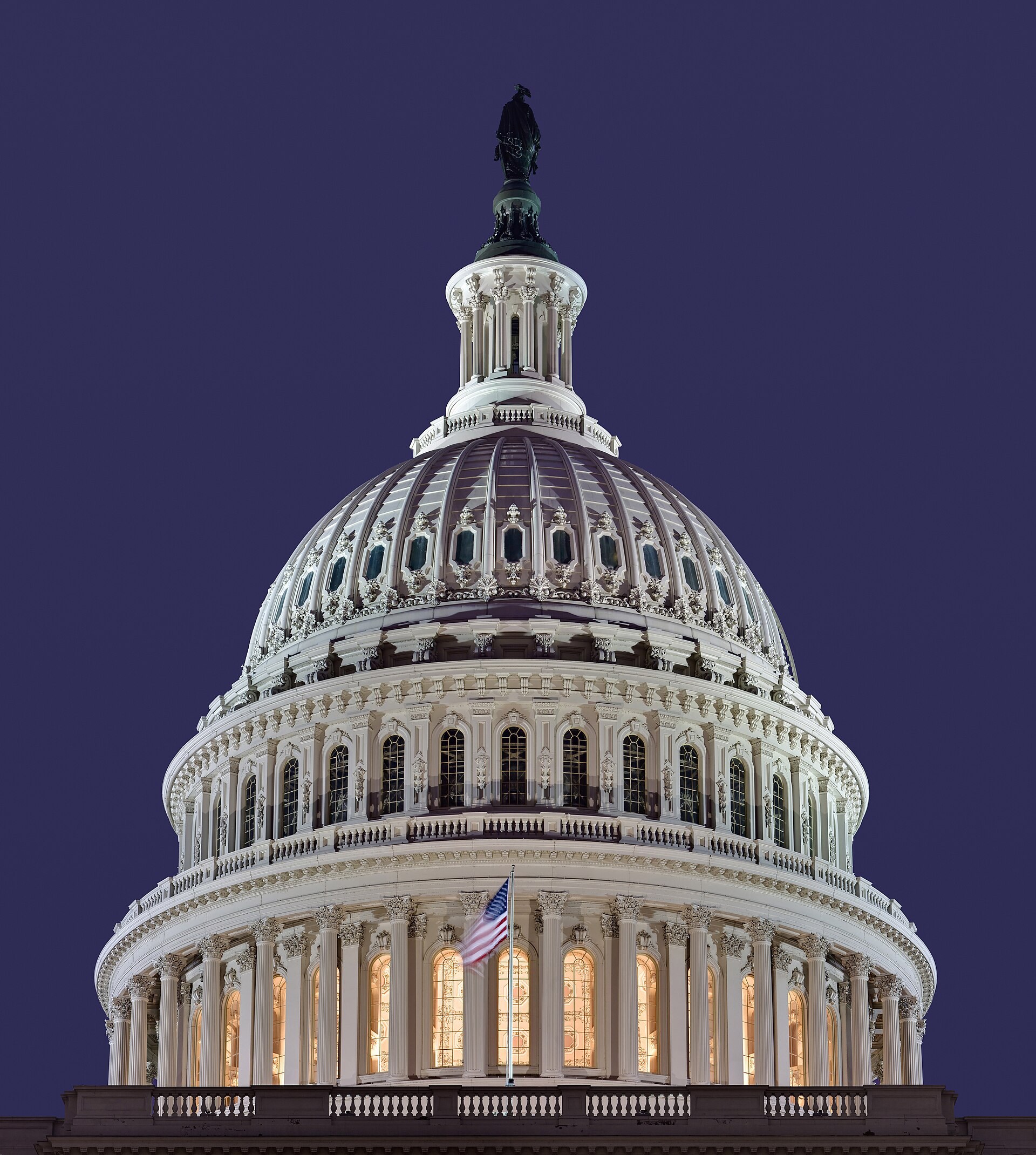
The US Electoral College is not a place or a building but a process set by the US Constitution. It is used to elect the president and vice president. The core rules are laid out in Article II, Section 1, then in the 12th Amendment (1804) and the 23rd Amendment (1961) (Source: U.S. National Archives).
The numbers: 538 electors and 270 votes
The Electoral College consists of a total of 538 electors. That number is made up of the 435 members of the House of Representatives, the 100 senators, and 3 electors allocated to the District of Columbia (Washington). To win, a candidate must gather 270 electoral votes — a majority (Source: U.S. National Archives).
Each state's number of electors equals its congressional delegation: one for each House seat, plus two senators. A state's House seats are reapportioned after the decennial census, so the number of electors can shift over time. The District of Columbia receives 3 electors under the 23rd Amendment and is treated like a state for this purpose (Source: U.S. National Archives).

How electors are chosen
Electors are usually nominated by the political parties in each state. When a voter casts a ballot on Election Day, they are technically voting not for the candidate directly but for a slate of electors pledged to support that candidate. Whichever party wins the state generally has its slate of electors appointed (Source: U.S. National Archives).
'Winner-take-all' and the Maine and Nebraska exception
48 states and the District of Columbia use a 'winner-take-all' system: the candidate with the most votes in the state takes all of that state's electoral votes. Only Maine and Nebraska differ — they use the congressional-district method: two votes go to the statewide winner and the remaining votes go to the winner in each congressional district, so their votes can be split (Source: U.S. National Archives).
Timeline: from Election Day to January 6
The process has several stages. Election Day is the first Tuesday after the first Monday in November. The electors meet in their states in December — on the first Tuesday after the second Wednesday in December — to cast their official votes. Congress then counts the votes in a joint session on January 6 of the year following the electors' meeting (Source: U.S. National Archives).
The vote-counting procedure was originally set by the Electoral Count Act of 1887; the Electoral Count Reform Act, passed in 2022, updated it. The new law clarified that the vice president's role in the joint session is purely ministerial — that is, the vice president cannot unilaterally reject votes — and set a threshold of at least 20 senators and 87 House members to raise an objection (Source: Congressional Research Service; Cato Institute).
'Faithless electors' and the 2020 Supreme Court ruling
Sometimes an elector votes for someone other than the candidate they pledged to support — such a person is called a 'faithless elector.' In 2020, in Chiafalo v. Washington, the US Supreme Court ruled unanimously (9–0) that states may require electors to keep their pledge and may penalize those who break it (Source: U.S. Supreme Court, Chiafalo v. Washington; Ballotpedia).
If no one reaches 270 votes
If no candidate reaches 270 electoral votes, under the 12th Amendment the president is chosen by the House of Representatives — with each state delegation getting one vote (a contingent election). The vice president is then chosen by the Senate. This rule was applied in history after the 1824 election: when no candidate won a majority, the House chose John Quincy Adams as president (Source: U.S. National Archives; U.S. House of Representatives History).
When the popular vote and the electoral vote diverged
Several times in US history a candidate who won more of the national popular vote lost the Electoral College. Such elections: 1876 (Rutherford Hayes defeated Samuel Tilden to become president), 1888 (Benjamin Harrison defeated Grover Cleveland), 2000 (George Bush defeated Al Gore), and 2016 (Donald Trump defeated Hillary Clinton). In 1824, Andrew Jackson won the most popular and electoral votes but, falling short of a majority, the House chose his rival (Source: Ballotpedia; U.S. House of Representatives History).
The reform debate: a neutral summary
Debate about the system continues. Supporters describe it as preserving the influence of smaller states, while critics point out that a handful of 'swing states' have a disproportionate effect on the result. One reform proposal is the National Popular Vote Interstate Compact: states that join agree to give their electors to the winner of the national popular vote. According to source data, as of 2026, 18 states and the District of Columbia have joined, totaling 222 electoral votes; the compact takes effect only once members total 270 votes and is not currently in force (Source: National Popular Vote Interstate Compact data / Wikipedia).
For the diaspora: how it differs from a direct popular vote
In a direct popular-vote system, the winner is the candidate with the most votes nationwide. In the US, winning depends on gathering 270 votes among the 538 electors — so a candidate can win the election even while receiving fewer votes in the national popular vote. When reading US election coverage, understanding this difference, and that 'electoral vote' and 'popular vote' are not the same thing, is important for media literacy (Source: U.S. National Archives).

Sources
- U.S. National Archives — About the Electoral College
- U.S. National Archives — Electoral College Timeline of Events
- U.S. Supreme Court — Chiafalo v. Washington (2020)
- Ballotpedia — Splits between the Electoral College and popular vote
- U.S. House of Representatives History — Electoral College Fast Facts
- Congressional Research Service — Joint Session of Congress for Counting Electoral Votes (R48309)
- National Popular Vote Interstate Compact