The Central Asian Union (1994): Economic Integration of Uzbekistan, Kazakhstan and Kyrgyzstan
In the first years of independence, three Central Asian states — Uzbekistan, Kazakhstan and Kyrgyzstan — created a single economic space in 1994. It was the first major integration attempt led by the region itself, without Moscow.
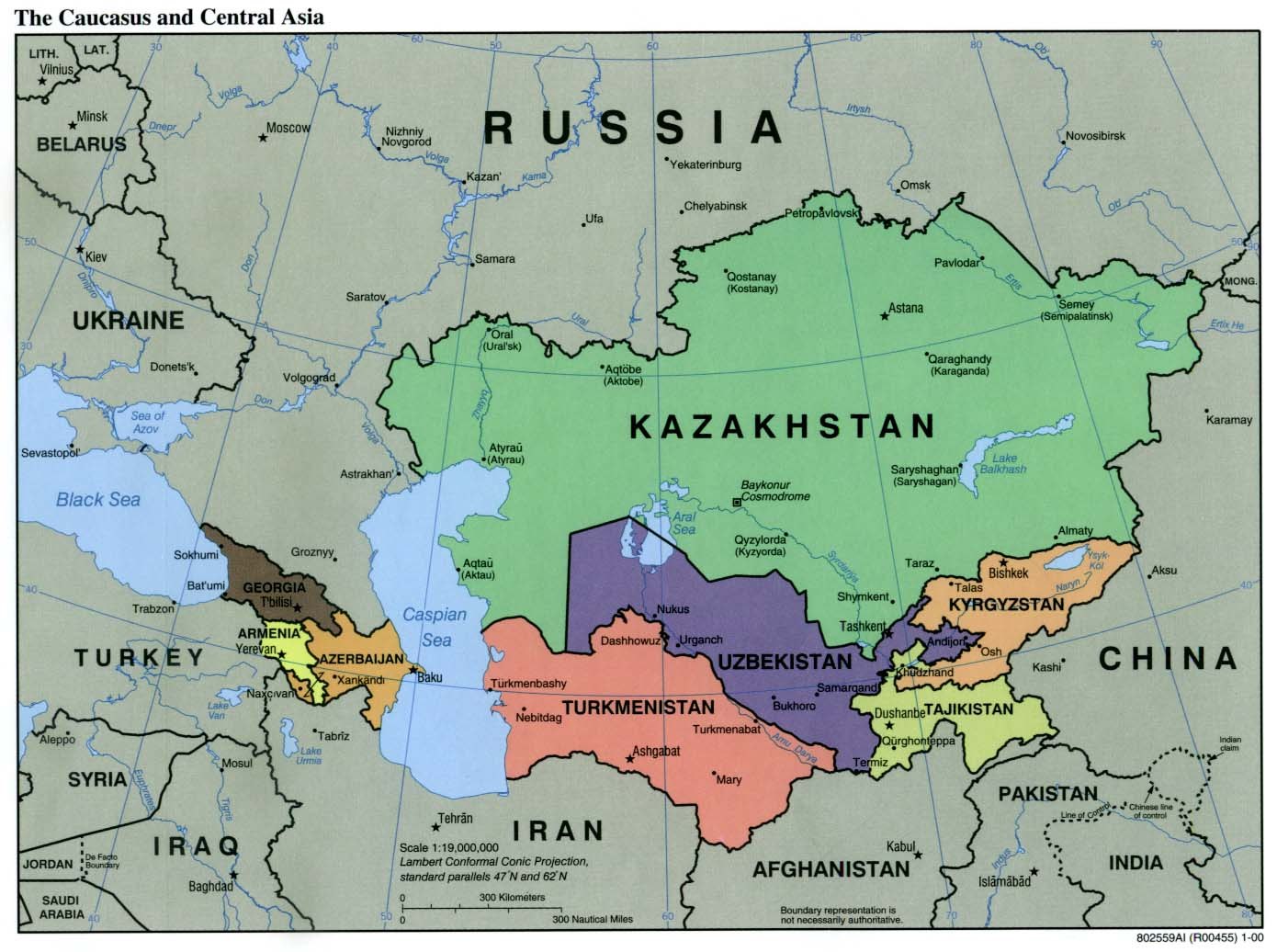
When the USSR — and with it the single ruble zone — collapsed in 1991, the newly independent states looked for ways to preserve their economic ties. This was especially pressing for the Central Asian states, whose economies had been tightly interlinked in the Soviet era. On this ground a regional integration project took shape in 1994 (Source: Kushkumbayev — Gone but Not Forgotten: The Central Asian Union, 1990–2005; Wikipedia — Central Asian Union).
Founding (1994)
On 10 January 1994, in Tashkent, Kazakhstan and Uzbekistan signed a Treaty on the Creation of a Single Economic Space, endorsed by Presidents Nursultan Nazarbayev (Kazakhstan) and Islam Karimov (Uzbekistan). Kyrgyzstan, under President Askar Akayev, joined the treaty on 30 April 1994. At a summit in Almaty on 8 July 1994, the three heads of state agreed to establish the union's institutions — the date usually cited for the formal founding of the Central Asian Union (Source: Kushkumbayev — Gone but Not Forgotten; Wikipedia — Central Asian Union).
Institutions created
The union set up several bodies: an Interstate Council (the top body, of heads of state), councils of prime ministers and foreign ministers, and a permanent Executive Committee headquartered in Almaty. Kazakhstan, Uzbekistan and Kyrgyzstan also created the Central Asian Bank for Cooperation and Development (Source: Kushkumbayev; Wikipedia — Central Asian Union).

Purpose
The project was built around the 'four freedoms': the free movement of goods, services, capital and labour, together with coordination of credit, settlement, customs and currency policy. It was a response to the collapse of the USSR and the ruble zone, aimed at keeping the region's economic space together (Source: Kushkumbayev; Wikipedia — Central Asian Union).
Change of name and membership
In 1994–1998 the body was often called the Central Asian Union or the Central Asian Economic Union. On 26 March 1998, in Tashkent, it was reconstituted as the Central Asian Economic Community (CAEC), and Tajikistan became a full member. On 28 February 2002, in Almaty, the Central Asian Cooperation Organization (CACO) was established, with Islam Karimov elected its first chair (Source: Kushkumbayev; Wikipedia — Central Asian Cooperation Organization).
Russia joins, and the end
On 18 October 2004, in Dushanbe, Russia joined CACO as a full member — which changed the organization's purely Central Asian character. At the final summit in St. Petersburg on 6–7 October 2005, it was agreed to merge CACO into the Eurasian Economic Community (EurAsEC); Uzbekistan became a full member of EurAsEC in January 2006, and CACO ceased to exist as an independent organization (Source: Kushkumbayev; Wikipedia — Central Asian Cooperation Organization).
Significance, and why it faded
Analysts regard this organization as the first serious integration project directed by the region itself — as distinct from the Moscow-led CIS — with Uzbekistan among its founders and central participants. Its decline, analysts suggest, is explained by weak implementation (more than 150 agreements were signed, yet no genuine free-trade zone was created), the divergent economic paths of the states, the Uzbek–Kazakh rivalry, and Russia's growing role. The organization's names differ across sources; this article uses the most reliable dates (Source: Kushkumbayev; CACI Analyst — Central Asian Union and the Obstacles to Integration in Central Asia).
