The second hijra of Uzbek émigrés from Afghanistan (1979–1992): a "doubly displaced" community
The descendants of Turkestani émigrés who fled Soviet rule into northern Afghanistan in the 1920s–30s were forced to flee again from the 1979 Soviet invasion — to Pakistan, Saudi Arabia and Turkey. The history of an Uzbek community that became refugees twice within a few generations, facts only.
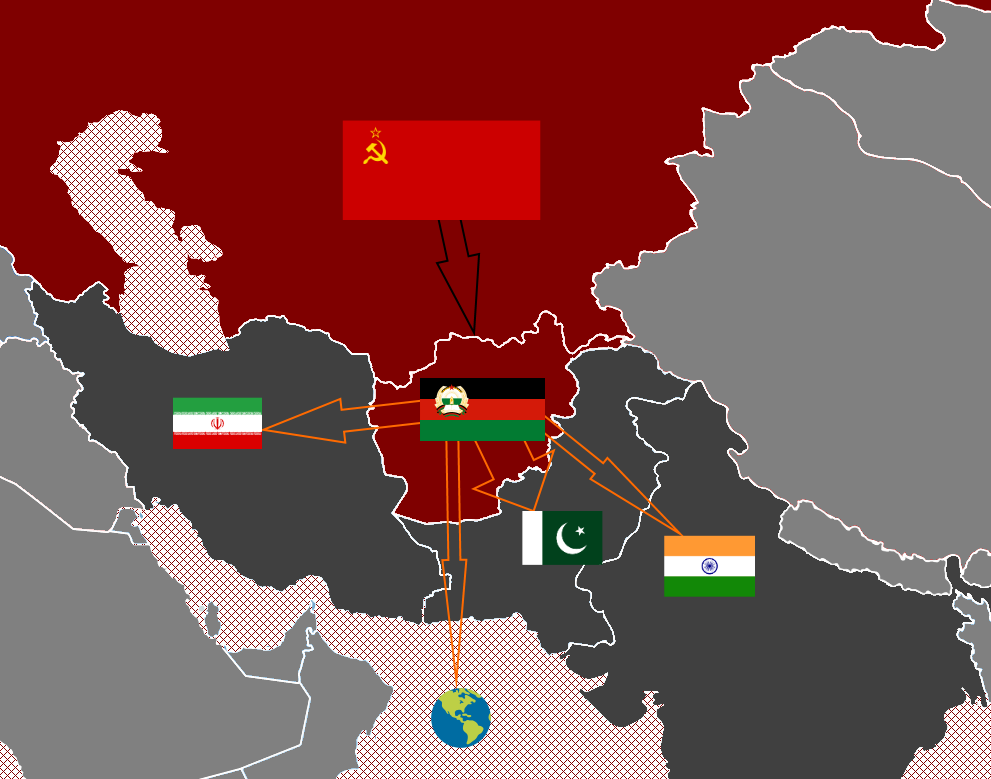
In the history of Uzbek migration there is one group that became refugees not once but twice — not in a single lifetime, but across a few generations. Their grandparents first fled Soviet rule into Afghanistan in the 1920s–30s; then their grandchildren were forced to flee again from the 1979 Soviet invasion. The following sets out the history of this "doubly displaced" community, facts only.
The first flight: after the Basmachi resistance
After the armed resistance in Turkestan (the Basmachi movement) was crushed by Soviet forces between 1918 and 1934, tens of thousands of Turkestanis — Uzbeks, Turkmens and Tajiks — crossed the Amu Darya into northern Afghanistan. They settled mainly in the provinces of Mazar-i-Sharif, Kunduz, Shibarghan, Balkh and Takhar and came to be called "muhajir" (émigrés) in the local language. The anthropologist Audrey Shalinsky described this Uzbek-Turkic émigré community of Kunduz in detail in her book Long Years of Exile (1994).
The second flight: 1978–1979
The Saur Revolution (communist coup) of April 1978 and the Soviet invasion of December 1979 plunged Afghanistan into war. Over the 1980s nearly six million Afghans left the country. By 1984, 3.2 million refugees were registered in Pakistan and 1.8 million in Iran. Among that flow were the descendants of the Turkestani émigrés of a few generations earlier — now losing their home a second time.

Where they went
Most first crossed into Pakistan, to the refugee camps around Quetta and Peshawar. Some then moved farther afield:
- Saudi Arabia — Jeddah and Medina, joining the long-established Turkestani diaspora there;
- Turkey — mainly Istanbul, working in carpet and textile workshops; linguistic closeness eased this route;
- Iran — some went into the money-exchange business;
- Later the West — Turkestani communities in the United States and Germany.
In 1982 Turkey took in one group of Turkic refugees from Afghanistan: about 1,150 Pamir Kyrgyz were airlifted in and settled at the village of Ulupamir in Van province. Though this episode concerns Kyrgyz specifically, it is one of the few documented cases of Afghan Turkic refugees being resettled in Turkey.
A "doubly displaced" community
The result was a distinctive double diaspora: a single family that within three generations became refugees twice — once from Soviet conquest in Turkestan, and again from Soviet conquest in Afghanistan. The community's memory holds both Bukhara and Samarkand, and Mazar-i-Sharif and Peshawar.
Today
Northern Afghanistan still has a large ethnic Uzbek population — Uzbeks are one of the country's larger peoples. After 1992 some tried to return toward independent Uzbekistan, but because citizenship rules were strict, many remained in Turkey, Saudi Arabia and the West. The Taliban's return in 2021 triggered a new wave of displacement in the region.

Sources
- Audrey C. Shalinsky — Long Years of Exile: Central Asian Refugees in Afghanistan and Pakistan (1994)
- Reporting on Refugees — Doubly Displaced: how two Soviet invasions created two generations of Uzbek refugees
- Wikipedia — Afghan refugees (1984 figures: 3.2M in Pakistan, 1.8M in Iran; ~6M over the 1980s)
- Insight Turkey — Afghan Remigration from Pakistan to Turkey (2014)
- RFE/RL — the Pamir Kyrgyz resettled at Ulupamir, Van (Turkey, 1982)