How the Central Bank of Uzbekistan and monetary policy work
The central bank is the state's bank of issue: it issues the national currency (the som), regulates banks, and runs monetary policy. Founded in 1991; a new law of 11 November 2019 strengthened its independence and set price stability as its primary objective. In January 2020 it adopted an inflation-targeting regime with a medium-term target of 5%. Its main tool is the policy rate: held at 14% since March 2025 (unchanged again at the 16 September 2026 meeting). The som was floated on 5 September 2017. Based on official Central Bank data.
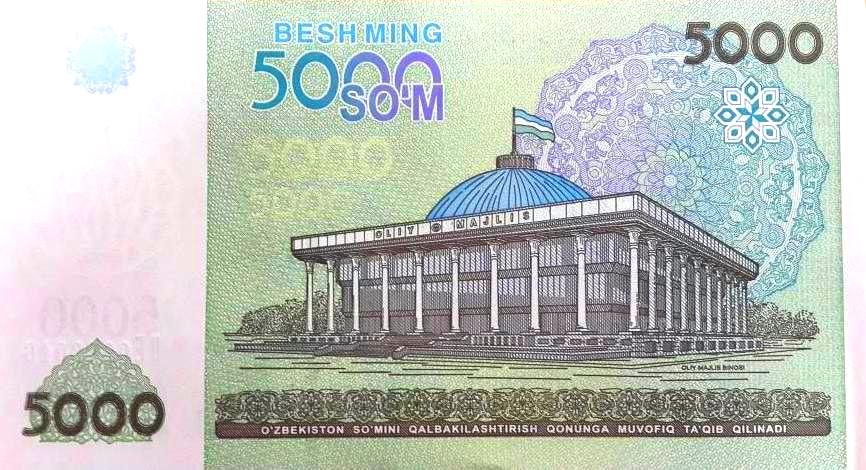
A central bank is the state institution at the heart of a country's financial system. It issues the national currency, oversees banks, and conducts monetary (money-and-credit) policy. Below, the Central Bank of the Republic of Uzbekistan and its policy are explained on a facts-only basis, drawing on the Central Bank's official information.
What the central bank is and what it answers for
The Central Bank of the Republic of Uzbekistan was founded in 1991, with its head office in Tashkent. It is the state's bank of issue: it issues and manages the som in circulation, holds the gold and foreign-exchange reserves, and regulates and supervises payment systems and commercial banks. The Central Bank takes its decisions independently and is accountable to parliament (the Oliy Majlis). It is run by a Board; the current chair, Timur Ishmetov, has held the post since 11 December 2024.
The 2019 law and independence
On 11 November 2019 a new law, 'On the Central Bank of the Republic of Uzbekistan', was adopted, replacing the 1995 law. It strengthened the Central Bank's independence and clearly set its primary objective as ensuring price stability (curbing inflation), as well as financial stability. Independence means the Central Bank takes monetary decisions within its mandate, free of political pressure.

Inflation targeting
In January 2020 the Central Bank moved to an inflation-targeting regime. Under this regime the bank makes reaching a pre-announced inflation target its main benchmark and directs all its tools toward it. The permanent medium-term target is annual inflation of 5%. According to the Central Bank and the IMF, overall inflation is expected to fall to about 7% by the end of 2026 and to reach the 5% target in 2027.
The main tool — the policy rate
The Central Bank's most important tool is the policy (key) rate. Raising it makes credit more expensive, cools demand and spending, and helps lower inflation; cutting it makes credit cheaper and stimulates economic activity. The policy rate has been held at 14% since March 2025; at its meeting on 16 September 2026 the Central Bank Board again kept it at 14% — aimed at maintaining a positive real rate to steer inflation toward target.
Other tools
Beyond the policy rate, the Central Bank influences market liquidity and interest rates through reserve requirements (the share of funds banks must hold), open-market operations (securities and deposit auctions), and bank refinancing. Under a free-floating exchange-rate regime, interventions in the currency market are limited and used only to smooth sharp swings.
Floating the som (2017)
On 5 September 2017 Uzbekistan floated the som and abolished the dual exchange-rate system (an official rate and a 'black-market' rate) that had operated for many years. Rates were unified and free access to currency was established. This reform laid the ground for modern monetary policy and, later, for the shift to inflation targeting.
Why it matters for ordinary people
The Central Bank's decisions directly affect lending and deposit rates, the value of savings, and prices. Stable, low inflation protects households' purchasing power. To raise financial literacy, the Central Bank launched the FinLit.uz platform in 2020; exact rates and indicators are published regularly at cbu.uz.

Sources
- Markaziy bank — 2026–2028-yillarga monetar siyosat asosiy yoʻnalishlari
- Markaziy bank — 2026-yil 16-sentabr: bazaviy stavka 14% da saqlandi
- Central Banking — Uzbekistan boosts transparency with new central bank law (2019)
- IMF — Uzbekistan: 2026 Article IV Mission concluding statement
- RFE/RL — Uzbekistan floats the som (September 2017)