Astana Finance Days: Debating How to Reduce Kazakhstan's Reliance on Banks
At the forum held on the AIFC platform on Sept. 9, senior financiers pointed to the need to deepen the capital market.
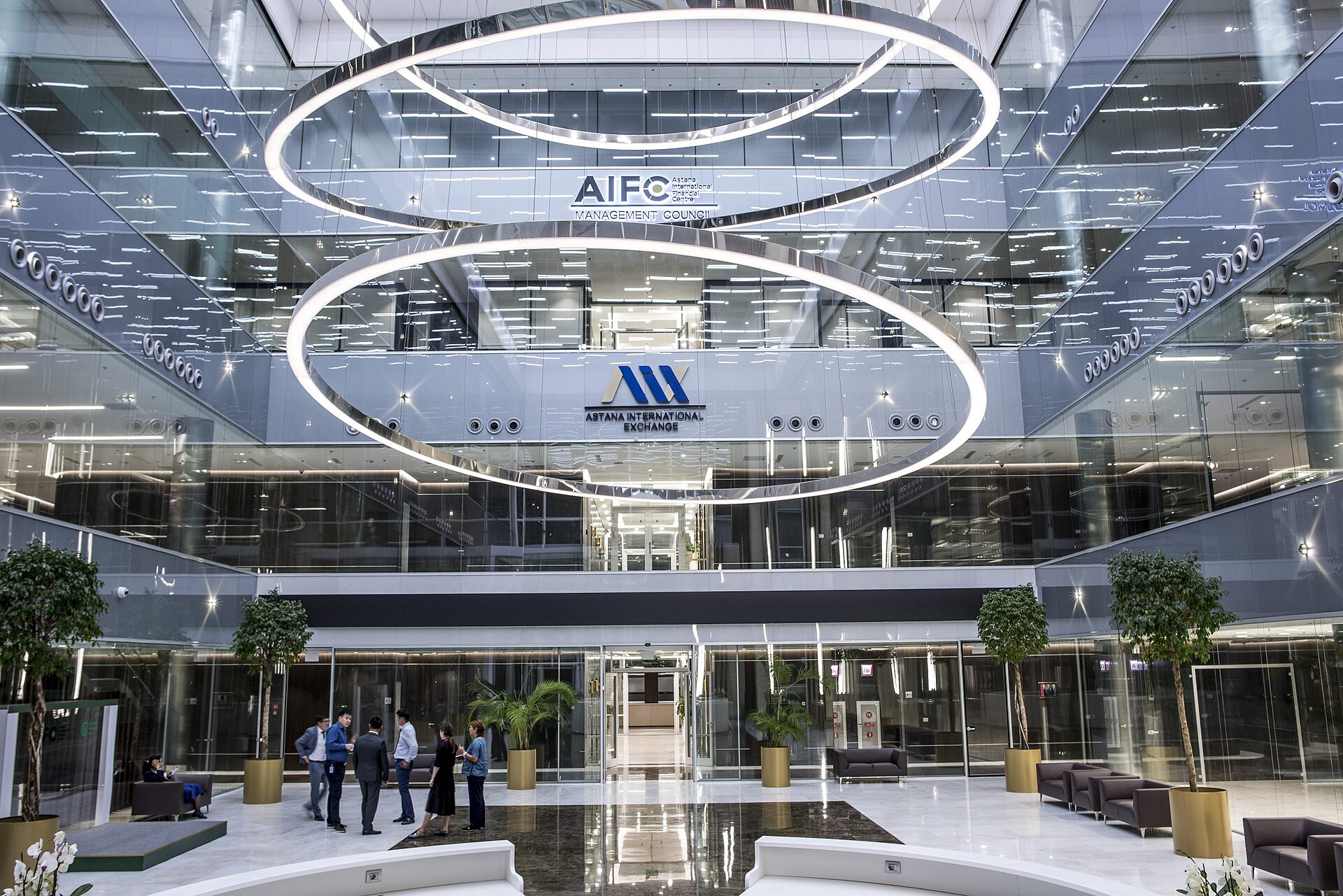
The Astana Finance Days forum was held on Sept. 9, 2026, in Astana at the Astana International Financial Centre (AIFC). The forum's plenary session was titled “Innovation at Institutional Scale: Rewiring the Architecture of Finance.”
Senior financial officials taking part in the session pointed to Kazakhstan's need for deeper financial markets and a system less dependent on banks.
The heart of the problem
Banks dominate Kazakhstan's financial system: bank credit is the primary source of financing for businesses and households. The capital market — raising funds through shares and bonds — remains relatively small.
Such a structure creates two kinds of risk. First, financing long-term projects becomes difficult, because banks typically work with short- and medium-term lending. Second, the entire weight of the system falls on one sector — a shock in the banking sector passes quickly to the whole economy.
How digital finance could help was discussed
The plenary session examined how digital financial instruments might contribute to deepening the market. Among the areas discussed were institutional-scale digital platforms, asset tokenization, and solutions that reduce dependence on traditional banking infrastructure.
What the AIFC is
The AIFC is a financial center with a special legal regime that began operating in Astana in 2018. It has a separate court system based on English common law, its own regulator and tax incentives. The Astana International Exchange (AIX) operates within the center.
- Forum date: Sept. 9, 2026
- Venue: AIFC, Astana
- Plenary session theme: rewiring the architecture of finance
- Main conclusion: the need to deepen the capital market
A regional comparison
Uzbekistan took a step in a similar direction in the weeks before Astana Finance Days: the Tashkent International Financial Centre (TIFC) was established, with a separate regime based on English law, its own commercial court and long-term tax incentives. On Sept. 10, Saida Mirziyoyeva was appointed to head the center.
Two capitals in the region are thus addressing the same audience — international financial companies and funds. Both centers are seeking to compete by guaranteeing their incentives over the long term.
What investors are focused on
Another theme noted by forum participants was Kazakhstan's shift from transit to capital. The phrase refers to the country's economy moving toward earning revenue from financial services and investment, beyond freight transport and raw-materials exports.
In practical terms, this requires several conditions: a predictable currency regime, clarity on capital-movement restrictions, corporate governance standards and a growing number of issuers.
Constraints
How the banking sector's dominance took shape
In most post-Soviet states, the financial system developed with banks at its core. There are historical reasons for this: the corporate sector is relatively young, the number of joint-stock companies is small, and savings institutions — pension and insurance funds — are limited in size.
The result is a two-sided problem for the capital market: on one side there are few issuers, and on the other the institutional investor base is narrow. These two factors reinforce each other and slow the market's natural growth.
What solution digital finance offers
Asset tokenization held a prominent place among the approaches discussed at the forum. It is the practice of representing a right to a real asset — real estate, an infrastructure project, a commodity stock — in the form of a digital token and placing it on the market in divisible form.
In theory this lowers the entry threshold for small investors and may increase secondary-market liquidity. In practice, its effectiveness depends on the level of legal protection, custody infrastructure and reporting standards.
AIFC indicators
The AIFC began operating in 2018. It houses the Astana International Exchange (AIX), an independent regulator (AFSA) and a court system based on English common law.
The center's core tasks are listed as attracting foreign capital, serving as a listing venue in the privatization of state enterprises and becoming a regional hub for financial services.
Competition and cooperation with Uzbekistan
In 2026, Uzbekistan established the Tashkent International Financial Centre (TIFC). It too provides for a regime based on English law, an independent commercial court and long-term tax incentives — exemption from certain taxes for qualified participants is set through 2076.
The two centers address the same audience, but their bases differ: Kazakhstan has longer experience with capital markets and privatization, while Uzbekistan has a larger domestic market and population.
In practice, both centers face the same problem: for international investors, the key criterion is not tax incentives but legal predictability, freedom to repatriate capital and stability of the currency regime.
The forum program
Astana Finance Days 2026 ran for two days, on Sept. 9 and 10. Another major event was held on the AIFC platform that same week: the “China Conference: Central Asia 2026” forum, organized on Sept. 7 together with the South China Morning Post.
Background indicators for Kazakhstan's economy
The oil and gas sector accounts for roughly one-fifth of Kazakhstan's gross domestic product, and its share of budget revenues is higher still. This structure heightens dependence on external price conditions.
Dependence also persists on the export side: more than 80 percent of oil exports go through the Caspian Pipeline Consortium (CPC) to the Novorossiysk terminal. Over the course of 2026, loading was halted several times because of drone attacks on the terminal and on tankers.
For that reason, the discussion of deepening the financial market connects to a broader question: diversifying the economy through sources beyond raw materials.
Investors' questions
Analyses devoted to the forum noted that investors' attention was focused on several practical issues: the procedure for bringing capital in and taking it out, currency conversion, corporate governance standards and the dispute resolution mechanism.
The AIFC's court system, based on English common law, was created precisely as an answer to that last point. Its practical value will be assessed more clearly as statistics accumulate on the number of cases heard and the enforcement of rulings.
Privatization and listings
One classic route to deepening a capital market is taking state enterprises to the exchange. Several large issues have been carried out along these lines in Kazakhstan.
Uzbekistan is following the same path: on Sept. 8, a plan to put $8 billion in state assets up for sale was announced; the list included Turonbank, the International Business Center and Uzexpocentre.
Such issues bring new securities to the market, but their liquidity will depend on the expansion of the investor base.
Most of the proposals put forward in the forum's discussions are not decisions as such but are at the stage of policy debate. Assessing the effectiveness of centers such as the AIFC and TIFC will require several years of statistics — the volume of capital attracted, the number of registered issuers and trading volume.