Houthis Seize Two More Strategic Islands in the Red Sea; Saudi Arabia Carries Out Strikes
The Greater and Lesser Hanish islands have been brought under control. Roughly 12 percent of world trade passes through the Bab el-Mandeb strait.
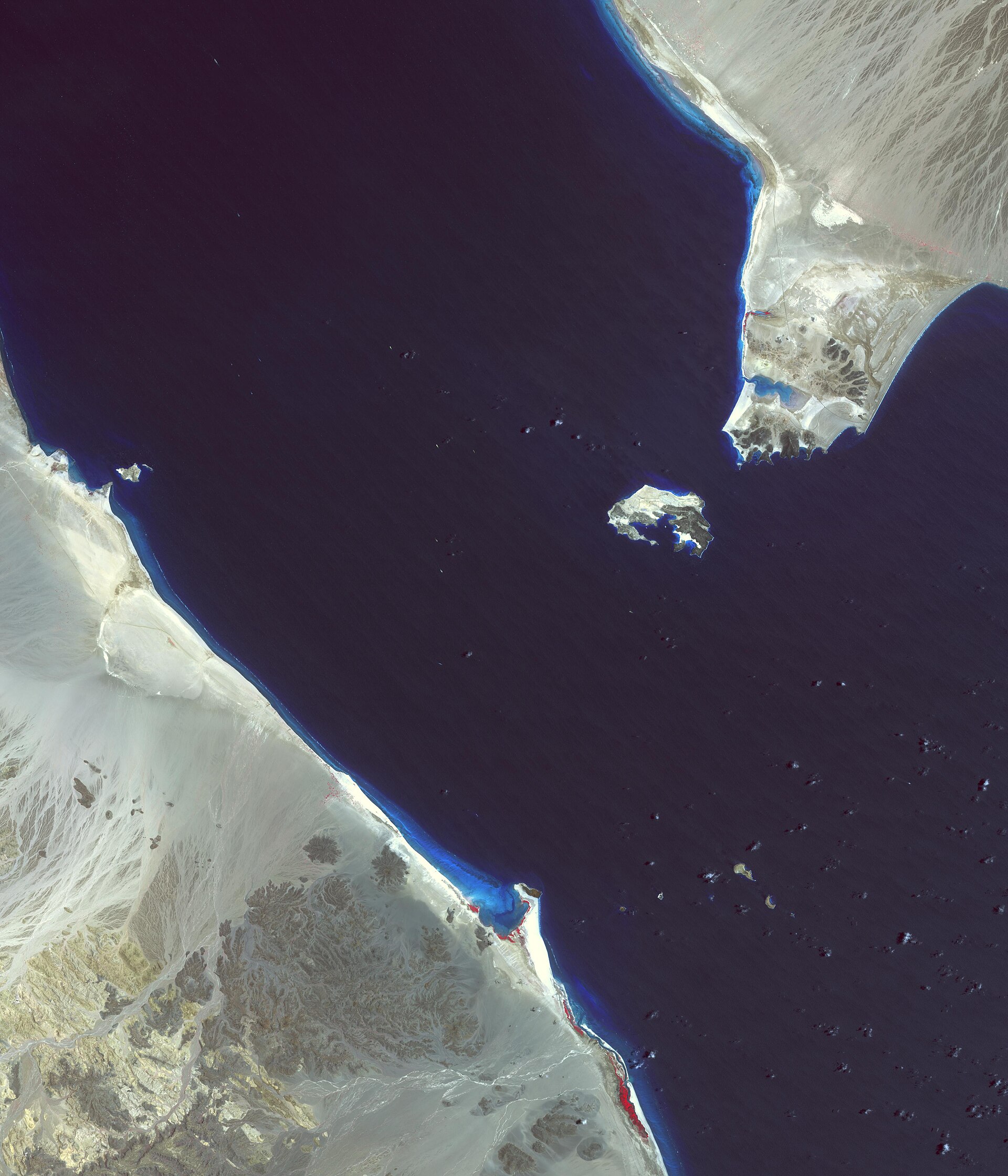
Yemen's Houthi movement announced on Sept. 14, 2026, that it had taken control of two more islands in the southern Red Sea — the Greater and Lesser Hanish islands. In doing so, they tightened their control over the Bab el-Mandeb strait.
Before seizing the islands, the Houthis had taken control of the coastal port city of Mokha and the island of Mayun (Perim).
Saudi Arabia's response
Saudi Arabia carried out airstrikes on the airport in the city of Mokha, held by the Houthis. In response, the Houthis launched missile and drone attacks on Saudi military facilities.
Yemeni government forces, for their part, reported advancing along the Taiz axis in the south of the country.
Why Bab el-Mandeb matters
Bab el-Mandeb is a narrow strait linking the Red Sea with the Indian Ocean. It is considered one of the world's most important maritime chokepoints.
- Share of world trade: ~12%
- Share of seaborne oil: ~11%
- Share of liquefied natural gas (LNG) flows: ~8%
- The strait is the southern entry point to the Suez Canal route
For Saudi Arabia, this route also matters as an alternative to the Strait of Hormuz for reaching Asian markets.
The effect on trade routes
Since 2023, because of the security situation in the Red Sea, major container carriers have rerouted around the Cape of Good Hope at the southern tip of Africa. That route is considerably longer and more expensive than passage through the Suez Canal.
Disruption along sea routes is one of the factors that has increased interest in land corridors. For Central Asian states, this is tied to the importance of the Trans-Caspian route (the “Middle Corridor”): freight traffic along it rose 22 percent in January–August 2026.
The regional backdrop
The conflict in Yemen has continued since 2014. The Houthi movement controls the northern part of the country, including the capital, Sanaa; the internationally recognized government operates in the south.
In 2026, tension in the region is also being linked to the situation surrounding Iran. In September, the dispute over sanctions on Iran continued in the UN Security Council; at the same time, concerns over oil supplies in the Middle East affected world prices.
The indirect effect on Central Asia
Rising oil prices become an inflationary factor for importing countries. Annual inflation in Kyrgyzstan remained above 11 percent in 2026, and official analyses cited world oil prices as one of the causes.
For exporting countries such as Kazakhstan and Turkmenistan, rising prices increase budget revenues, though higher logistics costs and insurance rates partly offset that benefit.
Uncertainties
The Hanish islands
The Greater and Lesser Hanish islands lie in the southern part of the Red Sea, between Yemen and Eritrea. They were the subject of a territorial dispute between Yemen and Eritrea in the 1990s; the dispute was resolved through international arbitration.
The islands are sparsely populated, but their military and strategic importance is considerable: they sit at points well suited to monitoring and controlling shipping lanes.
The island of Mayun (Perim) lies directly in the Bab el-Mandeb strait and divides it into two channels.
The port of Mokha
Mokha is a port city on Yemen's Red Sea coast. It is historically known as a center of the coffee trade; the city's name also gave rise to the name of a coffee variety.
In the current conflict, the city and its airport are considered important objectives from a military standpoint. Saudi Arabia carried out an airstrike on the airport.
The effect on maritime trade
Roughly 12 percent of world trade normally passes through the Bab el-Mandeb strait. About 11 percent of seaborne oil and 8 percent of liquefied natural gas use this route.
Since 2023, because of the security situation in the area, major container carriers have changed their routes: vessels are sailing around the Cape of Good Hope at the southern tip of Africa instead of through the Suez Canal.
That route adds roughly 10 to 14 days on the Asia–Europe run and raises fuel costs. Insurance rates have risen as well.
The effect on land corridors
Disruption along sea routes has been one of the factors increasing interest in overland routes. Freight traffic along the Trans-Caspian International Transport Route — the “Middle Corridor” — rose 22 percent in January–August 2026.
At the same time, the volume carried on land routes remains small compared with maritime shipping, and they cannot fully replace it.
The history of the conflict
The armed conflict in Yemen began in 2014 with the Houthi movement's seizure of the capital, Sanaa. From 2015, a Saudi-led coalition launched military operations.
A major humanitarian crisis developed in the country over the course of the conflict: according to UN figures, a large share of the population came to depend on food aid.
There have been several rounds of negotiations and periods of temporary truce in recent years, but no lasting agreement has been reached.
The regional backdrop
In 2026, tension in the region is also being linked to the situation surrounding Iran. On Sept. 5, the United States announced it had struck three oil tankers in the area of the Strait of Hormuz; Iran warned of countermeasures.
On Sept. 10, a vote on Iran sanctions in the UN Security Council ended 11 to 2. On Sept. 12, Iran's president criticized unilateral sanctions at the BRICS summit.
The indirect effect on Central Asia
Rising oil prices become an inflationary factor for importing countries. Analysis of inflation in Kyrgyzstan in 2026 cited the rising price of imported fuel as one of the main causes.
For exporting countries such as Kazakhstan and Turkmenistan, rising prices increase budget revenues, though higher maritime logistics costs partly offset that benefit.
Suez Canal revenues
The situation in the Red Sea has also affected Egypt's budget: transit fees from the Suez Canal are among the country's main sources of foreign currency.
Once vessels changed their routes, the number of transits through the canal declined. This created additional pressure on the regional economy.
The Taiz axis
Yemeni government forces reported advancing along the Taiz axis in the country's southwest. Taiz is one of Yemen's largest cities and has been under siege conditions for many years.
Movements at the front are generally reported on the basis of the parties' statements; opportunities for independent verification are limited.
International law of the sea
Under the international law of the sea, transit passage for vessels is guaranteed in straits used for international navigation. This rule applies regardless of the sovereignty of coastal states.
In practice, under conditions of armed conflict, that guarantee is constrained by the insurance market and carriers' decisions: if risk is assessed as high, vessels change their routes.
The humanitarian situation
The humanitarian situation in Yemen remains severe as a result of the long-running conflict. The functioning of the ports is decisive for delivering food and medicine to the country, because Yemen imports most of its food.
When military operations damage port infrastructure, the flow of humanitarian aid also stops.
The parties' statements on control of the islands differ, and independent verification is limited. No precise figures have been released on casualties resulting from the military operations.