The 1966 Tashkent Earthquake: The City Was Destroyed, the Whole Union Rebuilt It, and Its Population Changed
The earthquake of 26 April 1966 destroyed central Tashkent. This is a factual history of the quake, the all-Union reconstruction, and the shift in the city's demographics.
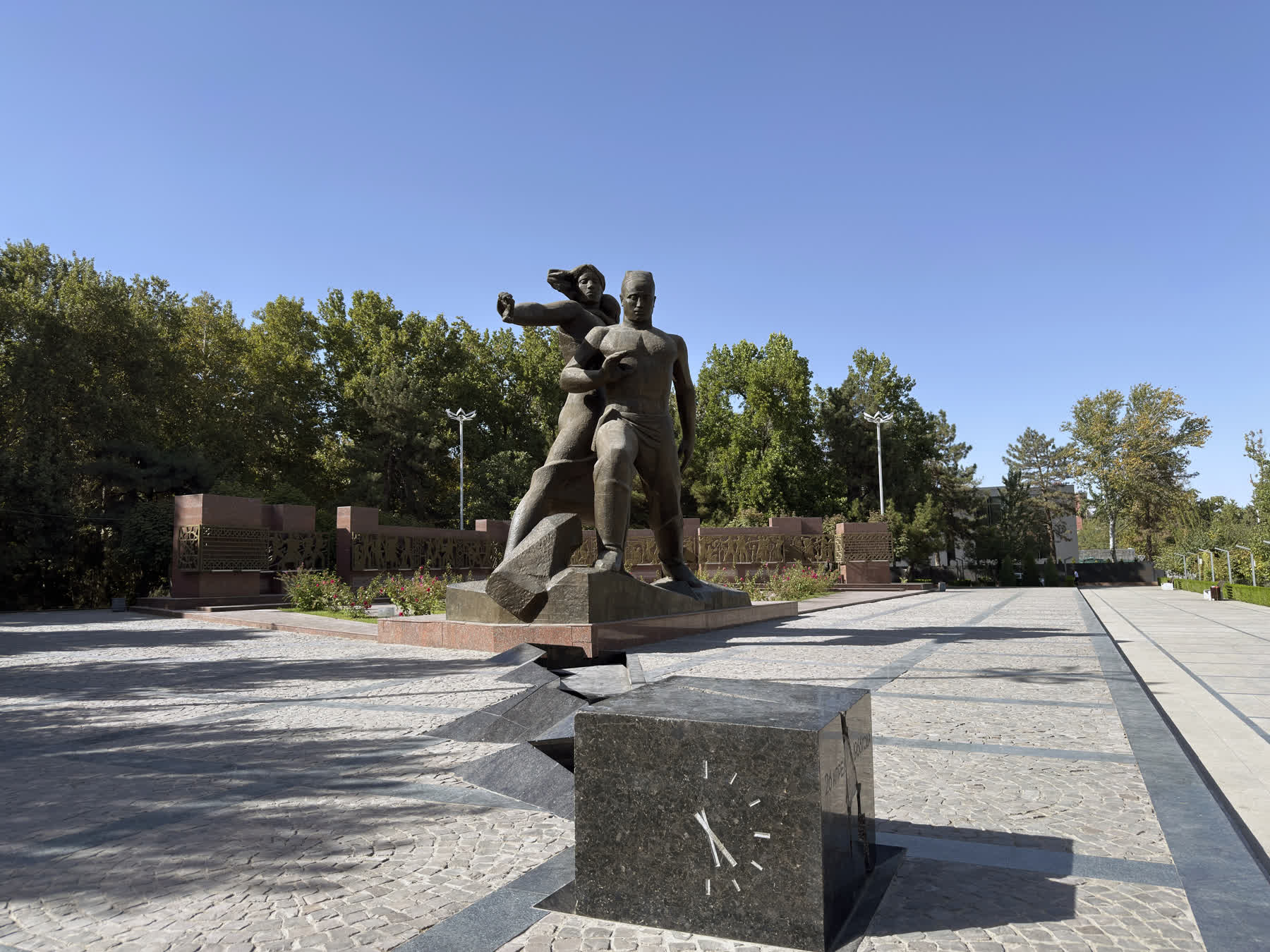
In the early morning of 26 April 1966, a strong earthquake struck the centre of Tashkent. Although relatively few people died, thousands of homes in the city centre were destroyed and hundreds of thousands of people were left without shelter. In the years that followed, Tashkent was rebuilt with the resources of the entire Soviet Union, and the process changed both the look of the city and the make-up of its population. This explainer sets out, in facts, the earthquake, the reconstruction, and its demographic consequences.
The Quake: Date, Time, and Magnitude
The earthquake struck on 26 April 1966 at about 5:23 a.m. local time. The epicentre lay in the very centre of Tashkent, at a very shallow depth of roughly 3-8 km. Its magnitude was about 5.2 (seismological sources give a range of 5.1-5.3); shaking intensity in the epicentral zone reached VIII-IX on the MSK scale. This was a moderate, not a powerful, earthquake, and its destructiveness came above all from its closeness to the centre (the shallow depth) and from the adobe (mud-brick) houses of the old city (Source: seismological and historical sources).
Casualties and Damage
Despite such destruction, the number of deaths was relatively low — according to various sources about 8 to 15 (some estimates put it higher). The low death toll is explained by the shallow depth and by the fact that the old-city houses were mostly single-storey and low. The damage to housing, however, was enormous: according to various sources between 78,000 and 95,000 homes were destroyed and between 200,000 and 300,000 people were left homeless; more than half of the old city consisted of collapsed adobe houses (Source: historical sources; figures vary somewhat between sources).

The All-Union Reconstruction
The Soviet government organised a large-scale, all-Union reconstruction effort: construction brigades and specialists came to Tashkent from other Soviet republics and from major Russian cities. The city was rebuilt rapidly over several years — by one account around 100,000 new homes were built by 1970. The centre was rebuilt with modern Soviet housing estates (microdistricts), wide avenues, and earthquake-resistant designs; new large residential districts such as Chilonzor were created in this period (Source: historical sources). In Soviet propaganda the reconstruction was celebrated as a demonstration of the friendship of peoples.
The Tashkent Metro and the Courage Monument
One symbol of the reconstruction was the Tashkent Metro: construction of the first line (the Chilonzor line) began in 1972 and it opened on 6 November 1977 — the first metro in Central Asia, built partly with seismic stability in mind (Source: historical sources). In memory of the earthquake and the reconstruction, the Courage Monument (Russian Muzhestvo) was erected in the city centre in 1976, ten years after the quake; its author was the sculptor Dmitry Ryabichev. A black granite cube split by a crack marks the date and time of the quake — 26 April 1966, 5:23 — and beside it stands a bronze group of a man shielding a woman and child (this monument is shown in the main image of this article).
The Shift in the Population
The earthquake and the reconstruction also changed the make-up of Tashkent's population. Many builders and specialists stayed on in Tashkent after the work was finished; this raised the share of Russian/Slavic and other non-Uzbek residents and made the city more multi-ethnic (Source: historical sources). At the same time, part of the old-city (mahalla) population was resettled to new microdistricts on the city's edge — especially Chilonzor. This meant a move from traditional low-rise mahalla life to standardised multi-storey Soviet housing estates, altering the traditional social fabric of the mahalla. The historian Paul Stronski (Tashkent: Forging a Soviet City, 1930-1966) describes the reconstruction as an event that let planners remake Tashkent as a model high-modern socialist city in Asia.
Leaders' Visits and Propaganda
After the earthquake, Soviet leaders — including CPSU General Secretary Leonid Brezhnev — came to Tashkent to see the situation (Source: historical sources). In official Soviet propaganda the reconstruction was presented as all the republics uniting to restore a brother city — a vivid example of the idea of the friendship of peoples. Today the earthquake of 26 April is remembered as an important date in Uzbekistan's history, and the Courage Monument is its principal memorial.
