Kyrgyzstan and Pakistan Sign 17 Documents in Bishkek, Targeting $200 Million in Trade
A transit trade agreement, an extradition treaty and a series of memorandums were signed during Pakistani Prime Minister Shehbaz Sharif's visit. Bilateral trade currently stands at around $16 million.
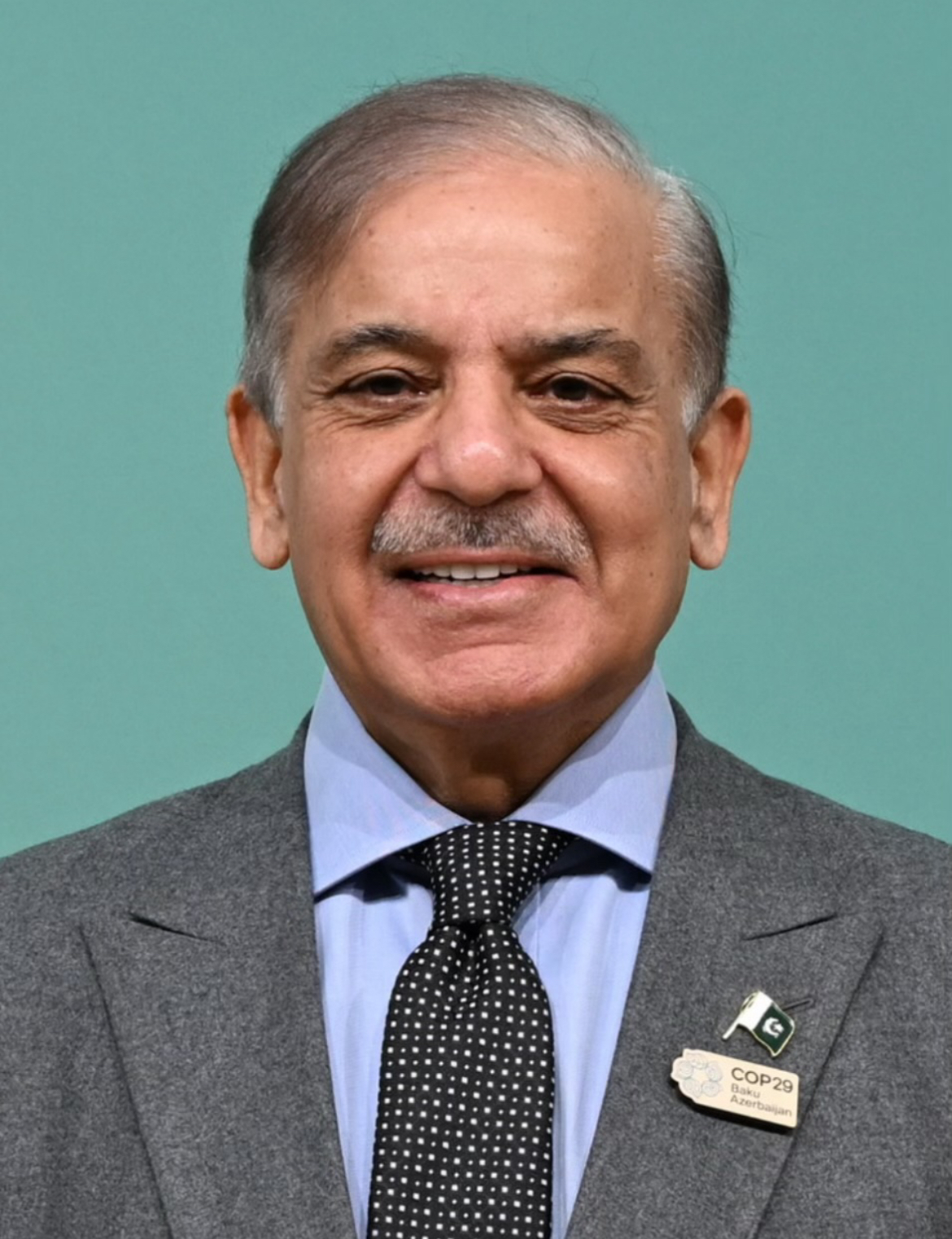
A package of documents between the two countries was signed in Bishkek on Sept. 2, 2026, with the participation of Pakistani Prime Minister Shehbaz Sharif and Kyrgyz President Sadyr Japarov. According to Pakistani Deputy Prime Minister and Foreign Minister Ishaq Dar, a total of 17 bilateral documents were exchanged during the visit.
At the center of the documents is the transit trade agreement. It is aimed at expanding Kyrgyzstan's access to Pakistan's seaports — Karachi, Bin Qasim and Gwadar. Because Kyrgyzstan is landlocked, transit is a systemic constraint on its foreign trade.
Trade volume: the current level and the target
The two sides agreed to raise bilateral trade to $200 million within two years. The figure currently stands at around $16 million — meaning the target implies more than a tenfold increase from the existing base.
The legal form of the agreement was also changed: text initially prepared as a memorandum was converted into a binding treaty.
I proposed signing a treaty instead of a memorandum, because that would be a concrete step.
— Shehbaz Sharif, Prime Minister of Pakistan (Dawn)
The documents signed
- A transit trade agreement
- An extradition treaty
- A memorandum on cooperation in virtual assets
- A twin cities agreement between Lahore and Osh
- Documents on cooperation in education and science
- A memorandum on environmental protection
- Frameworks for cooperation in defense and security
- A 2026–2027 cooperation program between the foreign ministries
The joint statement identified mining and metallurgy, agriculture, pharmaceuticals, textiles, digital technology, energy, tourism and educational exchange as priority areas. The energy section made particular mention of the CASA-1000 hydropower project, which provides for transmitting electricity from Central Asia to South Asia.
Why transport connectivity is the central issue
Kyrgyzstan and Pakistan share no direct land border. Cargo passes through Chinese territory or through Afghanistan, and both routes are complex in terms of logistics, customs and security. The transit agreement provides for simplifying customs procedures, standardizing document flows and establishing cargo tracking systems.
We welcome the signing of the transit trade agreement — it facilitates trade, improves logistics and creates new opportunities for regional connectivity.
— Shehbaz Sharif, Prime Minister of Pakistan (Dawn)
The regional context
The signing in Bishkek coincided with the week of the SCO summit. Over that period, Central Asian states expanded transport and logistics agreements with a number of external partners. Eight days later, on Sept. 10, Kyrgyzstan's National Investment Agency signed a memorandum on establishing the Sary-Tash international transport and logistics center near the Chinese border; that project likewise identifies a route to Pakistan.
Kyrgyzstan's economy grew 11.1 percent in the first seven months of 2026, though annual inflation remains above 11 percent. Expanding foreign trade routes is one of the government's declared priorities.
What remains unclear
Most of the documents signed are framework in nature: they do not always specify investment amounts, timelines or responsible bodies. The transit agreement's practical effect will depend on the reliability of routes passing through Afghan territory and on whether customs procedures are genuinely simplified.
Kyrgyzstan's problem of access to the sea
Kyrgyzstan is among the world's landlocked countries, and its distance to the nearest ports runs to thousands of kilometers. The economic literature notes that for such countries, transport costs can make up a significant share of export costs and place a direct constraint on foreign trade volumes.
In practice, Kyrgyz goods can take one of several routes: north through Kazakhstan and Russia, east through China, west through the Caspian Sea and the Caucasus, or south through Afghanistan and Pakistan. Each route has its own constraints — customs regimes, road conditions, seasonality or security.
The southern route is the shortest in terms of distance: Karachi is closer than other ports. But it passes through Afghan territory and has therefore remained limited in practice for many years.
Pakistan's ports
Three ports are named in the agreement. Karachi is the country's largest and oldest port; Bin Qasim is an adjacent industrial port; and Gwadar is a relatively new port on the Balochistan coast, developed under the China-Pakistan Economic Corridor.
Gwadar port lies close to the Strait of Hormuz and is therefore considered a strategic point geographically. Its cargo turnover, however, is significantly lower than Karachi's.
What the extradition treaty means
The documents signed include a treaty on extradition. Such treaties are generally a foundational instrument of legal cooperation between two countries and are more in demand as trade and economic ties expand.
The memorandum on virtual assets is also noteworthy: both countries have been building regulatory systems for crypto assets in recent years.
Twin cities: Lahore and Osh
Lahore is the capital of Pakistan's Punjab province and the country's second-largest city. Osh is the largest city in southern Kyrgyzstan and an important trading center in the Fergana Valley.
Twin city agreements are generally used to formalize cultural exchange, educational programs and ties among local entrepreneurs. Their economic effect is often indirect and long-term rather than immediate.
The CASA-1000 project
CASA-1000, singled out in the joint statement, is a project to transmit hydroelectric power generated in Kyrgyzstan and Tajikistan to Pakistan through Afghanistan. It is supported by the World Bank and other international institutions.
The project's core idea rests on exploiting a seasonal mismatch: hydropower generation in Central Asia increases in summer, while demand for electricity in South Asia is highest in precisely that period.
The section of the project on Afghan territory has been halted and reviewed several times since 2021.
The composition of trade
In current bilateral trade, Pakistan mainly supplies pharmaceutical products, textiles, surgical instruments and food products. Kyrgyzstan exports cotton, raw hides and leather and certain agricultural products.
Reaching the $200 million target will require broadening the existing range of goods. It is for precisely this reason that the joint statement identified mining and metallurgy, pharmaceuticals and digital technology as priority areas.
The international context
The signing coincided with the week of the SCO summit in Bishkek: the organization's 26th summit was held in the city on Aug. 31 and Sept. 1, concluding Kyrgyzstan's 2025–2026 chairmanship.
The leaders of ten member states attended the summit; Pakistan's prime minister was in the region in that connection. The bilateral visit was organized as a continuation of that program.
The $200 million figure is a target set for a two-year period, and no step-by-step plan confirming it has been published in official sources.